




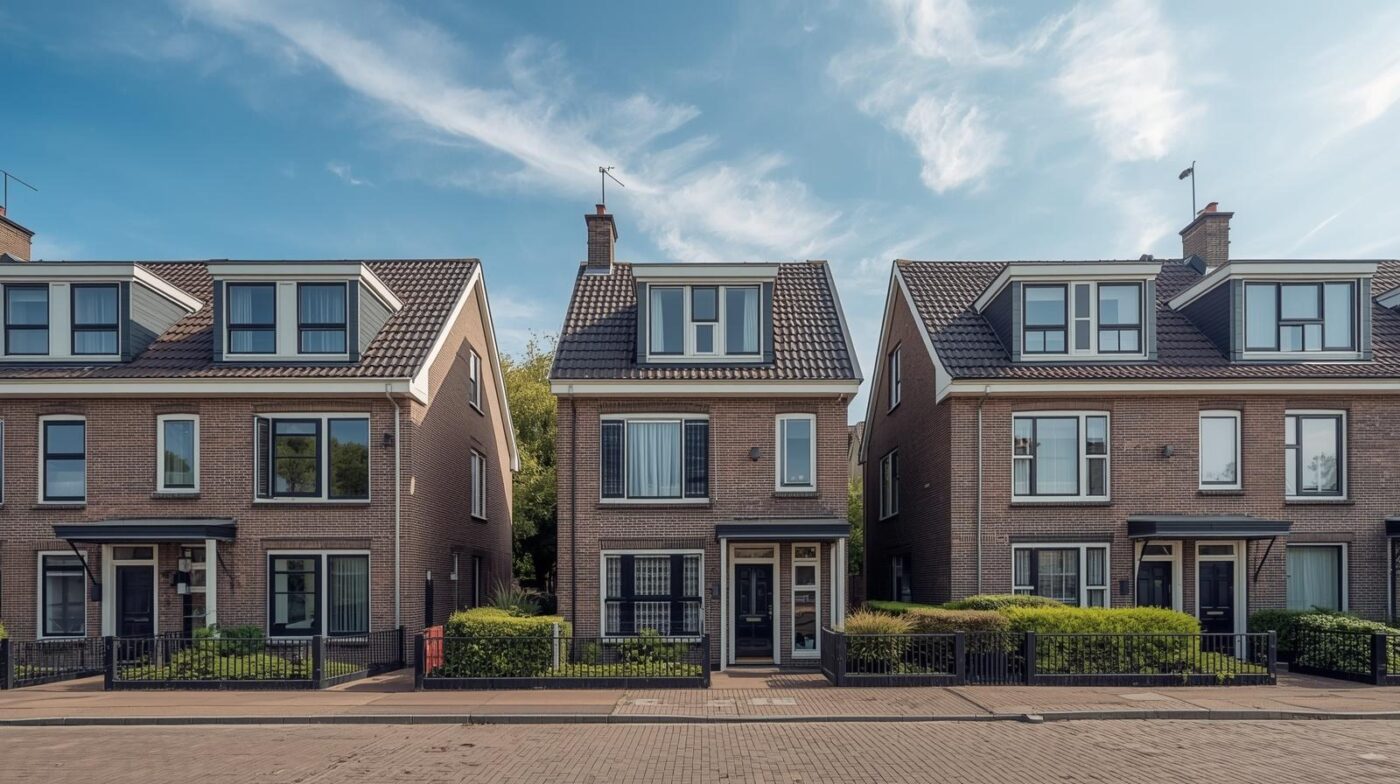

TL;DR: Between 2019 and 2024, 58-66% of new owner-occupied housing in the Netherlands went to households earning above €68,000 annually. Only 21-32% qualified as affordable.
This directly raises wage pressure for small businesses: desirable employees can’t live near your business, and those who can already earn more than you typically pay.
Housing cost pressure increases your payroll costs through higher salary expectations, geographic hiring constraints, and retention instability.
What this means for your business:
- Middle-income employees (€36,800-€68,000 annually) face the most acute housing pressure. They’re squeezed between high-priced purchase and rental markets and social housing reserved for low earners.
- Employees in higher-priced private rentals spend 37-41% of gross income on housing. A €1,200 monthly rental requires an annual salary of €43,200- €57,600 to meet standard landlord screening ratios.
- New housing construction targets high earners (56% in 2024), not the middle-income hiring tier where most small businesses operate.
- The pattern is structural, not cyclical. Five years of CBS data show no improvement in affordable supply relative to higher-priced units.
- Businesses with geographic flexibility gain a competitive advantage: hiring in lower-cost municipalities reduces wage pressure without cutting employee purchasing power.
Between 2019 and 2024, 58-66% of new owner-occupied homes in the Netherlands went to high-income households earning above €68,000 annually. Only 21-32% of new purchase housing qualified as affordable under government definitions.
If you’re running a small business in the Netherlands, this data maps directly onto your labor market. The people you want to hire don’t have the money to live near where you operate. The people who can afford new housing already earn well above what most micro businesses pay.
Your employee cost structure exists inside a labor market where housing affordability determines who works for you, where they live relative to your business, what salary they need to survive, and how long they stay before leaving the Netherlands.
What Changed in Dutch Housing Construction
The Netherlands added 52,000 to 58,000 new privately occupied housing units annually from 2019 to 2024. The breakdown stayed stable: roughly 29,000 new purchase homes, 15,000 private rentals, and 12,000 corporate (social housing) units per year.
The disparity lies in pricing and allocation.
In 2024, only 6,700 of the 29,000 new purchase units were affordable. That’s 23%. The other 22,300 units targeted higher-priced segments. For private rental: 7,300 affordable units versus 6,000 higher-priced units. For corporate housing, 11,400 affordable versus 100 higher-priced.
Income distribution among new residents shows the divide. In 2024, new purchase housing went to 3,900 low-income households, 8,900 middle-income households, and 16,400 high-income households. 56% went to high earners.
Middle-income households (your target hiring pool for skilled roles) accounted for only 31% of occupants of new purchase housing. They’re being priced out of new construction.
Key takeaway: Most newly purchased housing is not accessible to middle-income employees. This reduces your effective hiring pool and increases competition for affordable housing.
Why This Matters to Your Business
Running a business in Amsterdam, Rotterdam, Utrecht, or any Randstad location puts you in direct competition for talent where new housing construction targets people already earning €60,000 to €80,000+ annually.
That’s well above what most zzp’ers pay themselves. Far above what micro businesses pay junior or mid-level employees.
CBS data shows that middle-income households split almost evenly between purchasing housing (51%) and private rental (37%) when moving into new construction. The affordability threshold is moving against you.
Your potential employees need high salaries to buy or rent privately, or they’re competing for limited corporate housing that favors low-income households.
The middle is squeezed.
Bottom line: New housing construction is aimed at income levels higher than most small business wages. This means your potential hires may struggle to access housing unless their salaries already exceed €60,000.
How Housing Costs Translate Into Wage Pressure
Housing costs are transmitted into your payroll through measurable channels.
CBS data shows average housing cost ratios (woonquote) for new residents: 25-32% of income for affordable rentals, 41% for higher-priced private rentals in 2024. For purchase housing: 18-19% for affordable units (assumes access to mortgage credit, which requires stable employment and sufficient income).
Here’s what this means in practice:
Employees moving into higher-priced private rental housing spend 37-41% of their income on housing. Middle-income earners (roughly €36,800-€68,000 annually based on CBS income brackets) pay €1,200-€2,300 per month in housing costs.
To sustain that, they need a gross monthly income of €3,000-€5,500+.
Your payroll needs to accommodate this, or you lose access to those candidates.
Three Channels of Pressure
Your business feels housing pressure through three direct channels:
1. Salary expectations: Employees who don’t have access to affordable housing require higher salaries to function. If your salary band sits at €35,000-€45,000 annually for mid-level roles, you’re competing for candidates who don’t qualify for affordable housing and who don’t have the means to afford private rental at market rates without economic hardship.
This narrows your talent pool to those with family support, dual incomes, housing equity, or a willingness to commute from lower-cost areas.
2. Geographic constraints: Low- and middle-income employees don’t have the means to live near business centers where new construction concentrates. CBS data shows that low-income households in new housing predominantly occupy corporate units (50% in 2024), which are in limited supply and geographically concentrated in specific municipalities.
If your business requires on-site presence and you’re not located near affordable housing stock, your hiring radius shrinks, or your commute subsidy costs rise.
3. Retention instability: The mismatch creates churn. Employees who start at lower salaries don’t have the means to transition into new housing without major income increases. They pressure you for raises beyond your margin capacity, leave for higher-paying employers, or exit the Dutch labor market. Bottom line: Housing costs push up wage floors, limit hiring by geography, and cause turnover. Small businesses hiring at €35,000-€45,000 face the toughest competition for workers in the most inaccessible housing segment.t.
What This Means for Your Margins, Hiring, and Cash Flow
The housing data directly affects your P&L.
Margins and Pricing
When your labor costs rise because employees require higher salaries to afford housing, and you don’t have the option to pass those costs through to customers (price-sensitive B2C market or competing with larger businesses absorbing the pressure), your operating margin compresses.
You’re absorbing a market failure. When housing policy and construction economics fail to deliver affordable units for middle-income workers, the shortfall translates into higher labor costs for the businesses that employ them.
Key takeaway: Lack of affordable housing increases your operating costs. This is a structural business challenge, not a temporary problem.
Hiring and Retention Costs
Recruitment costs go up when your salary band doesn’t compete. Offering €35,000-€45,000 annually for mid-level roles puts you in competition for candidates in the most constrained segment of the new housing market.
According to industry-standard screening ratios, landlords in the Netherlands require renters to earn gross monthly income 3 to 4 times the monthly rent. A €1,200 monthly rental requires a a gross monthly income of of €3,600-€4,800(€43,200-€57,600 annually).
When your salary offer falls below this threshold, candidates are excluded from accessing housing near your business location before they apply.
Tax and Benefits Strategy
You need to shift the compensation structure toward benefits, thereby indirectly reducing employee housing pressure.
The 30% ruling (if applicable for expat hires) provides tax relief. But this doesn’t change the underlying housing cost burden. Mobility allowances, remote work flexibility, or co-working stipends in lower-cost municipalities become more relevant than straight salary increases.
Cash Flow and Payroll Planning
Planning to hire in 2025-2026? Assume salary expectations for middle-income roles continue to reflect housing cost pressure.
CBS data shows no structural improvement in affordable new housing supply relative to higher-priced units. Wage pressure continues.
Build this into cash flow forecasting and payroll budgeting now, rather than reacting when candidates reject offers or employees request raises.
Bottom line: Housing undersupply translates into internalized labor costs on your P&L. Salary offers between €43,200 and €57,600 exclude candidates from housing access before they apply. Build housing-driven wage inflation into financial planning as a structural assumption.
The Geographic Arbitrage Opportunity
Key takeaway: Some Dutch regions offer lower housing cost pressures. Consider geographic flexibility to expand your hiring pool and control wage costs.
Amsterdam, Rotterdam, The Hague, and Utrecht (the Randstad region) feature salary levels above the national average, driven by the concentration of major businesses and cost-of-living pressures, particularly housing costs.
Cities outside the main economic hubs and rural provinces (Friesland, Groningen) offer lower wages, balanced by a more affordable cost of living, particularly for housing.
This creates strategic arbitrage: businesses with geographic flexibility hire at lower nominal salaries in lower-cost municipalities while continuing or improving employee purchasing power.
When your business model allows remote or hybrid work, this becomes a competitive advantage. Employees who live in lower-cost municipalities face less income pressure. You hire effectively at lower salary levels without reducing their quality of life.
Bottom line: Geographic flexibility creates competitive advantage. Hiring in lower-cost municipalities outside the Randstad reduces wage pressure while continuing employee purchasing power. Remote or hybrid work models access this arbitrage directly.
What You Should Do Now
The Dutch new housing market doesn’t build for the income levels most small businesses pay. Construction targets high earners and, separately, low earners eligible for social housing.
The middle is underserved.
When your business depends on hiring middle-income employees, you’re operating in a labor market where housing costs create wage pressure you need to address.
Review Your Salary Benchmarks Against Housing Cost Reality
Check what your target employees would pay for housing in your business location. Use CBS woonquote data as a reference: when your employees spend 30-40% of gross income on housing, reverse-engineer what salary they need to sustain this.
Compare the data to what you’re offering.
Evaluate Geographic Flexibility
When your business model allows remote or hybrid work, this becomes a competitive advantage. Employees who live in lower-cost municipalities (outside the Randstad or in smaller cities with better housing supply) face less income pressure.
You hire effectively at lower salary levels without reducing their quality of life.
Monitor Retention Triggers Related to Housing
Track whether employees leave because they don’t have the money to stay in the region. Patterns (notably among younger or mid-career employees) indicate that your compensation structure is out of alignment with housing-market reality.
Adjust Hiring Strategy Toward Specific Income Cohorts
CBS data shows high-income households dominate new purchase housing, while low-income households are served by corporate units. Middle-income households are squeezed into private rental or affordable purchase housing, both of which are limited in supply.
Hiring for roles paying middle-income salaries? Recognize that your candidates are competing in the most constrained segment of the new housing market.
Target candidates who already own homes, who live with partners with higher incomes, or who are willing to remain in existing (older) housing stock rather than move into new construction.
Build Housing Cost Increase In Financial Planning
The pattern is structural, not cyclical. Five years of CBS data show consistent construction patterns favoring high earners, with no improvement in affordable new housing supply relative to higher-priced units.
Wage pressure continues as a permanent feature of the Dutch labor market for small businesses. This calls for strategic adjustment, not tactical response.
Assume salary expectations for middle-income roles continue rising independently of general inflation or sector-specific wage trends. Model this into your three-year financial projections.
Frequently Asked Questions
How does housing construction affect my labor costs?
Housing construction patterns determine who has the means to live where your business operates. When new construction targets high earners (€60,000-€80,000+), middle-income employees (€36,800-€68,000) face reduced access to housing. This creates wage pressure: you must pay higher salaries to afford housing near your business, or accept geographic constraints that narrow your hiring pool.
What salary do employees need to rent housing in the Netherlands?
Landlords require renters to earn gross monthly income 3 to 4 times the monthly rent. A €1,200 monthly rental requires a gross monthly income of €3,600-€4,800 (€43,200-€57,600 annually). Employees in higher-priced private rentals spend 37-41% of gross income on housing, according to CBS data.
Which income segment faces the most housing pressure?
Middle-income households (€36,800-€68,000 annually) face the most acute pressure. They’re squeezed between high-priced purchase and rental markets; they don’t have the means to afford them, and social housing (corporatie) is reserved for low-income households. In 2024, only 31% of new purchase housing went to middle-income households, compared to 56% for high earners.
Is this housing pattern temporary or structural?
The pattern is structural. Five years of CBS data (2019-2024) show consistent construction patterns: 58-66% of new owner-occupied housing went to high-income households, with no improvement in affordable supply relative to higher-priced units. Wage pressure continues as a permanent feature, not a cyclical distortion.
How does geographic location impact hiring costs?
Randstad municipalities (Amsterdam, Rotterdam, Utrecht, The Hague) feature higher salary levels and housing costs. Cities outside the main economic hubs and rural provinces offer lower wages, balanced by more affordable housing. Businesses with geographic flexibility access arbitrage: hiring in lower-cost municipalities reduces wage pressure while maintaining employee purchasing power.
What should I do if my salary offers are below housing affordability thresholds?
When your salary band sits at €35,000-€45,000, you’re competing for candidates in the most constrained housing segment. Options: evaluate remote work or mixed models to access talent in lower-cost municipalities, shift compensation toward benefits reducing housing pressure indirectly (mobility allowances, co-working stipends), target candidates with existing housing stability (homeowners, dual high incomes), or build housing-driven wage inflation into financial planning and adjust pricing or margins accordingly.
How do I calculate housing-driven salary requirements for my location?
Use CBS woonquote data as a baseline: employees spend 30-40% of gross income on housing. Reverse-engineer required salary: if housing costs €1,200 monthly, employees need €3,000-€4,000 gross monthly income (€36,000-€48,000 annually) to meet standard cost ratios. Compare this to your current salary offers to identify gaps.
Does the 30% ruling help with housing affordability?
The 30% ruling provides tax relief for eligible expat hires. But this doesn’t change the underlying housing cost burden. Employees still need sufficient gross income to meet landlord screening ratios (3-4x monthly rent) and afford housing at market rates. The ruling reduces tax liability, not housing costs.
Key Takeaways
- Housing affordability remains a direct input into your labor cost structure and hiring capacity. New construction systematically targets income levels above those of most micro and small businesses.
- Middle-income employees (€36,800-€68,000) face the most acute housing pressure. They’re squeezed between high-priced markets and social housing reserved for low earners. In 2024, only 31% of new home purchases went to middle-income households, versus 56% for high earners.
- Housing costs are transmitted into payroll through three channels: salary floors determined by housing cost ratios (37-41% of income for higher-priced rentals), geographic hiring constraints, and retention instability.
- Salary offers below €43,200-€57,600 exclude candidates from housing access before they apply. Landlords require a gross monthly income of 3-4 times the monthly rent.
- The pattern is structural, not cyclical. Five years of CBS data show no improvement in affordable housing supply relative to higher-priced units. Wage pressure continues as a permanent feature of the Dutch labor market for small businesses.
- Businesses with geographic flexibility gain a competitive advantage. Hiring in lower-cost municipalities outside the Randstad reduces wage pressure while continuing employee purchasing power.
- Adjust strategy now: review salary benchmarks against housing-cost realities in your location, evaluate remote or hybrid work models, monitor retention triggers related to housing, and build housing-driven wage inflation into three-year financial projections.