





The Netherlands housing shortage is blocking business growth. Three years of declining construction, a 395,000-home deficit, and grid congestion mean 25% of job candidates reject offers because they find no housing. For expat entrepreneurs, housing scarcity functions as a structural ceiling on hiring and growth.
Core Facts
- 25% of Netherlands job seekers reject offers because of housing unavailability
- Housing deficit stands at 395,000 homes, projected to reach 453,000 by 2027
- 86,000 permits issued in 2025, but only 69,200 homes completed
- Construction industry needs 94,000 new workers in the next five years
- Average wait for residential electricity connection is 40 weeks
- Netherlands faces 1.4 million person labor shortage by 2030
You found product-market fit. You secured your first clients. You’re ready to hire.
Then the candidate says: “I find no housing.”
The deal dies. Not because of salary. Not because of culture fit. Because the Netherlands doesn’t have housing for the talent your business needs.
25% of job seekers in the Netherlands now reject offers when they find no housing near the workplace. One in four qualified candidates walking away before you negotiate terms.
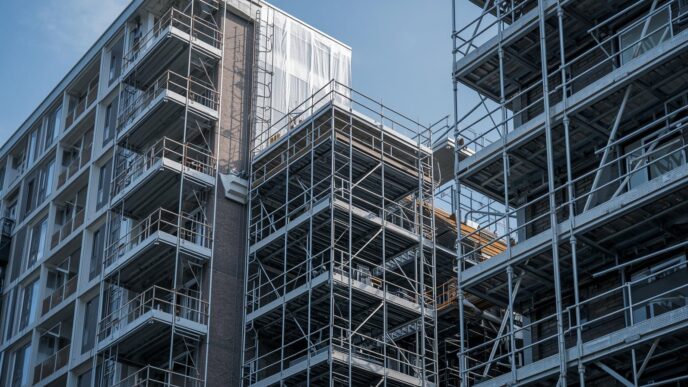
Why Permits Don’t Turn Into Homes
Statistics Netherlands reported 2025 as the third consecutive year of declining housing construction. The country added 69,200 newly built homes, down from a 2022 peak of 74,100. That’s a 6.6% drop during an acute shortage.
Permit issuance remains higher than the 2019-2022 period, but actual construction lags behind. Authorities issued 86,000 permits in 2025. Only 69,200 homes were completed.
The time between permit approval and construction completion has stretched. Between 3% and 5% of permits get withdrawn entirely.
Regulatory approval is decoupled from execution capacity. The system approves housing. It doesn’t build it.
What this means: Permit numbers tell you nothing about actual housing delivery. The execution gap reveals structural problems in construction capacity, not regulatory barriers.
What Blocks Construction
Labor Shortages
The construction industry needs 94,000 new workers in the next five years to complete existing projects. Without them, delays become permanent.
CBS chief economist Peter Hein van Mulligen attributes the construction decline to labor shortages and the lag effect from previously low permit issuance.
Grid Congestion
Grid congestion stalls projects for years. The average wait for a residential electricity connection is 40 weeks. Large developments face delays measured in years. Areas like Arnhem and Utrecht have no room for new housing connections until 2030.
You approve all the permits you want. If there’s no power grid capacity, nothing gets built.
What this means: Construction bottlenecks are physical, not regulatory. Labor shortages and grid congestion create execution barriers. Policy changes don’t fix this.
How Housing Shortage Impacts Hiring
The housing deficit sits at 395,000 homes. That’s the highest in over a decade and represents 4.8% of the total housing stock.
Experts warn this could reach 453,000 homes by 2027 unless construction rates surge.
For expat entrepreneurs running micro and small businesses, this creates a compounding problem. You’re competing for talent in a market where two-thirds of businesses struggle with staff shortages.
The Netherlands is projected to face a labor shortage of 1.4 million people by 2030. That’s 14% of the current workforce. This is structural scarcity, not a temporary dip.
When your candidate finds no housing, they don’t reject your offer and keep looking. They leave the Dutch market entirely. You lose them to Berlin, Lisbon, or remote work in their home country.
What this means: Housing scarcity amplifies labor scarcity. The 1.4 million person labor shortage by 2030 gets worse when qualified candidates leave the Netherlands because they find no housing.
Is Renting a Solution
Some founders assume candidates rent while they search for permanent housing. Wrong assumption.
Rental supply is declining faster than ownership stock. Internationals who previously rented are now buying because rental costs have become prohibitive and availability has collapsed.
The number of internationals buying homes in the Netherlands doubled from 0.8% in 2020 to 1.6% in the first half of 2025. They’re not doing this by choice. The rental market offers no viable alternative.
Internationals pay more than locals. They pay €591,000 versus the €575,000 average purchase price and compete for move-in-ready homes.
If your candidate needs to buy a home before accepting your job offer, your hiring timeline extends by months. Most small businesses don’t absorb that delay.
What this means: Renting is not a backup plan. Rental supply is declining faster than ownership stock, forcing internationals into purchasing homes before they start work.
Where Housing Is Available
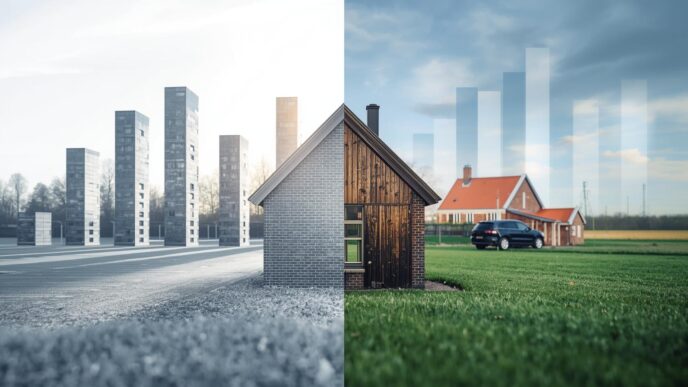
Noord-Holland led construction with 14,000 new homes in 2025. Zuid-Holland completed 12,900. Amsterdam alone added 8,100 homes.
Proportional growth tells a different story. Smaller municipalities like Kapelle achieved 4.7% housing stock growth. Boekel hit 4.2%. Ameland reached 4.0%.
Urban centers where job opportunities concentrate face the tightest housing constraints. Smaller towns grow faster in relative terms, but they lack the infrastructure, client base, and ecosystem density most businesses need.
You face a geographic trap: locate where talent wants to live, or locate where housing exists.
Most expat entrepreneurs don’t get to compromise on location. Your clients, investors, and network sit in Amsterdam, Rotterdam, Utrecht, or The Hague. Moving to Kapelle is not a solution. It’s a different business model.
What this means: Housing is more available in smaller municipalities, but those locations lack the business ecosystem most startups need. Urban centers have jobs but no housing.
Hidden Cost Structure
The housing crisis doesn’t just block hiring. It increases your operational costs in ways that don’t show up on a P&L until too late.
Rising housing costs drive wage demands higher. Employees who don’t afford rent near your office demand remote work or higher compensation to justify longer commutes.
Turnover accelerates when employees relocate for housing reasons. You lose institutional knowledge and spend more on recruitment cycles.
Productivity drops when employees face housing instability. Stress, long commutes, and apartment hunting drain focus.
The housing shortage becomes a permanent tax on your business operations.
What this means: Housing scarcity creates hidden operational costs through wage pressure, turnover, and productivity loss.
What Control Points Exist
You don’t fix the Dutch housing market. But you adjust your hiring and operational structure to reduce exposure.
Expand Your Geographic Hiring Radius
If you’re only recruiting within Amsterdam, you’re fishing in the most constrained pool. Consider candidates willing to commute from adjacent regions where housing supply is marginally better.
Offer Relocation Support
Most small businesses don’t budget for this. If you provide temporary housing assistance, broker connections, or relocation stipends, you differentiate immediately.
Build Remote-First Structures
Not every role requires daily office presence. If you structure work to allow 3-4 days remote, you expand your talent pool to candidates who live farther out.
Hire Earlier in the Candidate Lifecycle
If housing delays stretch your hiring timeline by months, start recruiting before you need the role filled. Treat housing search time as part of onboarding.
Consider International Remote Hires
If the role doesn’t require Dutch residency, hiring in Belgium, Germany, or other EU markets with better housing availability bypasses the constraint entirely.
What this means: You don’t control housing supply. You control hiring strategy, geographic reach, remote work structure, and relocation support.
The Market Won’t Self-Correct Quickly
The three-year construction decline coincides with rising interest rates, inflation, and construction cost increases following COVID-19. These are macroeconomic factors. Policy tweaks don’t resolve them.
The 0.9% housing stock growth rate in 2025 falls below population growth and household formation rates. The shortage is worsening, not stabilizing.
Every province except Overijssel and Zeeland issued more permits than completed construction. This nationwide execution gap signals industry-wide constraints, not localized bottlenecks.
Structural reforms in construction capacity, financing mechanisms, or regulatory processes take years to materialize.
The government target of 100,000 new homes per year has been missed for three consecutive years. In 2025, nearly 80,000 homes were completed. That’s 20% short of the goal.
One-third of planned homes face permits that aren’t yet final, with lengthy objection and appeal procedures still underway. Even when permits exist, construction doesn’t begin in the short term.
If you’re waiting for the housing market to improve before scaling your team, you’re planning around a timeline that doesn’t exist.
What this means: Housing shortage recovery requires structural reforms that take years. The 100,000 annual home target has been missed for three consecutive years.
Decision Discipline in a Constrained Market
The housing crisis exposes a fundamental tension for expat entrepreneurs in the Netherlands.
You chose this market for its infrastructure, rule of law, access to capital, and proximity to European clients. Those advantages remain real.
But the housing constraint now functions as a structural ceiling on growth. You don’t scale a business you don’t staff.
Founders who navigate this best treat housing availability as a core business constraint, not a background inconvenience.
They adjust hiring timelines. They build flexibility into work structures. They expand geographic reach. They budget for relocation support.
They don’t wait for the market to fix itself. They adapt the business model to the reality in front of them.
The housing shortage is not temporary. It’s the operating environment.
Structure your hiring accordingly.
Frequently Asked Questions
How many job candidates reject offers because of housing in the Netherlands?
25% of job seekers in the Netherlands reject offers when they find no housing near the workplace. This translates to one in four qualified candidates walking away before salary negotiations.
What is the current housing deficit in the Netherlands?
The housing deficit stands at 395,000 homes, representing 4.8% of the total housing stock. Experts project this could reach 453,000 homes by 2027 unless construction rates surge.
Why are permits not turning into completed homes?
Authorities issued 86,000 permits in 2025, but only 69,200 homes were completed. The gap exists because of labor shortages, grid congestion, and the lag between permit approval and construction completion. The construction industry needs 94,000 new workers in the next five years.
Is renting a viable option for international hires in the Netherlands?
No. Rental supply is declining faster than ownership stock. The number of internationals buying homes doubled from 0.8% in 2020 to 1.6% in the first half of 2025 because the rental market offers no viable alternative.
Where is housing most available in the Netherlands?
Smaller municipalities like Kapelle, Boekel, and Ameland have higher proportional growth rates. However, urban centers like Amsterdam, Rotterdam, Utrecht, and The Hague where job opportunities concentrate face the tightest housing constraints.
What is grid congestion and how does it affect housing construction?
Grid congestion refers to the lack of electricity infrastructure capacity. The average wait for a residential electricity connection is 40 weeks. Areas like Arnhem and Utrecht have no room for new housing connections until 2030.
How does the housing shortage impact business operations beyond hiring?
Rising housing costs drive wage demands higher. Turnover accelerates when employees relocate for housing reasons. Productivity drops when employees face housing instability through stress, long commutes, and apartment hunting.
Will the Dutch housing market self-correct soon?
No. The government target of 100,000 new homes per year has been missed for three consecutive years. Structural reforms in construction capacity, financing mechanisms, and regulatory processes take years to materialize.
Key Takeaways
- 25% of Netherlands job candidates reject offers because they find no housing, creating a direct hiring constraint for businesses
- Permit approval doesn’t equal construction because labor shortages and grid congestion create execution barriers
- The housing deficit of 395,000 homes amplifies the projected 1.4 million person labor shortage by 2030
- Renting is not a backup plan because rental supply is declining faster than ownership stock
- Housing scarcity creates hidden operational costs through wage pressure, turnover, and productivity loss
- Founders who treat housing availability as a core business constraint adapt through expanded geographic reach, remote work structures, and relocation support
- The housing shortage is structural, not temporary, requiring business model adaptation rather than waiting for market correction