





Dutch inflation dropped to 2.4% in January 2026, but service inflation remains at 3.9%, nearly double the headline rate. For expat entrepreneurs in the Netherlands, labor costs, rent, and professional services continue rising faster than goods prices. The gap between what’s cooling and what’s still running hot determines your real cost structure.
What you need to know:
- Overall inflation fell to 2.4% (from 2.8% in December 2025)
- Service inflation stays elevated at 3.9%, driven by wage growth and commercial rent
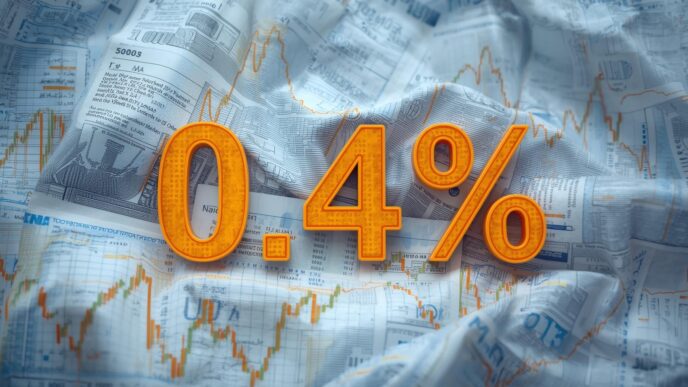
- Energy prices reversed from deflation to 0.4% inflation, signaling a new equilibrium
- CBS shifted to base year 2025=100, affecting contract indexing clauses
- Minimum wage rose to €14.71/hour (€2,549.73 monthly) from January 1, 2026
Statistics Netherlands (CBS) released January 2026 inflation data, and the headline looks clean: 2.4%, down from December’s 2.8%.
The lowest rate in months. Trajectory looks good. The European Central Bank’s 2% target is within reach.
But here’s what I’m actually tracking: the gap between what’s cooling and what’s still running hot.
If you run a small business in the Netherlands, the headline number isn’t the number hitting your P&L.
How is Dutch inflation calculated?
CBS measures inflation by comparing the Consumer Price Index (CPI) against the same month last year. January 2026 came in at 2.4% year-over-year. Month-over-month, prices dropped 0.7%.
That monthly drop includes seasonal distortions. Winter sales on clothing, post-holiday spending pullbacks. Normal. Not a structural shift.
What matters more is the category breakdown:
- Food, beverages, and tobacco: 2.0% (down from 3.1%)
- Energy: 0.4% (reversed from -0.4% deflation)
- Industrial goods (excluding energy): 0.6%
- Services: 3.9% (down slightly from 4.1%)
Services inflation is still running at nearly double the headline rate.
That’s the number that determines your cost structure if you employ people, rent commercial space, or buy professional services.
Bottom line: The 2.4% headline hides a 3.9% service inflation rate that directly affects your labor and operational costs.
Why does service inflation remain high?
Service prices are sticky. They’re driven by labor costs. Labor costs are driven by wage growth.
Dutch wages grew by more than 6% in 2024. Projections for 2025 sit at 5.2%. Well above inflation. That means real wage growth. Good for employees. Expensive for employers.
Collective labor agreements (CAO) are indexed to inflation. Minimum wage adjustments are automatic. From January 1, 2026, the statutory minimum wage rose to €14.71 per hour (€2,549.73 monthly for a 40-hour week), up 2.15% from €14.40.
You employ staff? You absorbed that increase whether your revenue grew or not.
Commercial rent follows a similar pattern. Rental costs for business premises are often indexed to CPI or sector-specific indices. Property rents rose 5.1% in 2025, up from 3.7% in 2024.
While your suppliers’ prices for physical goods stabilized, your fixed costs kept climbing. Wages, rent, professional services.
Bottom line: Wage growth above 5% and commercial rent increases of 5.1% keep service costs climbing while goods prices stabilize.
What happened to energy prices?
Energy prices flipped from slight deflation (-0.4% in December) to modest inflation (0.4% in January).
That’s a small move, but it signals something structural: European energy markets have absorbed the post-Ukraine crisis shock and settled into a new equilibrium.
Energy is no longer at the extreme levels of September 2022, when Dutch inflation hit 14.5%. But it’s not returning to pre-2022 pricing either.
Your business is energy-intensive? Manufacturing, logistics, food production? You’re operating in a permanently higher cost environment.
The control point here is contract strategy. Fixed-rate energy contracts lock in predictability. Variable contracts expose you to market swings. Dutch subsidy programs for renewable energy adoption (managed through RVO.nl) offset some of this. But they require upfront investment and administrative discipline.
Bottom line: Energy prices shifted from deflation to 0.4% inflation, marking a new permanent baseline above pre-2022 levels.
How does the CPI base year change affect your contracts?
CBS shifted the CPI base year from 2015=100 to 2025=100, effective January 2026.
Standard statistical practice. It updates the consumption basket to reflect how households spend money now. More on digital services, less on physical media. More on remote work infrastructure, less on commuting.
But it creates a practical problem for businesses: contract indexing clauses.
Many Dutch commercial leases, supplier agreements, and service contracts include automatic price adjustments tied to CPI. Your contract references “CPI as published by CBS”? You need to verify which base year applies and whether the formula still works as intended.
Older contracts written in 2020 or earlier may reference the 2015 base year. New contracts use 2025. The absolute index numbers are different, even though percentage changes align.
Renewing contracts in 2026? This is the year to clarify indexing language with your legal or financial advisor. Ambiguity here creates disputes later.
Bottom line: The shift from 2015=100 to 2025=100 base year creates contract ambiguity. Review and clarify all indexing clauses in 2026.
What is the difference between HICP and CPI?
The Harmonized Index of Consumer Prices (HICP) came in at 2.2% in January, compared to the CPI’s 2.4%.
The difference: owner-occupied housing costs. HICP excludes them. CPI includes them, calculated through rental price trends.
For expat entrepreneurs, this distinction matters when comparing Dutch inflation to other EU countries. HICP is the metric the European Central Bank uses for monetary policy decisions.
The eurozone HICP hit 2.0% in December 2025, meeting the ECB’s target for the first time since May. The Netherlands’ 2.2% HICP sits slightly above that average.
What this tells you: Dutch inflation is cooling, but not as fast as some neighboring countries. That influences ECB interest rate decisions, which in turn affect your borrowing costs if you have euro-denominated business loans or mortgages.
Bottom line: HICP excludes housing costs and drives ECB rate decisions. Netherlands’ 2.2% HICP sits above the eurozone’s 2.0% target.
How should you adjust your pricing strategy?
Here’s the operational translation:
Your input costs for goods are stabilizing. Industrial goods inflation at 0.6% means suppliers stopped passing through aggressive price increases. You sell physical products? Your margin pressure from the supply side is easing.
Your labor and service costs are still rising. At 3.9%, service inflation is structural. Your business model is labor-intensive or relies on outsourced professional services? Your cost base is growing faster than the headline inflation rate.
Your customers’ purchasing power is improving. Real wage growth means employees have more disposable income. Consumer confidence is recovering. But that doesn’t automatically translate into higher willingness to pay. It translates into higher expectations for value.
The pricing decision: do you absorb the service cost increases to stay competitive, or pass them through and risk losing price-sensitive customers?
There’s no universal answer. But the control point is the same: you need cost transparency.
You can’t break down your cost structure by category? Goods, labor, rent, energy, services? You can’t make an informed pricing decision. You’re guessing.
Bottom line: Cost transparency by category (goods, labor, rent, energy, services) is required for informed pricing decisions.
What are the 2026 changes to the 30% ruling?
If you employ international talent, the 30% ruling thresholds increased for 2026:
- Standard applicants: €48,013 minimum annual salary
- Employees under 30 with a master’s degree: €36,497
These thresholds adjust annually based on wage trends. Designed to keep the ruling accessible to “highly skilled migrants.” But the definition of “highly skilled” is tied to salary levels, not skills.
Structuring compensation packages to attract expat talent? These thresholds are hard floors. You can’t negotiate below them and maintain 30% ruling eligibility.
The ruling provides significant tax relief. 30% of gross salary is tax-free for up to five years. But the administrative requirements are strict. Missing documentation or incorrect filings result in retroactive tax assessments.
The control point: treat 30% ruling administration as a compliance process, not a paperwork task. Use a payroll provider familiar with the ruling’s requirements, or budget for a tax advisor who specializes in expat taxation.
Bottom line: Minimum salary thresholds rose to €48,013 (standard) and €36,497 (under 30 with master’s). Treat administration as compliance, not paperwork.
What inflation signals matter in Q1 2026?
CBS publishes final CPI data on the 12th of each month. The January final figures came out February 12. February preliminary data will drop early March.
I’m tracking three signals:
1. Whether service inflation breaks below 3.5%. If it does, that suggests wage pressures are moderating faster than expected. If it stays above 3.8%, labor costs remain a structural headwind.
2. Whether energy inflation stabilizes or accelerates. A move above 1% would indicate renewed energy market volatility. Stability near 0.5% suggests the new equilibrium is holding.
3. Whether the ECB cuts rates further. The eurozone hit the 2% HICP target in December. If inflation holds near target through Q1, the ECB has room to ease monetary policy. Lower rates reduce borrowing costs for businesses with variable-rate loans.
Bottom line: Watch service inflation (target: below 3.5%), energy stability (target: near 0.5%), and ECB rate decisions.
What controls reduce inflation exposure?
If you want to reduce exposure to inflation volatility, install these controls:
Cost structure transparency. Break your expenses into categories that align with CBS inflation data: goods, labor, rent, energy, services. Track each category’s inflation rate separately. This tells you where margin pressure is coming from.
Contract indexing review. Audit all contracts with automatic price adjustment clauses. Verify the index referenced (CPI, HICP, sector-specific), the base year, and the adjustment formula. Clarify ambiguities before renewal.
Energy contract strategy. If your energy costs exceed 10% of revenue, model the difference between fixed and variable contracts over 12–24 months. Factor in subsidy eligibility for renewable energy investments.
Wage planning aligned to CAO schedules. If your employees fall under a collective labor agreement, CAO wage increases are non-negotiable. Budget for them in advance. If you’re not covered by a CAO, benchmark your wage adjustments against sector norms to retain talent without overpaying.
Pricing discipline tied to cost drivers. Don’t adjust prices based on “market conditions.” Adjust prices based on measurable cost changes in your specific cost structure. Communicate those changes to customers with transparency.
The Bigger Pattern
Dutch inflation is cooling, but the cooling is uneven.
Goods are stable. Energy is settling. Services are still expensive.
The businesses that navigate this well are the ones that understand which inflation rate applies to their cost structure.
The headline number is useful for macroeconomic context. It’s not useful for operational decisions.
Your job is to translate CBS data into cost exposure, then build controls that reduce volatility.
Structure is cheaper than surprises.
Frequently Asked Questions
What is the current inflation rate in the Netherlands?
Dutch inflation stands at 2.4% as of January 2026, down from 2.8% in December 2025. This represents the year-over-year change in the Consumer Price Index measured by Statistics Netherlands (CBS).
Why is service inflation higher than goods inflation?
Service inflation runs at 3.9% because services are labor-intensive. Dutch wage growth exceeded 6% in 2024, and collective labor agreements index wages to inflation automatically. Commercial rent also follows CPI indexing, keeping service costs elevated.
How does the CPI base year change affect my business contracts?
CBS shifted from base year 2015=100 to 2025=100 in January 2026. Contracts with CPI indexing clauses may reference different base years, creating formula ambiguities. Review all contracts with automatic price adjustments and clarify which base year applies.
What is the difference between CPI and HICP?
CPI includes owner-occupied housing costs calculated through rental price trends. HICP excludes housing costs. The European Central Bank uses HICP for monetary policy decisions. Netherlands’ HICP is 2.2%, while CPI is 2.4%.
When does CBS publish inflation data?
CBS publishes final CPI data on the 12th of each month. Preliminary estimates appear earlier in the month. Data includes year-over-year comparisons, month-over-month changes, and category breakdowns.
What are the 2026 minimum wage requirements in the Netherlands?
The statutory minimum wage rose to €14.71 per hour (€2,549.73 monthly for 40 hours) effective January 1, 2026. This represents a 2.15% increase from €14.40 per hour in 2025.
How do I qualify for the 30% ruling in 2026?
Standard applicants need a minimum annual salary of €48,013. Employees under 30 with a master’s degree need €36,497. These thresholds adjust annually based on wage trends. Administrative requirements are strict, with retroactive tax assessments for incorrect filings.
Should I use fixed or variable energy contracts?
Fixed-rate contracts lock in predictability but may cost more upfront. Variable contracts expose you to market swings but offer flexibility. If energy costs exceed 10% of revenue, model both scenarios over 12 to 24 months and factor in RVO.nl subsidy eligibility for renewable investments.
Key Takeaways
- Dutch inflation dropped to 2.4% in January 2026, but service inflation remains at 3.9%, nearly double the headline rate.
- Labor costs drive service inflation. Minimum wage rose to €14.71/hour, and wage growth exceeded 6% in 2024.
- Energy prices reversed from deflation to 0.4% inflation, signaling a new permanent baseline above pre-2022 levels.
- CBS shifted CPI base year from 2015=100 to 2025=100. Review all contracts with indexing clauses to avoid disputes.
- Cost structure transparency by category (goods, labor, rent, energy, services) is required for informed pricing decisions.
- Track three Q1 2026 signals: service inflation below 3.5%, energy stability near 0.5%, and ECB rate decisions.
- Install controls: cost transparency, contract indexing review, energy strategy, CAO-aligned wage planning, and pricing discipline tied to measurable cost drivers.