





The ECB raised its 2026 inflation forecast to 2.6% because of energy price spikes from the Middle East conflict.
Oil hit €108 per barrel, gas jumped 50-60%, and Qatar lost 17% of its LNG capacity for five years.
Small businesses in the Netherlands are now facing stagflation as costs rise and demand falls, squeezing margins.
You have a narrow window to prepare before possible rate hikes.
Secure enough cash to cover two months of expenses, identify and track energy-sensitive costs, test how much prices can increase without losing customers, and create clear decision-making processes for rapid response.
Core Answer:
- ECB inflation forecast jumped from 1.9% to 2.6% in 2026 due to energy supply shocks from the Middle East conflict
- Oil prices exceeded €108 per barrel, natural gas spiked by 50-60%, and Qatar’s damaged LNG facility lost 17% of its capacity for up to five years.
- Small businesses risk squeezed margins as costs rise and demand falls—a typical stagflation challenge.
- ECB will not intervene immediately, creating a preparation window before possible rate hikes materialize
- Action priorities: build a two-month cash buffer, map energy-sensitive costs, test pricing elasticity, and document decision frameworks
The European Central Bank revised its 2026 inflation forecast to 2.6%, up from 1.9% in December. The driver is not domestic policy or wage pressure. Energy price volatility caused by escalating Middle East conflict, especially involving Iran, is responsible.
For expat entrepreneurs running micro and small businesses in the Netherlands, this is the second major supply shock in four years. The first was Russia-Ukraine in 2022, which pushed eurozone inflation to 10%. The second is unfolding now, and it carries a specific risk profile you need to understand before it shows up in your cost structure.
This is not about geopolitics. It is about how external shocks translate into margin pressure, cash flow distortion, and decision errors under stress.
How Did the ECB Inflation Forecast Change?
The ECB’s baseline scenario assumes market conditions from March 11, 2026. Oil prices had already climbed above €108 per barrel (converted from Brent crude at $115). Natural gas prices spiked 50-60% from pre-conflict levels, moving from around €30-32 per megawatt-hour to €50 per MWh as of mid-March.
Then Israeli strikes hit Iran’s South Pars gasfield, and Iranian missiles damaged Qatar’s Ras Laffan Industrial City, the world’s largest LNG export facility. QatarEnergy CEO Saad al-Kaabi stated that the damage wiped out approximately 17% of Qatar’s LNG export capacity for up to 5 years, resulting in an estimated €18.5 billion in lost annual revenue.
The Strait of Hormuz handles about 20% of global oil and gas flows. Four vessels have been hit in Gulf waters since the conflict began. Shipping companies and insurers are avoiding the passage.
The result is a dual supply shock: oil and liquefied natural gas are disrupted simultaneously.
The 2022 crisis was driven by the loss of Russian pipeline gas to Europe. Now, oil price pressure is combined with LNG supply losses. Infrastructure damage will take years to repair.
Bottom line: This is a dual supply shock (oil and LNG together) with infrastructure damage measured in years, not months. The 2022 crisis was the pipeline gas from Russia. This compounds oil and LNG simultaneously.
What Is the ECB Saying About Rate Hikes?
ECB President Christine Lagarde said the Governing Council is “not pre-committing to a particular rate path” and will remain “particularly attentive” to developments in commodity markets, supply bottlenecks, and inflation expectations.
Translation: the central bank is watching, but it will not react immediately. The threshold for emergency monetary intervention is high.
This creates a narrow window where firms can prepare before possible rate hikes materialize. The signal is clear: adapt now while financing costs remain relatively stable.
The ECB presented alternative scenarios past the baseline. In an adverse scenario in which energy supply disruptions persist through year-end, inflation exceeds 4% in 2026 and approaches 5% in 2027. Oil and gas prices in this scenario reach nearly €141 per barrel and €110 per MWh, respectively, in Q2 2026.
Barclays economists noted the ECB would raise rates if Brent crude settled around €95 per barrel and natural gas at €65 per megawatt-hour, warning that “headline and core inflation could increase to a point where the overshooting from the ECB’s target in the medium term would become large and persistent.”
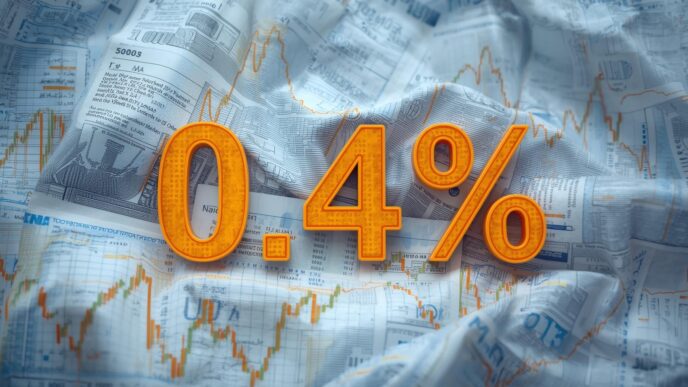
The math is simple. According to International Monetary Fund analysis, every 10% rise in oil prices adds 0.4% to inflation and cuts 0.15% from economic growth.
Oil’s already above €108. If oil reaches €141 in the adverse scenario, we’re looking at a 30% increase from current levels. Do the math: an additional 1.2 percentage points of inflation and 0.45 percentage points of growth reduction.
Bottom line: The ECB is watching but will not act immediately. You have a narrow window of opportunity before rate hikes materialize. If oil reaches €141, inflation rises 1.2 percentage points and growth drops 0.45 percentage points.
Why Are Small Businesses More Vulnerable?
Large corporations have pricing power and diverse revenue streams. They can absorb cost increases or pass them to customers with minimal loss.
Micro and small businesses with fewer than 50 employees operate on thin margins and face rising costs amid falling demand.
Stagflation means rising costs collide with reduced revenues, worsening profitability.
When oil reaches €108, and gas prices spike, people spend more on energy. They reduce spending on non-essentials. This suppresses demand and adds to inflationary pressure.
You can’t raise prices enough to offset cost increases without driving away customers. You can’t absorb costs without eroding viability.
Diesel prices in the Netherlands have exceeded €2 per liter. The EU weighted average has surged 20% since the war began. For businesses dependent on logistics, delivery, or transportation, this isn’t a minor variable. This is a structural cost shift.
According to the MetLife & U.S. Chamber of Commerce Small Business Index, a record 58% of small business owners cite inflation as a top challenge in Q1 2025. Concern about revenue increased 10 percentage points to 35%, marking the highest level since tracking began.
Two in three small businesses (66%) say they are comfortable with their cash flow, down six points from last quarter (72%).
Cash flow stability is decreasing as costs rise, increasing business fragility.
Bottom line: Small businesses face stagflation (rising costs, falling demand) with thin margins. Cash flow comfort dropped from 72% to 66%. Meanwhile, 58% cite inflation as their top challenge.
What Does the Five-Year Repair Timeline Mean?
Short-term supply disruptions pass. You weather them through reserves and alternative sourcing. A five-year repair timeline for Qatar’s Ras Laffan facility forces structural adaptation.
For the Netherlands (already transitioning away from Groningen gas production), this accelerates the immediacy of energy independence strategies and renewable infrastructure investment.
LNG deliveries to Italy and Belgium are suspended, but not to the Netherlands. This elicits questions about Dutch energy supply resilience and diversification. The Netherlands’ position as a European gas trading hub through the TTF (Title Transfer Facility) provides some buffering capacity, but reliance on interconnected European infrastructure means that disruptions anywhere in the network can trigger chain reactions.
Ed Cox, ICIS market intelligence editor, noted Europe paid high energy and heating costs in 2022 after losing Russian gas. This damaged businesses in Europe and Asia and hurt consumers. It shows Europe depends on imported LNG.
This historical parallel creates institutional memory of vulnerability. The comparison to 2022 reveals a pattern: major geopolitical shocks now occur with increasing frequency, and each finds Europe’s energy infrastructure vulnerable.
Energy cost volatility is now a permanent planning variable, not an exceptional circumstance.
Bottom line: Short-term disruptions pass. Five-year infrastructure damage forces structural adaptation. Treat energy cost volatility as a permanent planning variable.
What Can You Control Right Now?
You can’t control oil prices. You can’t control central bank policy. You can’t control geopolitical conflict.
You control your cash position, your cost structure, and your decision discipline.
Cash position:
- Run a 90-day cash flow projection assuming 15-20% higher energy and logistics costs.
- Identify the threshold where margin compression becomes unviable.
- Build a reserve buffer equal to two months of operating expenses if you don’t already have one.
Cost structure:
- Map every cost line sensitive to energy prices: fuel, heating, logistics, and supplier inputs.
- Identify fixed versus variable costs and where you have leverage in negotiations.
- Lock in energy contracts or supplier agreements where you still have room before prices rise further.
Pricing discipline:
- Test price elasticity with small increases before implementing broad changes
- Communicate cost pressures transparently to customers before raising prices.
- Shift the product or service mix toward higher-margin offerings with less elastic demand.
Decision discipline:
- Delay non-essential capital expenditures until the energy price trajectory stabilizes.
- Avoid long-term commitments that assume stable input costs.
- Document scenario planning so you have decision frameworks ready if conditions deteriorate.
Bottom line: You control three things: cash position, cost structure, and decision discipline. Map your exposure, build reserves, test pricing, and document frameworks before conditions worsen.
How Do Inflation Expectations Become Self-Fulfilling?
The ECB’s focus on preventing inflation expectations from becoming “self-fulfilling” points to a psychological dimension of economic policy.
When businesses and workers expect sustained inflation, they adjust their behavior preemptively. Retailers raise prices faster. Employees demand larger wage increases. Lenders build higher inflation premiums into interest rates.
For entrepreneurs, this means inflation becomes partially a confidence game where collective expectations matter as much as underlying fundamentals.
If you believe prices will keep rising, you raise prices now. If your suppliers believe the same, they raise prices on you. If your employees believe the same, they demand higher wages. The expectation creates the reality.
This is why central banks react aggressively to inflation psychology, even when the initial trigger is an external supply shock rather than domestic demand pressure.
You need to separate the signal from the noise. The real question is not whether inflation will rise in the short term—it will. The question is whether it becomes embedded in expectations and behavior patterns.
Watch for these signals in your own business environment:
- Suppliers implementing automatic price escalation clauses in contracts
- Customers are accelerating purchases to avoid future price increases.
- Employees requesting cost-of-living adjustments outside normal review cycles
- Banks are tightening credit terms or increasing interest rate spreads.
These behaviors indicate inflation expectations are shifting from temporary to persistent.
Bottom line: When everyone expects inflation, behavior changes create the reality. Watch for escalation clauses, accelerated purchases, wage adjustment requests, and credit tightening. These signal expectations are shifting from temporary to persistent.
What Clarity Arrives in April?
The ECB stated “a clearer picture is expected to emerge as soon as next month” regarding the conflict’s economic impact.
Decision-making timelines have compressed. Businesses operating on quarterly or annual planning cycles face a macroeconomic environment that shifts month to month.
You’ll need more agile financial planning and scenario modeling than traditional business frameworks accommodate.
By mid-April, you’ll have better visibility on:
- Whether oil prices stabilize or continue climbing toward the €141 adverse scenario
- Whether natural gas supply disruptions prove temporary or structural
- Whether the ECB signals rate hikes or maintains its careful stance
- Whether European governments implement emergency energy support measures
Use this window to stress-test your assumptions. Run cases where energy costs rise by another 20%. Run situations where customer demand drops 15%. Run cases where both happen at the same time.
The businesses that survive stagflation are not the ones with perfect forecasts. They are the ones with decision systems that work under multiple scenarios.
Bottom line: By mid-April, you’ll know if oil stabilizes or climbs to €141, if gas disruptions prove temporary or structural, and if rate hikes are coming. Use this window to stress-test scenarios in which costs rise by 20%, demand drops by 15%, or both occur simultaneously.
What Does Strong Structure Look Like Under Pressure?
Governance is what remains when stress removes politeness.
When margins compress and cash tightens, you’ll face pressure to:
- Delay supplier payments to conserve cash
- Cut corners on quality to reduce costs.
- Avoid difficult conversations with employees about wage constraints.
- Ignore early warning signals because addressing them seems overwhelming.
These are the moments where weak structure collapses.
Strong structure means:
- You have documented decision authority for expense reduction actions before you need them.
- You have forthcoming communication protocols with employees about business conditions.
- You have supplier relationships based on honesty rather than optimistic promises.
- You have financial controls that prevent panic-driven decisions.
The system doesn’t care about your intentions. It measures proof, responsibility, and documented decisions.
If you can’t prove why you made a decision six months from now, you don’t have governance. You have memory.
Bottom line: Governance is what remains when stress removes politeness. Weak structure collapses under margin pressure. Strong structure means documented authority, transparent protocols, honest relationships, and financial controls that prevent panic decisions.
What Is the Real Risk?
Energy shocks are external. Your response is internal.
Most businesses don’t fail from the shock itself. They fail because of delayed recognition, denial, or panic-driven decisions made without structure.
The ECB’s warning gives you advance notice. Use it.
Build the cash buffer. Map the cost exposure. Test the pricing flexibility. Document the decision framework.
Structure is cheaper than recovery.
Frequently Asked Questions
What caused the ECB to raise its inflation forecast?
The Middle East conflict involving Iran disrupted both oil and LNG supplies. Israeli strikes hit Iran’s South Pars gasfield. Iranian missiles damaged Qatar’s Ras Laffan facility, knocking out 17% of its LNG capacity for 5 years. The Strait of Hormuz (20% of global oil and gas flows) is effectively closed to shipping.
How high could inflation go in 2026?
The ECB baseline forecast is 2.6% inflation in 2026. In an adverse scenario where the energy disruptions persist through year-end, inflation exceeds 4% in 2026 and approaches 5% in 2027. This assumes oil reaching €141 per barrel and gas hitting €110 per MWh.
When will the ECB raise interest rates?
Barclays economists estimate the ECB would raise rates if Brent crude settles around €95 per barrel and natural gas reaches €65 per megawatt-hour. The central bank is not pre-committing to a rate path and will stay attentive to commodity markets. A clearer picture emerges in April.
Why are small businesses more vulnerable than large corporations?
Large corporations have pricing power and varied revenue streams. They absorb cost increases or pass them to customers with minimal volume loss. Small businesses (fewer than 50 employees) operate on thin margins and face simultaneous cost increases and demand reduction. This is stagflation: rising expenses meet falling revenue.
What is the biggest threat to cash flow right now?
Energy-sensitive costs are rising by 15-20%, while customer demand is dropping as households redirect spending from discretionary purchases toward essential energy costs. Diesel already exceeds €2 per liter in the Netherlands (20% surge). For logistics-dependent businesses, this is a structural cost shift.
How long will Qatar’s LNG capacity be reduced?
QatarEnergy’s CEO stated that the damage eliminates approximately 17% of export capacity for up to 5 years. This is not a short-term disruption. It forces structural adaptation. Europe already lost Russian pipeline gas in 2022. Now, LNG supply has been constrained for years.
What does inflation becoming self-fulfilling mean?
When businesses and workers expect sustained inflation, they adjust their behavior preemptively. Retailers raise prices faster. Employees demand larger wage increases. Lenders build higher inflation premiums into rates. The expectation creates the reality. Central banks react aggressively to prevent this psychology from embedding.
What should I do this week to prepare?
Run a 90-day cash flow projection assuming 15-20% higher energy costs. Identify where margin compression turns unsustainable. Build a two-month operating expense reserve if you don’t have one. Map every cost sensitive to energy prices. Test small price increases before implementing broad changes.
Key Takeaways
- The ECB raised its 2026 inflation forecast from 1.9% to 2.6% because the Middle East conflict disrupted oil and LNG supplies simultaneously (dual supply shock)
- Qatar lost 17% of its LNG capacity for five years, oil hit €108 per barrel, gas spiked 50-60%, and the Strait of Hormuz is effectively closed.
- Small businesses face asymmetric risk: thin margins meet stagflation (rising costs and falling demand together). The ECB will not intervene immediately, creating a narrow preparation window before possible rate hikes materialize in April.pril
- IMF analysis: every 10% oil price rise adds 0.4% inflation and cuts 0.15% growth. At €141 oil, that is 1.2% more inflation and 0.45% less growth.
- Cash flow comfort among small businesses dropped from 72% to 66%, while 58% cite inflation as their top challenge.
- Energy cost volatility is now a permanent planning variable because geopolitical shocks are occurring with increasing frequency and leaving Europe’s infrastructure vulnerable.