


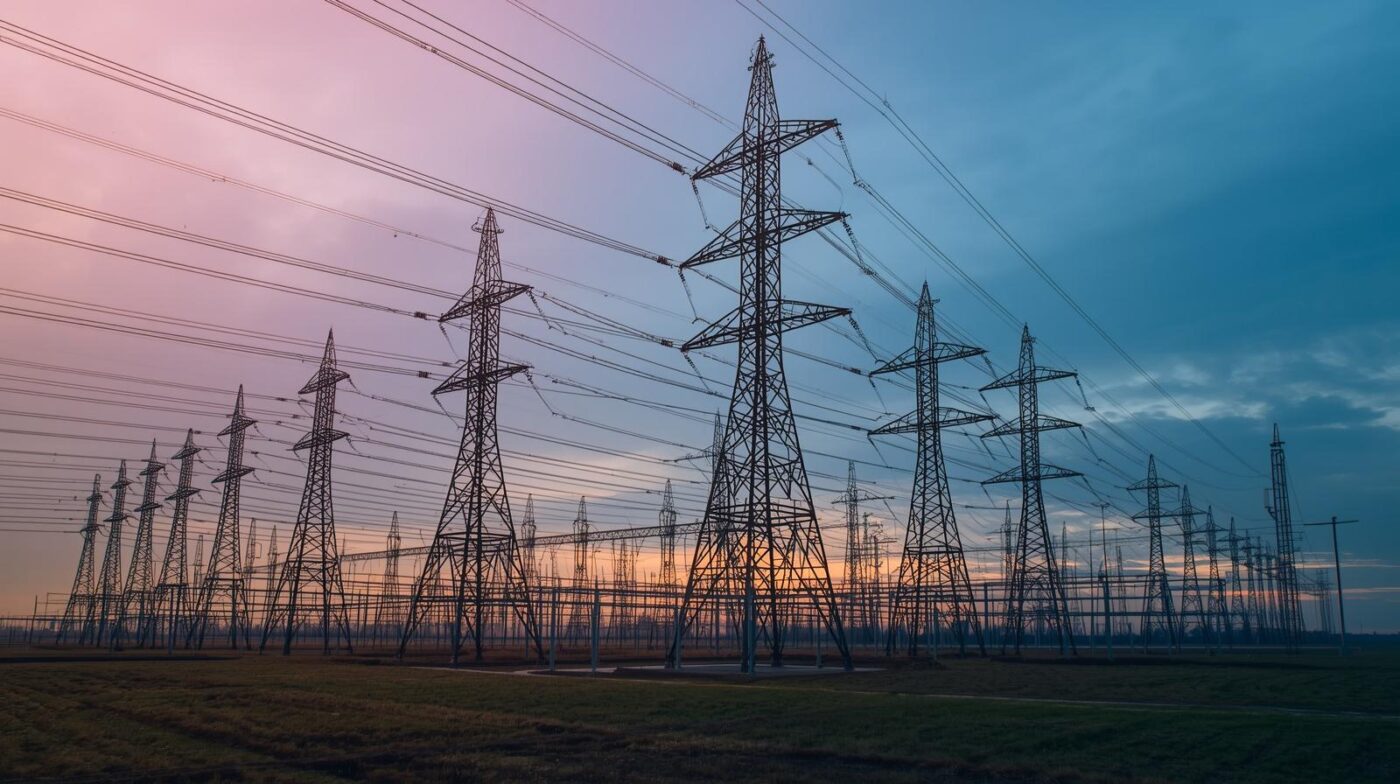

The Netherlands produced 132 billion kWh of electricity in 2025, with renewables hitting 49% of total production.
This creates three direct impacts for expat entrepreneurs: volatile energy pricing tied to weather patterns, 12- to 24-month delays in grid connection, and new revenue opportunities in distributed generation.
Fossil fuel production increased by 14% because energy transitions involve stop-and-starts.
Your energy strategy needs updating.
Core facts:
- Solar production jumped 17% in 2025, but installed capacity grew only 4%. Weather drives output more than infrastructure.
- The Netherlands experienced 585 hours of negative electricity prices (7% of the year) when renewable generation exceeded demand.
- More than 12,000 companies are waiting for grid connections. Plan facility expansions 12 to 24 months ahead.
- Battery attachment rates for households reached 22% in 2024, nearly triple the 2023 level, as net metering ends in 2027.
- SDE++ subsidy budget for 2026 is €8 billion, supporting solar, wind, heat pumps, and energy storage projects.
The Centraal Bureau voor de Statistiek (CBS) confirmed what the grid operators already knew: 2025 was the year Dutch electricity production broke every record. 132 billion kWh generated. 30 billion kWh exported. Renewable sources accounted for more than 49% of total production for the second year in a row.
For expat entrepreneurs running micro and small businesses in the Netherlands, this looks like progress.
It’s not.
The energy transition creates opportunity and volatility, grid constraints, and managerial complexity that most founders miss. The same forces pushing renewable energy past fossil fuels are now changing how you power your business, price your contracts, and plan your infrastructure investments.
The 2025 data shows the real operating environment and what this means for your business decisions.
How Did the Netherlands Become a Regional Energy Hub?
The Netherlands generated more electricity and fundamentally changed where power is generated and where it goes.
Over the past decade, domestic electricity production increased 25%. Most coverage misses this part: foreign demand drove the growth, not Dutch consumption. The Netherlands evolved from net importer to regional energy hub, compensating for production shortfalls in Germany, Belgium, Austria, and Switzerland.
Exports to Germany jumped nearly 50% in 2025. Belgian imports rose 25%. Why? German offshore wind underperformed. Austrian and Swiss hydropower suffered from low water levels. Belgian nuclear plants reduced output.
The Netherlands filled the gap.
Small European nations build strategic value by becoming a reliable node in a fragile network. Reliability comes with exposure. When your neighbors need more power, your domestic market competes with export demand. Pricing, grid access, and investment priorities all shift.
Key insight: Domestic electricity production increased 25% over ten years, driven by foreign demand rather than Dutch consumption. The Netherlands fills production gaps for Germany, Belgium, Austria, and Switzerland. Strategic value comes with exposure to export-driven pricing pressure.
Solar Surged Because of Weather, Not Just Capacity
Solar energy production jumped 17% year-over-year. Installed capacity grew only 4%.
The difference? 2025 was sunny.
Weather-dependent renewable energy creates production volatility with no connection to infrastructure investment. Onshore wind production decreased in 2025 despite steady capacity because wind conditions were less favorable.
For business owners, this means unpredictable energy availability and price fluctuations. The Netherlands experienced 585 hours of negative electricity prices in 2025, a 30% increase from 2024. Seven percent of the year when renewable generation exceeded demand.
Bottom line: Weather determines renewable output more than installed capacity. Unpredictable energy availability and price swings follow. Track these patterns or lose savings opportunities.
Fossil Fuels Increased Despite the Long-Term Decline
Fossil fuel electricity production increased 14% in 2025. Natural gas rose 11%. Coal surged 25%.
This wasn’t a policy change. It was economics and grid reality.
Low coal and natural gas prices in Q1 2025 made conventional generation profitable again. Gas- and coal-fired plants compensated for lower renewable output during unfavorable weather. The grid needs dispatchable power, generation you turn on when the sun stops shining, and the wind stops blowing.
Over the longer term, coal-based electricity production stays 70% below 2015 levels. The trend is clear. Energy transitions move through stops and starts. Conventional sources remain essential for grid stability during the transition period.
Reality check: Energy transitions move through stops and starts. Conventional sources remain essential for grid stability during transition periods. Business strategies assuming a smooth fossil fuel phase-out fail.
What Are the Three Operational Facts for Your Business?
Most founders treat energy as a fixed cost. Not anymore.
The 2025 data shows three operational facts you need to build into your planning.
Energy Costs Will Become More Volatile
As renewable energy dominates the grid, electricity pricing becomes weather-dependent. Sunny, windy periods create oversupply and price crashes. Calm, cloudy periods trigger scarcity and price spikes.
Fixed-rate contracts smooth this volatility, at a premium. Flexible contracts offer lower average costs but need active management.
The control point: understand your consumption profile and align it with the contract structure. If your business shifts energy-intensive operations to low-price periods, flexible contracts work. If you need consistent budgeting, fixed rates are safer, even at higher costs.
The Autoriteit Consument & Markt (ACM) regulates competition in the energy market. Check their guidance on contract terms before signing anything.
Action item: Match your energy consumption profile to the contract structure. Flexible operations work with variable contracts. Consistent budgeting needs fixed rates.
Grid Connection Delays Are Getting Worse
More than 12,000 companies are waiting for new or expanded grid connections in 2025. Subsidy budgets for renewable electricity production have been halved due to grid limitations.
The hidden constraint on growth: the grid absorbs new capacity too slowly. In 2025, 16 PJ of renewable electricity was curtailed (switched off) because of insufficient storage capacity. Up from 12 PJ in 2024.
If you’re planning facility expansion, manufacturing operations, or energy-intensive services, grid capacity is a critical path item. Contact your regional grid operator early. Delays of 12 to 24 months are becoming standard.
The workaround: behind-the-meter solutions. On-site solar with battery storage bypasses grid connection queues. You generate, store, and consume without waiting for grid upgrades.
Workaround: Behind-the-meter solutions (on-site solar plus battery storage) bypass grid connection queues.
Distributed Generation Creates New Business Models
By 2024, nearly 3 million residential properties in the Netherlands had rooftop solar panels. Solar energy production increased more than twentyfold over the past decade.
The economics shifted.
The net-metering scheme that allowed households to offset consumption against production ends entirely in 2027. This extends residential payback periods from 7 years to roughly 11 years without additional measures.
The response? Household battery attachment rates reached 22% in 2024—nearly triple the 2023 level.
This opens an opportunity for expat entrepreneurs in energy storage solutions, installation services, and peer-to-peer energy trading platforms. As prosumers seek alternatives to maximize solar investment returns, new business models are emerging around local energy markets and grid flexibility services.
The Dutch government grants substantial support through the SDE++ subsidy scheme. The 2026 provisional budget is €8 billion, supporting renewable energy projects, CO₂ reduction, and innovative technologies, including solar panels, wind energy, heat pumps, and energy storage systems.
Check eligibility through the Netherlands Enterprise Agency (RVO). The Netherlands ranks second among European countries for the number of renewable energy subsidy schemes—73 total programs.
Opportunity signal: Battery attachment rates nearly tripled in one year. New business models form around energy storage, installation services, and peer-to-peer energy trading. Check SDE++ eligibility through RVO.
Which Energy Strategy Decisions Matter Now?
Energy strategy used to be simple: get the cheapest contract and forget about the details. This approach now creates exposure.
Founders need to evaluate:
1. Energy Contract Structure
Fixed-rate contracts provide budget certainty but lock you into higher average costs. You pay a premium to avoid volatility risk.
Variable-rate contracts expose you to market pricing. During periods of renewable oversupply, rates drop significantly, or even go negative. You need operational flexibility to take advantage of low-price periods.
Hybrid contracts combine fixed baseline pricing with variable components. You get partial protection with some upside potential.
The decision depends on your consumption profile, operational responsiveness, and risk acceptance. If energy accounts for less than 5% of operating costs, fixed rates offer simplicity. If energy is a major cost driver, actively managing variable contracts yields substantial savings.
2. On-Site Generation and Storage
Solar panel installations for commercial properties remain economically viable even after the end of net metering when you add battery storage.
The math changed. Without net metering, you need to either consume the electricity you generate directly or store the excess for later use. Exporting surplus to the grid generates minimal revenue.
Battery systems convert solar from a grid-dependent investment to a self-sufficient one. You generate during the day, store excess, and consume during evening peak hours when grid electricity costs most.
The payback calculation depends on your consumption pattern, available roof space, and local grid tariffs. For businesses with daytime operations and evening administrative work, combined solar-plus-storage systems make financial sense.
Check SDE++ eligibility for both solar and storage components. Installation costs have decreased, and subsidy support reduces payback periods to 6-8 years.
3. Grid Flexibility Services
The grid needs flexibility more than additional generation capacity. Opportunity follows.
If your business has flexible energy consumption (e.g., cold storage, data processing, or manufacturing with adjustable schedules), you can monetize that flexibility. Grid operators and energy companies pay for demand response services that reduce consumption during peak periods or increase consumption during oversupply periods.
Virtual power plant platforms aggregate small, flexible loads into grid-scale resources. Your business participates by allowing automated load adjustments in exchange for compensation.
Companies with 50 kW or more of flexible load access these markets. The revenue won’t change your business, but it offsets 5-15% of your annual energy costs with minimal operational impact.
Revenue potential: Companies with 50 kW or more of flexible load can offset 5-15% of annual energy costs through demand response services. Virtual power plant platforms make this accessible to small businesses.
What Founders Commonly Miss
Most expat entrepreneurs treat energy as infrastructure, something operational teams handle. The 2025 data shows why this assumption gets expensive.
Energy is a strategic input with price volatility, availability constraints, and regulatory transformations. Treating energy as a fixed cost creates blind spots.
The founders who adapt fastest will:
Track energy market dynamics the same way you track supplier pricing or customer acquisition costs. Energy isn’t set-and-forget anymore.
Evaluate on-site generation based on updated economics. The end of net-metering changed the calculation. Battery storage changed it again. Run the numbers with current assumptions.
Plan facility expansions with grid capacity as a major constraint. Verify capacity before signing leases or making capital commitments.
Look at energy flexibility as a revenue source, not a cost line item. If your operations allow load shifting, the flexibility has market value.
Monitor subsidy programs through RVO and the Belastingdienst. The Netherlands provides considerable support for energy efficiency, renewable generation, and storage systems. Most founders miss available funding because they don’t track program updates.
Blind spot alert: Treating energy as infrastructure creates exposure. Founders who adapt treat energy as a strategic input with market forces, subsidy opportunities, and income prospects.
The Uncomfortable Reality
The Netherlands achieved record renewable energy production in 2025. That’s real progress.
But progress creates complexity. Weather-dependent generation means price volatility. Grid constraints mean connection delays. Policy modifications mean business model disruption.
The energy transition moves through structural breaks, not smooth curves. Each break creates opportunity and exposure.
Founders who understand the mechanisms (how renewable oversupply creates negative prices, how grid congestion blocks expansion, how subsidy schemes enable new business models) build a strategy grounded in reality.
Founders who assume energy keeps working the same way face expensive surprises.
The system measures consumption, tracks capacity, and enforces constraints.
Structure your energy strategy before the next constraint forces you to.
Frequently Asked Questions
What caused the 585 hours of negative electricity prices in 2025?
Renewable generation exceeded demand during sunny and windy periods. When solar and wind produce more electricity than the grid can consume or store, prices drop below zero. This happened 7% of the year in 2025, a 30% increase from 2024.
Why are grid connection delays now 12 to 24 months?
The grid absorbs new capacity too slowly. More than 12,000 companies are waiting for connections. In 2025, 16 PJ of renewable electricity was curtailed (switched off) because of insufficient storage capacity. Grid network upgrades lag behind growth in generation capacity.
Does the end of net-metering in 2027 kill solar economics for businesses?
No, but the math changed. Without net-metering, exporting surplus to the grid generates minimal revenue. Solar is feasible if you add battery storage to consume the generated electricity directly. Payback periods shift from 7 years to 11 years without storage, but drop to 6-8 years with storage and SDE++ subsidies.
How do I know if my business qualifies for SDE++ subsidies?
Check eligibility through the Netherlands Enterprise Agency (RVO). The 2026 budget is €8 billion, supporting renewable energy projects, CO₂ reduction, solar panels, wind energy, heat pumps, and energy storage systems. The Netherlands offers 73 renewable energy subsidy schemes in total.
Should I choose a fixed-rate or variable-rate energy contract?
It depends on your consumption profile and operational responsiveness. Fixed-rate contracts provide budget certainty but cost more. Variable-rate contracts expose you to market pricing, which creates savings opportunities during renewable oversupply but requires flexibility to shift energy-intensive operations to low-price periods. Hybrid contracts offer partial protection with some upside.
What are virtual power plant platforms and how do they work?
Virtual power plant platforms aggregate small, flexible loads into grid-scale resources. Your business participates by allowing automated load adjustments (reducing consumption during peak periods or increasing during oversupply). Grid operators pay for this pliability. Companies with 50 kW or more of flexible load qualify.
Why did fossil fuel electricity production increase 14% in 2025?
Low coal and natural gas prices in Q1 2025 made conventional generation profitable. Gas and coal plants compensated for lower renewable output during unfavorable weather. The grid needs dispatchable power (generation you turn on when renewables underperform). Energy transitions move through stops and starts. Fossil fuels remain essential for grid stability throughout the course of transition.
What is behind-the-meter solar, and why does it bypass grid queues?
Behind-the-meter means on-site solar with battery storage. You generate, store, and consume electricity without connecting to the grid for export. This bypasses grid connection queues because you’re not adding load or generation to the grid. You become energy independent within your facility.
Key Takeaways
- Weather drives renewable output more than infrastructure. Solar production jumped 17% in 2025, but capacity grew only 4%. This creates unpredictable pricing.
- Grid connection delays are 12 to 24 months. Plan facility expansions early. Behind-the-meter solar plus storage bypasses queues entirely.
- Energy is a strategic input, not a fixed cost. Match contract structure to your consumption profile and operational versatility.
- Net-metering ends in 2027. Solar remains viable with battery storage. Check SDE++ subsidies through RVO to reduce payback periods to 6-8 years.
- Flexible energy consumption has market value. Companies with 50 kW or more of flexible load offset 5-15% of annual energy costs through demand response services.
- The Netherlands offers 73 renewable energy subsidy schemes with an €8 billion SDE++ budget for 2026. Most founders don’t access available funding because they don’t track programs.
- Energy transitions move through stops and starts. Fossil fuel production increased 14% in 2025 because conventional sources remain essential for grid dependability during transition periods.