




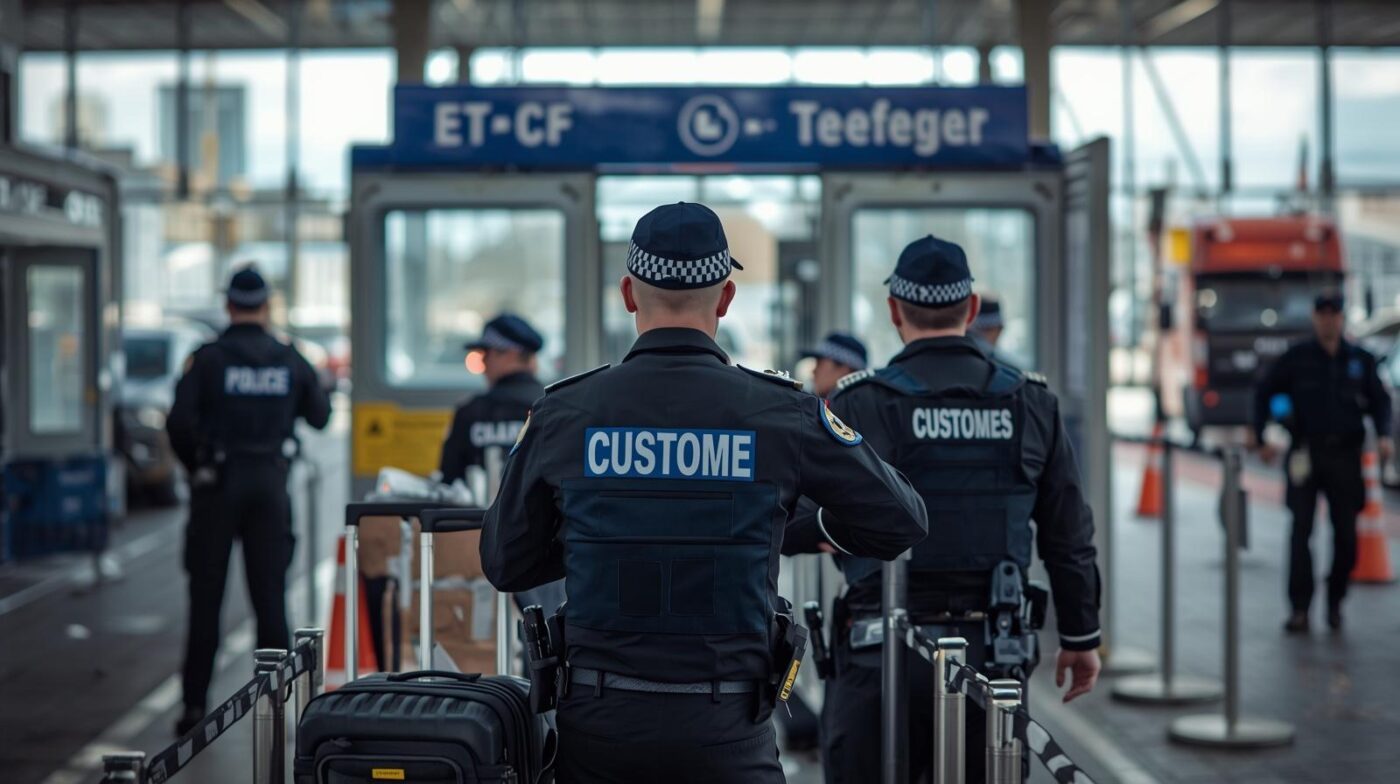

The EU approved the biggest customs reform since 1968. Starting in November 2026, every parcel from outside the EU will face mandatory handling fees.
E-commerce platforms turn into legal importers. Non-EU sellers need EU representation.
Bulk warehousing beats dropshipping.
Penalties are calculated as 6% of the annual import value.
You have seven months to adapt before new costs take effect.
What You Need to Know Now
- Mandatory handling fees will apply to all parcels from non-EU countries to EU consumers starting on November 1, 2026.
- Internet retailers and sellers share legal responsibility as importers under EU law.
- Non-EU sellers must establish an EU presence or use an Authorized Economic Operator representative.
- EU warehouse operations get lower fees than direct shipments from outside the EU.
- Penalties range from 1% to 6% of the total annual import value for repeated violations.
The EU approved its biggest customs overhaul since 1968. For e-commerce businesses in the Netherlands that import from outside the EU, this reform significantly alters your cost structure, legal liability, and competitive position. To understand the impact, let’s look at the key changes.
Most founders learn of regulatory changes only after consequences arise.
The reform targets a structural problem: 5.8 billion low-value parcels entered the EU last year. Volume doubled since 2022. The system couldn’t process it. Customs authorities couldn’t enforce it. Product safety standards were ignored in more than half of the inspected shipments.
In response, the EU will shift responsibility upstream, increase penalties for non-compliance, and reward disciplined compliance structures.
To navigate these reforms, start by understanding the new costs: What is the Mandatory Handling Fee?
Every parcel entering the EU from a non-EU country and sent directly to consumers is subject to a mandatory handling fee. The European Commission will set the amount before November 1, 2026. The fee covers administrative processing costs.
The entity that pays customs charges must also pay this fee. You cannot list it as a separate fee for consumers.
This changes your pricing model. If you source products from China, the UK, or other non-EU territories, you’ve got a new fixed cost per shipment. Your margin calculations need to account for this before November.
The fee applies per item based on tariff classification. A parcel containing products from three different tariff categories means three separate fees, not one. Mixed-shipment orders are more expensive than single-product orders.
What to do: Review your current product mix and shipping patterns. Calculate exposure based on average items per parcel and tariff diversity. Adjust pricing or consolidate product categories to reduce per-shipment costs.
Critical insight: The mandatory handling fee adds a fixed cost per tariff category to every non-EU import. Mixed-product shipments pay multiple fees. Adjust your pricing model and consolidate product categories before November 2026.
Beyond costs, legal roles will shift significantly. How Does Platform Liability Work?
E-commerce platforms facilitating sales from non-EU countries to EU customers are treated as importers under EU law. This includes sellers using those platforms.
If you sell on Temu, SHEIN, AliExpress, or similar platforms, you share customs duties with the platform. The platform gives customs data, pays customs charges, and ensures products meet EU safety rules. This transfer of liability means neither the platform nor the seller can claim ignorance.
For Netherlands-based entrepreneurs, compliance with Dutch enforcement covers platform relationships. Product safety violations, low-value declarations, or missing paperwork cause shared risk.
How it works: Platforms turn into gatekeepers. They face penalties for facilitating non-compliant imports. They enforce compliance requirements on sellers through stricter onboarding, increased documentation requirements, and account suspensions.
You’ll need proof that your products meet EU standards before the platform requires it. Waiting until you get a compliance notice means you’re already behind enforcement.
What to do: Audit your current product listings to ensure EU compliance documentation is in place. Verify CE marking, safety certificates, and labeling requirements. Store proof digitally where you can access it within 24 hours.
Critical insight: Platforms and sellers share legal importer status. Platforms face penalties for facilitating non-compliant imports, so they’ll enforce stricter requirements on sellers. Get your compliance documentation prepared before platforms demand it.
Next, let’s address the requirement to establish an EU presence. What Are the EU Establishment Requirements?
Non-EU sellers and platforms have to establish a legal presence in the EU or use an EU-based representative with Authorized Economic Operator (AEO) status.
This creates two paths for Netherlands-based founders:
Path one: If you’re a non-EU seller, you’ll need an EU entity. Registering with the Kamer van Koophandel becomes mandatory. Your business structure supports customs accountability.
Path two: If you’re EU-established, you serve as an authorized representative for non-EU businesses. This is a service opportunity. Non-EU sellers need trusted EU partners who understand Dutch and EU compliance regulations.
The AEO qualification remains accessible to small businesses. You’ll need to demonstrate compliance history, financial solvency, and adequate record-keeping systems. Once qualified, you’ll gain simplified customs procedures and faster processing.
What to do: Evaluate whether AEO status makes strategic sense for your business model. If you process a significant volume of imports or plan to represent non-EU sellers, the investment pays for itself through reduced friction and enhanced competitive positioning.
Critical insight: Non-EU sellers need EU legal presence or an AEO representative. This creates opportunities for Dutch entrepreneurs to serve as authorized representatives or to pursue AEO status to gain a competitive advantage.
Why EU Warehousing Beats Direct Shipment
The reform favors bulk imports over shipping individual parcels. Goods sent in bulk and stored in EU warehouses qualify for lower EU delivery fees. This structural preference alters the economics between dropshipping and warehousing.
Direct shipment from Asia to individual EU customers costs more per unit. Bulk import to a Netherlands warehouse, followed by EU distribution, costs less.
The Netherlands offers logistics advantages, including proximity to major European markets, established fulfillment networks, and efficient customs handling at Rotterdam and Schiphol.
Founders who invest in warehouses gain cost advantages. Those who use non-EU fulfillment pay more and get slower shipping. The trade-off: Inventory holding costs rise, but per-shipment customs costs fall. The break-even point depends on your order volume, product margins, and warehouse efficiency.
What to do: Model the total cost difference between direct shipment and EU warehousing for your specific product mix and volume. Include handling fees, storage costs, and the impact of delivery speed on conversion rates.
Critical insight: Bulk imports to EU warehouses face lower handling fees than individual parcels shipped directly from outside the EU. The Netherlands offers a strong logistics infrastructure for warehouse operations.
Achieving compliance can unlock additional benefits. How Does Trusted Trader Status Work?
Companies that consistently comply are subject to a “trust and check” regime. You must pass full checks and allow customs to view your business records electronically. You will get fewer shipment checks and more flexible payment terms for fees and duties. The current AEO qualification helps here. Small businesses can apply if they keep good records, show financial health, and prove compliance. This isn’t bureaucracy. This is a structural advantage.
Trusted trader status decreases operational friction. Your shipments move faster. Cash flow improves through deferred payment options. Audit risk decreases.
HCustoms checks more for risky operators. Trusted traders get less scrutiny. Non-compliant importers get many more checks. Establishing trust through documented compliance creates an advantage as enforcement tightens.
What to do: Start building your compliance record now. Keep organized documentation of all import transactions, product certifications, and customs declarations. When you apply for trusted trader status, you’ll need proof of consistent behavior.
Critical insight: Trusted trader status means fewer inspections, faster shipments, and flexible payment terms. Build your compliance record now because authorities reward documented discipline, not future promises.
Finally, understand the risks involved. How Do Penalties Scale?
Companies that repeatedly violate EU rules face fines of between 1% and 6% of the total value of goods imported into the EU over the previous 12 months.
This is percentage-based exposure, not a fixed penalty.
If you import €500,000 worth of goods annually, a 1% penalty equals €5,000. A 6% penalty equals €30,000. The cost scales with your business size.
Customs can also suspend, revoke, or cancel trusted trader status. They can mark businesses as high-risk. Every flagged shipment faces tough inspection and delays, increasing costs.
Often, small compliance gaps build unnoticed over time, while enforcement actions come suddenly and reflect the accumulated import volume.
Most founders underestimate this because they think of it on a per-shipment basis. The system calculates the annual import value.
What to do: Calculate your maximum penalty exposure based on current import volume. Treat this number as the cost of structural failure. Compare it to the cost of implementing proper controls now.
Critical insight: Penalties range from 1% to 6% of the annual import value, not per shipment. An annual import volume of €500,000 is subject to fines of €5,000 to €30,000. Calculate your exposure now.
What Is the EU Customs Data Hub?
A new centralized EU Customs Data Hub replaces at least 111 existing software systems throughout member states. Optional use begins in 2031. Mandatory compliance starts in 2034.
This eliminates the ability to navigate between fragmented national systems. Every transaction becomes visible in a single database managed by the new EU Customs Authority in Lille, France.
For Netherlands-based businesses, this simplifies cross-border operations within the EU. You’ll deal with a single system rather than multiple national interfaces.
The transition period matters. Between 2031 and 2034, you’ll operate in both old and new systems. Your business software, accounting tools, and logistics partnerships must respond to changing technical requirements.
Control point: Monitor technical specifications as the Data Hub develops. Ensure your current systems export data in formats compatible with centralized reporting. Avoid vendor lock-in by using software that complies with new EU standards.
Critical insight: One centralized system replaces 111 national systems. Optional in 2031, mandatory by 2034. Prepare your software and logistics partnerships for the transition period when you’ll operate in both systems.
What Strategic Positions Does This Create?
The reform creates three distinct strategic positions:
Position one: Compliant and visible. You maintain proper documentation, pursue trusted trader status, and establish EU-based operations. You’ll gain faster processing, lower inspection rates, and competitive advantages as enforcement against non-compliant operators tightens.
Position two: Compliant but invisible. You follow rules but don’t seek formal recognition. You’ll avoid penalties but miss out on operational advantages available to trusted traders. You remain in the middle of the enforcement distribution.
Position three: Non-compliant. You ignore documentation obligations, undervalue declarations, or sell non-compliant products. You confront escalating penalties, shipment delays, and eventual exclusion from platforms and markets.
The reform eliminates the fourth position that has existed until now: non-compliant and undetected. The volume of parcels made enforcement impossible. The Data Hub and platform liability rules close the gap.
Critical insight: Three positions remain: compliant and visible (gains advantages), compliant but invisible (avoids penalties), and non-compliant (faces escalating consequences). The fourth position (non-compliant and undetected) no longer exists.
When Do These Changes Take Effect?
November 1, 2026: Mandatory handling fees begin across all EU member states. Some countries, including the Netherlands, will implement earlier through national measures.
2028: EU Customs Authority becomes operational, managing the Data Hub and coordinating enforcement throughout member states.
2031: Data Hub becomes available for voluntary use.
2034: Data Hub use becomes mandatory for all EU customs transactions.
You’ve got seven months until the first major cost impact. You’ve got eight years until full digital integration becomes mandatory.
The strategic question isn’t whether to adapt. The strategic question is whether you adapt early and gain an advantage, or adapt late under enforcement pressure.
Critical insight: November 2026 marks the introduction of mandatory fees. 2028 launches the EU Customs Authority. 2031 offers voluntary Data Hub access. 2034 makes it mandatory. You’ve got seven months until cost impact, eight years until full digital integration.
What Should You Do Before November?
Urgent actions (complete by October 2026):
- Calculate your maximum penalty exposure based on annual import volume.
- Audit all product listings for compliance with EU documentation requirements. Review the platform’s terms of service for new importer responsibilities. Model the total cost difference between direct shipment and EU warehousing
- Verify that all suppliers can provide the required customs documentation.
Strategic decisions (complete by Q1 2027):
- Evaluate whether to pursue AEO or trusted trader status.
- Decide between direct shipment and EU-based inventory.
- Assess the opportunity to serve as an authorized representative for non-EU sellers.
- Review business software interoperability with future Data Hub requirements.
Ongoing discipline:
- Keep organized digital records of all import transactions.
- Monitor European Commission delegated acts setting fee levels
- Track platform compliance requirement changes
- Document all product certifications and safety standards.
The Competitive Reality
This reform levels the playing field between compliant and non-compliant operators. Ninety-three percent of all e-commerce flows to the EU fall under these new rules.
The competitive advantage through regulatory arbitrage disappears. The advantage shifts to process efficiency, compliance infrastructure, and strategic stance within the new system.
Netherlands-based entrepreneurs who understand this early will build structural advantages: trusted-trader status, EU warehouse operations, authorized representative services, and platform relationships built on documented compliance.
Those who wait will adjust under pressure, paying penalties while building the controls they should’ve installed at a lower cost.
The system won’t care about intentions. It measures proof, documentation, and structural discipline.
You’ve got seven months to decide which position you want to occupy when enforcement begins.
Structure is cheaper than recovery.
Frequently Asked Questions
When exactly do the mandatory handling fees start?
Mandatory handling fees begin on November 1, 2026, across all EU member states. Some countries, including the Netherlands, will implement earlier through national measures. The European Commission will set the exact fee amount before the start date.
Do the handling fees apply to all imports or only certain products?
The fees apply to every parcel entering the EU from a non-EU country when sent directly to consumers. The fee gets charged per tariff category, not per parcel. A single parcel with products from three different tariff categories pays three separate fees.
What happens if I’m selling on platforms like Temu or AliExpress?
You share legal importer responsibility with the platform. Both you and the platform face sanctions for non-compliance. Platforms will enforce stricter onboarding requirements, documentation demands, and account suspensions to protect themselves from liability.
Do small businesses qualify for AEO status?
Yes. AEO status is still accessible to small businesses. You must demonstrate compliance history, financial solvency, and adequate record-keeping systems. Once qualified, you’ll receive simplified customs procedures, faster processing, and potential benefits as a trusted trader.
How are penalties calculated for customs violations?
Penalties range from 1% to 6% of the total value of goods imported into the EU over the previous 12 months, not per shipment. If you import €500,000 annually, a 1% penalty equals €5,000. A 6% penalty equals €30,000. The cost scales with business size.
Is dropshipping from China still viable under these rules?
Dropshipping becomes more expensive because shipments from outside the EU incur higher per-unit handling fees. Bulk import into an EU warehouse, followed by distribution within the EU, incurs lower fees. The economics favor warehousing over dropshipping from non-EU locations.
When does the EU Customs Data Hub become mandatory?
The Data Hub becomes available for voluntary use in 2031. Mandatory compliance starts in 2034. Between 2031 and 2034, you’ll operate in both old and new systems, so your software and logistics partnerships have to adapt during the transition.
What documentation do I need to prove EU compliance?
You’ll need CE marking, safety certificates, and labeling documentation for all products. Store this proof digitally where you can access it within 24 hours. When you apply for trusted trader status, you’ll need a documented compliance history, not promises of future compliance.
Key Takeaways
- Mandatory handling fees take effect on November 1, 2026, and apply per tariff category, creating new fixed costs for every non-EU import sent directly to consumers.
- Digital storefronts and sellers share legal importer responsibility, meaning compliance violations create shared liability, and platforms will enforce stricter requirements.
- EU warehouse operations gain structural cost advantages over dropshipping because bulk imports face lower handling fees than individual direct shipments.
- Penalties scale from 1% to 6% of the annual import value, not per shipment, making non-compliance costs grow with your business.
- Trusted trader status and AEO qualification create competitive advantages through faster processing, fewer inspections, and flexible payment terms.
- The EU Customs Data Hub will replace 111 national systems by 2034, mandating that businesses prepare for digital integration and avoid vendor lock-in.
- Three strategic positions remain: compliant and visible (gains advantages), compliant but invisible (avoids penalties), and non-compliant (faces escalating consequences).