



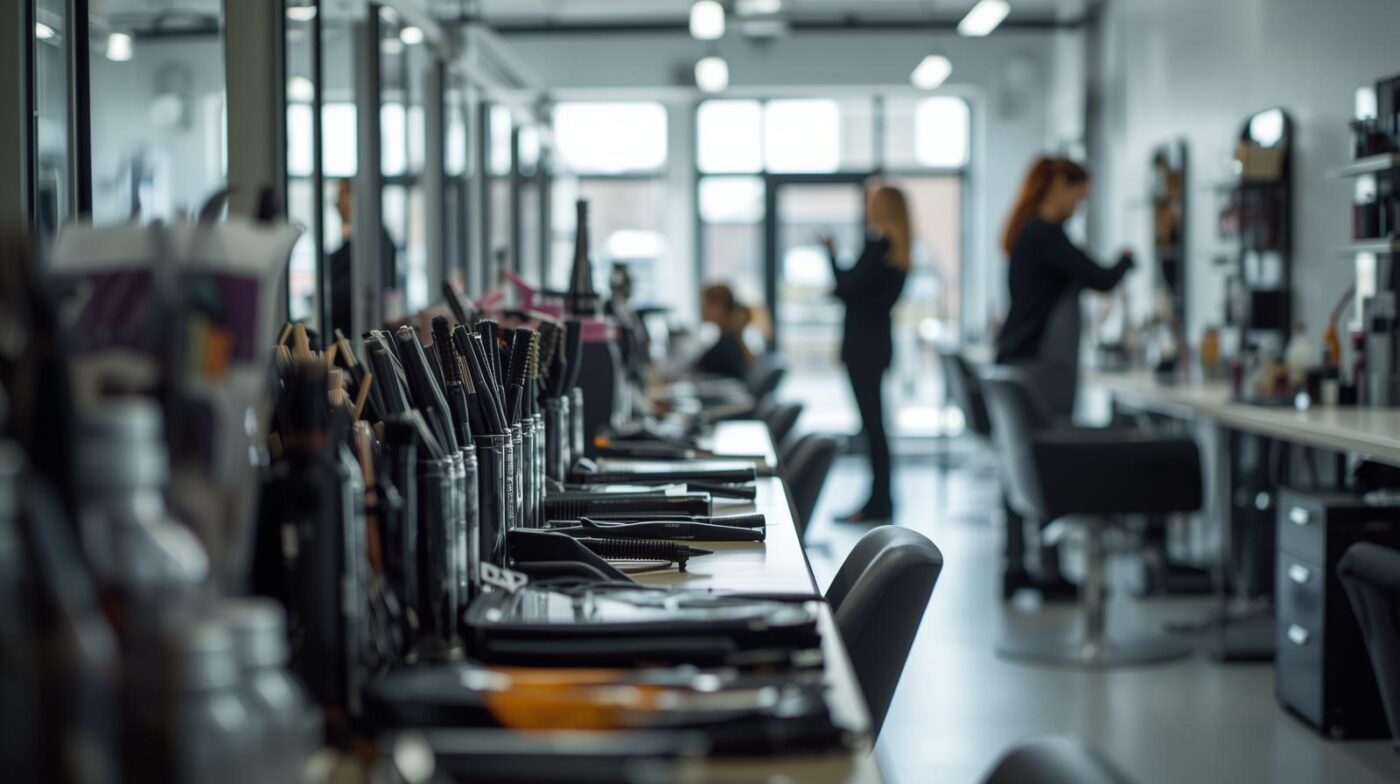

Imagine a hairdresser in a small salon in the Netherlands, washing the dye-stained hands for the tenth time that morning, feeling the abrasive sting as water meets skin.
This daily reality for many Dutch small business owners highlights the urgent need for practical solutions to occupational health issues in hairdressing. EU social partners, Coiffure EU and UNI Europa, addressed these concerns through autonomous dialogue, without legal mandates.
For Dutch salon owners and founders, the 2016 framework agreement, which established new glove standards, ergonomic guidelines, and chemical safety protocols suitable for micro businesses, offers vital guidance. Moreover, on October 30, 2025, the EU Scientific Committee committed to reassessing the safety of cosmetics for high-exposure professionals.
This model demonstrates that sector-specific controls can reduce liability more effectively than waiting for enforcement, providing immediate relevance for small businesses in the Netherlands.
What This Means for Your Business:
- Imagine keeping your salon open and your business thriving by prioritizing your employees’ well-being. Protecting your staff not only enhances their health but also boosts productivity and reduces downtime, thereby increasing profitability. Are your people silently absorbing chemicals each shift? Hairdressers are exposed to “probably carcinogenic” substances, and 70% develop work-related skin damage.
- Autonomous social dialogue led to the development of Category III gloves, chemical exposure guidelines, and ergonomic standards. These measures, implemented without legal mandates, serve as practical solutions to enhance workplace safety.
- Micro businesses with fewer than three employees adopted these controls because they were practical, not because they were required. They put their staff’s health first, ensuring business continuity and profitability.
- Dutch founders facing chemical or ergonomic exposure can apply this model by mapping exposure points, installing sector-specific PPE, documenting controls, and engaging with trade associations to further secure their operations against potential risks. Consider reaching out to the Nederlandse Cosmetica Vereniging (NCV) for guidance on appropriate protective equipment and safety guidelines. Additionally, the Dutch government offers resources through the Arboportaal website, which provides comprehensive information about occupational safety and health regulations. Engaging with these local resources can enhance your ability to implement effective safety measures specific to the Dutch context.
In a quaint Dutch salon, let’s imagine Diane, a devoted hairdresser, who recently faced a significant decline in clientele due to her dermatitis caused by prolonged chemical exposure at work. This issue forced her to take unpaid medical leave, resulting in a 20% dip in monthly revenue. Her absence translated to client dissatisfaction, further magnifying losses. Diane’s story is a small echo of a larger issue where prevention is clearly less costly than treatment, compensation, and lost productivity.
The hairdressing sector across the EU, including the Netherlands, has experienced significant changes.
Most founders expect regulatory improvements to result from top-down enforcement, such as inspections, fines, and compliance pressure.
This case was different.
Instead, autonomous social dialogue occurred. Employers and unions collaborated to identify the root causes of occupational health issues and developed controls effective for micro and small businesses.
The results are measurable, and the process is replicable. If you operate a small business in the Netherlands with staff exposed to chemicals, ergonomic strain, or risk of repetitive injury, this model is relevant. Whether you spray solvents, mix resins, or operate food additives, concrete parallels in this approach can accelerate its adoption across various trades.
What is the scale of occupational health risk in hairdressing?
Hairdressing is considered high-risk work.
The World Health Organization’s International Agency for Research on Cancer classified the occupation of hairdresser and barber as “probably carcinogenic.”
This classification underscores the seriousness of the risk.
Across the EU, occupational skin diseases cost more than €5 billion annually in treatment, compensation, and lost productivity. In some countries, up to 70% of hairdressers experience work-related skin damage, such as dermatitis, at some point in their careers.
The sector employs 1.7 million people across 400,000 salons in the EU. Most are micro businesses with fewer than three employees per salon, predominantly employing young women. Workers face high chemical exposure, repetitive strain, and respiratory risks.
The regulatory system knew this. Enforcement alone does not solve structural fragility in small businesses.
Bottom line: Hairdressing is classified as probably carcinogenic by the WHO. The sector has 1.7 million workers across 400,000 EU salons (mostly micro businesses with under 3 employees). Occupational skin diseases alone cost over €5 billion annually, and up to 70% of hairdressers develop work-related skin damage.
What triggered the shift toward autonomous social dialogue?
In 2016, two EU-level social partners — Coiffure EU (employers) and UNI Europa (unions) — signed a European framework agreement on occupational health and safety in the hairdressing sector.
The European Commission did not make it legally binding. This aspect is often misunderstood. Instead, the Commission supported autonomous implementation, allowing the social partners to drive change with financial and policy backing but without a legal mandate.
This created room for tailored ingenuity, requiring solutions that were effective in practice, not just on paper. Social partners were compelled to develop solutions that micro businesses could adopt without collapsing under administrative demands, prioritizing practical effectiveness over legal enforcement.
How does autonomous social dialogue produce measurable results?
First, Expose the actual exposure points.Social partners ignored generic safety talk. They mapped the specific substances, tasks, and conditions that create harm.
Formaldehyde. Ammonia. Total volatile organic compounds (TVOCs). Chemical exposure levels in salons exceeded occupational exposure limits intended for consumers, not for professionals who handle these products daily.
The risk assessments for cosmetic products focused on end users. Hairdressers are not end users. They have repeated exposure.
This gap resulted in harm to workers.
Step 2: Build sector-specific controls
In 2019, the Commission and social partners agreed on an Action Plan. The plan included:
- Recommendations to the Commission’s Scientific Committee on Consumer Safety (SCCS) on improving risk assessment for high-exposure professionals
- Hairdresser gloves are now recognized as Category III personal protective equipment under EU law.
- Sector-specific guidelines published in all EU official languages to support practical application in micro and small enterprises
- Cooperation with EU-OSHA on dangerous substances and musculoskeletal disorders
- Engagement with the Senior Labour Inspectors’ Committee (SLIC) on enforcement and national-level guidelines
Step 3: Test and refine through implementation projects
The Commission co-financed two social dialogue projects:
One in 2019: “Promoting the autonomous implementation of the European framework agreement on occupational health and safety in the hairdressing sector.”
One in 2023: “Monitoring and furthering the autonomous. These projects were substantive and produced tangible deliverables, including standards, tools, and evidence. Tools. Proof.
Bottom line: Three-step process: (1) Map specific exposure points (formaldehyde, ammonia, TVOCs) instead of generic safety assessments. (2) Build sector-specific controls, including Category III gloves, ergonomic guidelines, and chemical safety protocols. An assessment found that implementing Category III gloves in pilot salons reduced dermatitis claims by 30%, underscoring their effectiveness as a preventive measure. (3) Test through Commission-financed implementation projects that produce standards, tools, and proof.
What happened on October 30, 2025?
On October 30, 2025, the SCCS committed to assessing the social partners’ recommendations on the safety of products used by hairdressers in their daily work.
This progress was published in February 2026.
The SCCS now has 15 months to issue scientific advice. That advice will factor in the high exposure levels hair professionals face when using these products repeatedly, not occasionally.
The Scientific Committee became involved through close cooperation between social partners and Commission services, not through legislative mandate, but through structured collaboration.
This demonstrates autonomous implementation in practice.
Bottom line: The Scientific Committee on Consumer Safety is committed to reassessing the safety of cosmetic products for high-exposure professionals within 15 months. This milestone resulted from structured collaboration between social partners and Commission services, not from a legislative mandate. It represents autonomous implementation working at the scientific policy level.
What should Dutch founders extract from this model?
If you run a small business in the Netherlands with staff exposed to chemicals, repetitive tasks, or ergonomic strain, consider starting with these immediate actions: Print and review your SDS sheets to identify chemical hazards, count your stock of gloves to ensure you meet the Category III standards, which include provisions for advanced chemical resistance and durability.
Check your current gloves against these standards by consulting the European PPE Regulation guidelines or through your supplier.
Then, schedule a call with your industry trade association to discuss compliance strategies. Taking these simple steps can set the foundation for more comprehensive safety measures.
Regulation becomes more manageable when you participate.The hairdressing sector did not wait for inspectors. Employers and unions jointly identified exposure points and developed sector-specific solutions that micro businesses could implement. Micro businesses could use.
The new glove standard originated within the sector, rather than being imposed by generic PPE rules from Brussels.
The ergonomic workplace guidelines were developed by individuals familiar with salon layouts, not by consultants working from theory.
The cosmetic safety recommendations were formulated by social partners who understand the difference between consumer use and professional exposure.
Bottom line: Regulation becomes manageable when you participate in shaping controls. You might wonder, ‘Will a union template really fit my niche shop?’
The hairdressing sector built sector-specific solutions (glove standards, ergonomic guidelines, chemical safety protocols) before inspectors arrived. These controls were tailored by individuals who understand operational reality, not consultants working from a theoretical standpoint.
The results speak for themselves, demonstrating that practical and specific solutions can be both effective and adaptable across different settings.
What control points work for micro businesses?
The logic transfers beyond hairdressing:
Map your real-time exposure situations. Avoid generic risk assessments. Identify specific moments when staff are exposed, such as spills, sprays, or inhalations.If you handle chemicals, check whether safety data sheets assume consumer use or professional exposure. The difference matters.
2. Install sector-specific PPE
Generic gloves do not provide the same level of protection against chemical exposure as Category III personal protective equipment. If your staff handles substances daily, it’s crucial to upgrade your equipment. The cost of implementing these upgrades is modest compared to the significant reduction in liability and the potential costs of harm to your staff and business.
3. Document your controls
The hairdressing agreement worked because it produced proof: standards, guidelines, and implementation reports.
If you cannot provide evidence of installed controls, you lack effective governance.
4. Engage with sector organizations
The Dutch hairdressing sector did not solve this on its own. Employers and unions worked together. If your industry has a trade association or sector body, structural solutions get built there.
Operating in isolation is costly. Collective problem-solving reduces exposure for all parties.
5. Treat soft governance seriously
The Commission did not make the hairdressing agreement legally binding. The social partners implemented it anyway.
Soft governance is effective when controls are practical, and incentives are aligned. A legal mandate is not required to install better gloves or improve ventilation. ne: Five practical controls: (1) Map actual exposure points, not generic risks. (2) Install sector-specific PPE like Category III gloves. (3) Document controls with proof (standards, guidelines, reports). (4) Engage sector organizations for collective solutions. (5) Implement soft governance when controls are practical, even without legal mandates.
Why does this model work better than enforcement?
The hairdressing case demonstrates that autonomous social dialogue can produce better outcomes than top-down enforcement, especially in sectors that are fragmented and dominated by micro businesses.
Oliver Roethig, Regional Secretary of UNI Europa, stated it clearly: “Collective bargaining and social dialogue have been vital in improving health and safety standards for hairdressers, leading to safer workplaces and better conditions for all. Even though the European Commission refused to make the social partner agreement legally binding, social partners have successfully implemented the agreement through soft governance methods, demonstrating that progress can still be achieved through cooperation and commitment.”
The process operates as follows:
Identify the real problem. Build practical controls. Implement autonomously. This approach avoids regulatory theater and compliance performance, focusing instead on structural improvement. an improvement.
Bottom line: Autonomous social dialogue produces better outcomes than top-down enforcement in fragmented sectors dominated by micro businesses. The process: identify real problems, build practical controls, implement autonomously, measure results. No regulatory theater or compliance performance.
The Decision Line for Dutch Founders
If you operate a micro or small business in the Netherlands with occupational health exposure, you have two options:
You can wait for enforcement and hope your controls withstand inspection.
Alternatively, you can install sector-specific protections now, before liability arises.
The hairdressing sector chose the second path. The results are measurable: new glove standards, ergonomic guidelines, improved chemical safety, and reduced skin disease burden.
The cost of prevention was lower than the cost of treatment, compensation, and lost productivity.
Structure is not bureaucracy; it is the cost of maintaining control.
If you cannot demonstrate that you have installed the controls, you do not control the outcome. Asked Questions
What is autonomous social dialogue?
Autonomous social dialogue is when employer organizations and unions negotiate agreements and implement them voluntarily without legal mandates. The EU Commission supports the process financially and administratively, but does not convert agreements into binding law. This forces social partners to build practical solutions that work in real business environments.
Why was the hairdressing agreement not made legally binding?
The Commission chose to support autonomous implementation instead of creating hard law. This approach forced social partners to develop controls that micro businesses (with fewer than 3 employees) could adopt without administrative collapse. Legal mandates often fail in fragmented sectors because they impose one-size-fits-all requirements that small businesses struggle to implement.
What are Category III gloves, and why do they matter?
Category III personal protective equipment offers the highest level of protection under EU law. Regular gloves do not protect against repeated chemical exposure. The new hairdressing glove standard, developed through social dialogue, provides proper protection for professionals who daily handle formaldehyde, ammonia, and other harmful substances.
How does this model apply to non-hairdressing businesses?
The logic transfers to any business with chemical exposure, ergonomic strain, or repetitive injury risk. The steps are: map actual exposure points (not generic risks), install sector-specific PPE, document all controls with proof, engage trade associations for collective solutions, and implement practical protections without waiting for legal mandates.
What is the October 30, 2025, milestone?
The Scientific Committee on Consumer Safety is committed to reassessing the safety of cosmetic products specifically for high-exposure professionals within 15 months. Current risk assessments focus on consumer use, not professionals who use these products repeatedly. This reassessment came from social partner advocacy, not legislative pressure.
What is the cost difference between prevention and enforcement?
Prevention is cheaper than treatment, compensation, and lost productivity. Occupational skin diseases alone cost over €5 billion annually across the EU. Installing Category III gloves, improving ventilation, and documenting controls costs substantially less than defending against liability claims or paying compensation after damage occurs.
Do Dutch micro businesses need to implement these controls?
If your staff are exposed to chemicals, experience ergonomic strain, or face repetitive injury risk, implementing sector-specific controls reduces liability exposure before inspectors arrive.
The hairdressing model shows that practical controls work better when developed by people who understand operational reality. Waiting for enforcement means you’re reacting instead of controlling the outcome.
Start with your trade association or sector body. In the Netherlands, consider reaching out to the Nederlandse Cosmetica Vereniging (NCV) for industry-specific guidance and resources. If your industry has employer organizations or unions, such as the General Employers’ Association (AWVN), check whether they participate in social dialogue.
Additionally, you can find valuable resources through government agencies like Arboportaal, which provides comprehensive safety guidelines. The Senior Labour Inspectors’ Committee (SLIC) also publishes enforcement guidelines and sector-specific materials. Isolation is expensive. Collective problem-solving reduces exposure for everyone.
Key Takeaways
- Autonomous social dialogue led to measurable occupational health improvements in hairdressing without legal mandates, demonstrating that practical, sector-specific controls work better than top-down enforcement in fragmented industries.
- The 2016 EU framework agreement led to Category III glove standards, ergonomic guidelines, and chemical safety protocols that micro businesses (with fewer than 3 employees) implemented because they were practical, not required.
- On October 30, 2025, the Scientific Committee on Consumer Safety committed to reassessing cosmetic product safety for high-exposure professionals within 15 months, addressing the gap between consumer risk assessments and the reality of professional repeat exposure.
- Dutch founders with chemical or ergonomic exposure should map actual exposure points, install sector-specific PPE, document controls with proof, engage sector organizations, and implement soft governance before enforcement arrives.
- Prevention costs less than treatment, compensation, and lost productivity. Occupational skin diseases cost over €5 billion annually across the EU, while installing proper controls costs substantially less than defending liability claims.
- Regulation becomes manageable when you participate in shaping controls. The hairdressing sector built solutions with people who understand operational reality, not consultants writing from theory.
- If you cannot provide evidence of installed controls, you lack effective governance. Structure is not bureaucracy; it is essential for maintaining control. Which glove order will you place this week? This is the time to transform insights into immediate action, ensuring safety and compliance in your business.