




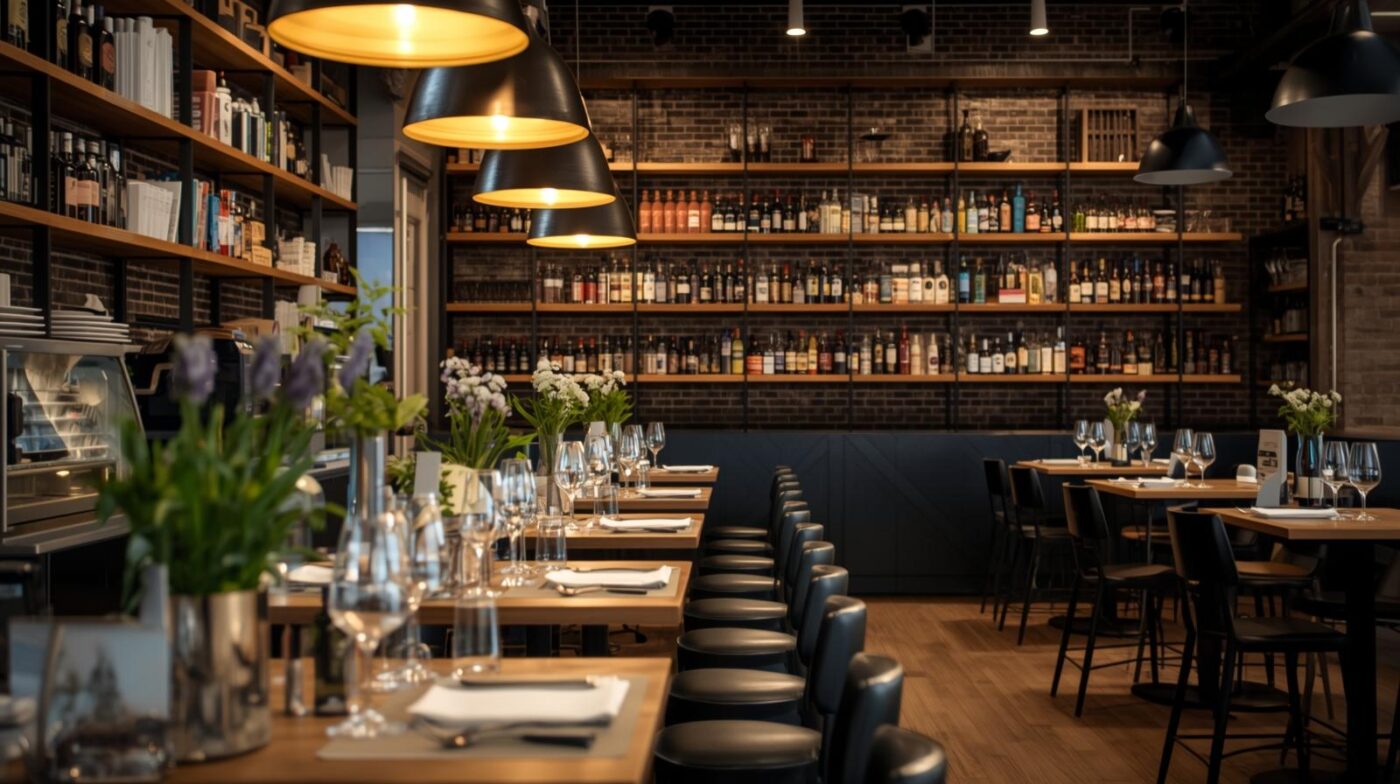

Dutch hospitality revenue grew 3.9% in 2025, but entrepreneur confidence dropped sharply to -12 in Q1 2026.
Growth comes from price increases, not volume (which fell 0.5%). Debt problems affect 20% of hospitality businesses, bankruptcies hit a ten-year high, and the gap between revenue growth and declining confidence signals structural fragility.
Fast-food and catering outdo traditional restaurants and cafés. Survival depends on margin discipline, cost flexibility, and subsector positioning.
What you need to know:
- Revenue growth of 3.2% in Q4 2025 masks volume decline of 0.5%, meaning growth comes entirely from price increases
- Entrepreneur confidence fell from -8.4 to -12 between Q4 2025 and Q1 2026, signaling operators expect trouble ahead.
- 20% of hospitality businesses carry problematic debt (up from 14% in 2024), while bankruptcies reached a ten-year high
- Fast-food and catering (6.2% and 4.7% growth) outdo traditional restaurants (3.7%) and cafés (2.6%)
- Vacation parks and campgrounds contracted by 4.2%, while hotels grew by 2.3%, indicating divergence in accommodation preferences.
The numbers look fine on paper.
The Centraal Bureau voor de Statistiek (CBS) released Q4 2025 revenue data for the Dutch hospitality sector, and topline growth continues. Revenue climbed 3.2% year-over-year in Q4 2025. Full-year 2025 delivered 3.9% growth.
Here’s the mechanism most founders miss: revenue growth doesn’t mean structural health.
While turnover increased, entrepreneur confidence collapsed. Business owners’ sentiment dropped from -8.4 in Q4 2025 to -12 in Q1 2026. This isn’t noise. This is a signal.
The gap between what’s happening now and what operators expect next reveals something uncomfortable: the sector is making more money while losing structural strength.
Why Is Entrepreneur Confidence Falling While Revenue Grows?
Confidence metrics don’t measure feelings. They measure forward-looking risk assessment from people who see their cash flow daily.
When confidence deteriorates while revenue grows, operators recognize something coming before the numbers show up. According to CBS data, business confidence in accommodation and food services fell from -11.3 at the beginning of Q4 2024 to -17.9 in Q1 2025. One of the most negative sentiment levels across all Dutch economic sectors.
This isn’t pessimism. This is pattern recognition.
Here’s what operators see:
- Cost inflation outpacing revenue growth.
- Margin compression, they can’t price away.
- Buyer behavior shifts favoring efficiency over experience.
- Debt accumulation, revenue growth can’t service
The confidence drop from -8.4 to -12 occurred as entrepreneurs looked ahead to Q1 2026. They’re not reacting to current conditions. They’re anticipating specific ensuing challenges.
The system doesn’t break suddenly. It breaks slowly, then all at once.
Bottom line: Confidence measures what operators see coming, not what’s here. The drop from -8.4 to -12 indicates that entrepreneurs recognize specific threats before they appear in revenue numbers.
How Does Revenue Growth Hide Structural Fragility?
The mechanism works like this:
The Dutch horeca sector achieved 3.9% revenue growth in 2025. But volume fell by 0.5% according to Rabobank figures.
The entire growth came from price increases, not from serving more customers or increasing transaction frequency.
You’re charging more for less activity.
This works until the moment pricing power breaks. Price elasticity has limits. When consumers reduce frequency or switch to cheaper alternatives, revenue growth stalls. Your cost structure (rent, labor, energy, and supplies) doesn’t automatically adjust downward.
The gap between price-driven revenue growth and volume decline creates fragility most founders don’t see until cash flow tightens.
Bottom line: Growth from price increases alone is fragile. When pricing power weakens, fixed costs create sudden cash flow problems.
Which Horeca Subsectors Are Growing Fastest?
The sector isn’t moving uniformly. Different formats face different realities.
Catering and canteens (kantines en catering) led growth at 6.2% in Q4 2025. Fast-food restaurants followed at 4.7%. Traditional restaurants grew 3.7%. Cafés showed the weakest performance at 2.6%.
This hierarchy isn’t random. This reveals a structural change in how Dutch consumers allocate hospitality spending.
Convenience and functional eating occasions outperform experiential dining and social drinking. KHN data shows coffee and dessert shops increased from about 1,400 in 2020 to over 2,000 in 2025, while cafés and nightclubs dropped by more than a fifth.
The pattern is clear: consumers favor speed, efficiency, and daytime occasions over traditional evening dining and drinking experiences.
If you operate a traditional restaurant or café, you’re competing in the slower-growth segment. Revenue growth requires either operational excellence that competitors don’t match or a value proposition compelling enough to justify premium pricing in a market shifting toward convenience.
Bottom line: Fast-food and catering grow 2-3x faster than traditional restaurants and cafés because consumers favor convenience over experience.
What Is Happening in the Accommodation Sector?
While food and drink establishments (eet- en drinkgelegenheden) manifested resilience with 4.2% Q4 growth and 4.8% annual growth, accommodation providers (logiesverstrekking) barely expanded at 0.5% quarterly and 1.7% annually.
Within accommodation, hotels grew 2.3%. But vacation parks and camping contracted by 4.2%.
This divergence indicates structural vulnerability in the leisure accommodation sector. Dutch consumers are cutting discretionary leisure spending or altering preferences toward international destinations as travel normalized post-pandemic.
For small business owners in vacation parks, camping, or budget accommodation, this contraction isn’t a temporary softness. This is a signal. Your market segment faces structural headwinds demanding strategic repositioning.
Bottom line: Hotels grow modestly while vacation parks contract 4.2%. This isn’t cyclical. This is a structural repositioning that demands a strategic response.
Why Are Bankruptcies Rising In Spite of Revenue Growth?
Here’s how the mechanism turns revenue growth into business failure:
In the Netherlands, around 7% of all companies carry problematic debt. In the hospitality sector, the share rises to 20%, especially affecting restaurants, snack bars, and dining cafés.
A sharp increase from 14% in 2024.
Revenue growth doesn’t eliminate debt. This masks the problem temporarily. When margins compress because cost inflation exceeds pricing power, debt service turns unsustainable.
Between January and May 2025, 154 hospitality businesses went bankrupt. The highest number in years. Closures in the first three quarters of 2025 reached a ten-year high, mostly among restaurants.
This is the disconnect: revenue grows, but bankruptcies accelerate.
The businesses failing aren’t necessarily poorly managed. They’re structurally fragile. They carry debt loads that are serviceable during recovery years but unsustainable when growth slows and margins compress.
Bottom line: 20% of hospitality businesses carry problematic debt. Revenue growth masks debt problems until margins compress, at which point bankruptcies accelerate.
What Does This Mean for Small Hospitality Businesses?
If you operate a micro- or small-horeca business in the Netherlands, the sector-level growth rate is irrelevant to your survival. What matters is your subsector positioning, cost structure, and margin discipline.
Subsector positioning: Are you in a fast-growth segment (catering, fast-food) or a slow-growth segment (traditional restaurants, cafes)? Growth rates vary by 2-4 percentage points between segments. The difference builds up over time.
Cost structure flexibility: Do you adjust labor, procurement, and overhead costs in response to volume changes? Or are you locked into fixed costs, unable to scale down when demand softens?
Margin discipline: Revenue growth of 3-4% annually is entirely consumed by cost inflation if you don’t actively manage margins. Dutch minimum wage increases, energy costs, and food supply inflation easily exceed 3-4% annually.
The businesses that survive the next 12-24 months will be those that recognize that revenue growth doesn’t equal profitability.
Bottom line: Sector-level growth doesn’t determine your survival. Your subsector, cost flexibility, and margin discipline do.
What Controls Should You Install Now?
If you’re an expat entrepreneur running a hospitality business in the Netherlands, install these controls now:
Track volume separately from revenue. Don’t celebrate revenue growth without understanding whether growth comes from volume increases or price increases. A decline in volume with revenue growth indicates fragility.
Monitor your subsector benchmark. Compare your performance to your specific subsector (restaurants, catering, fast-food, accommodation) rather than the overall horeca sector. CBS publishes subsector data quarterly. Use it.
Model margin compression scenarios. Calculate what happens to your profitability if cost inflation continues at 4-6% annually while you raise prices only 3-4%. Identify the breaking point before you reach it.
Evaluate debt service capacity under lower growth. If you carry debt, model whether you service this if revenue growth slows to 2% or turns negative. Don’t assume current growth rates continue.
Consider subsector repositioning. If you’re in a slow-growth segment, evaluate whether you pivot toward faster-growing formats. Catering and workplace food services offer better growth trajectories than traditional full-service restaurants.
Review your quarterly VAT returns (BTW-aangifte) through the Belastingdienst. Use them to track your actual performance against sector benchmarks. If your growth rate consistently lags your subsector by 1-2 percentage points or more, you have a competitive status problem.
Bottom line: Track volume separately from revenue, benchmark against your subsector, model margin compression, and evaluate debt capacity under lower growth scenarios.
What Is Driving the Confidence Decline?
Entrepreneur confidence doesn’t decline randomly. This declines when operators see specific risks materializing.
The confidence drop from -8.4 to -12 as entrepreneurs looked ahead to Q1 2026 suggests awareness of:
- Anticipated consumer spending reductions
- Concerns about the Dutch or European economic slowdown
- Policy changes affecting operating expenses
- Seasonal weakness amplified by structural headwinds
For planning purposes, investigate what specific factors are driving pessimism among your peers in business. Contact KvK (Kamer van Koophandel) or KHN (Koninklijke Horeca Nederland) for sector-specific intelligence.
Confidence metrics are forward-looking. They tell you what operators expect before showing up in revenue data.
Bottom line: Confidence decline signals specific anticipated risks: consumer spending cuts, an economic slowdown, cost pressures, and seasonal weakness exacerbated by structural problems.
Why Doesn’t Revenue Growth Protect Your Business?
The Dutch horeca sector demonstrates a pattern visible across many industries: topline growth coexists with structural deterioration.
Revenue growth creates the illusion of health. This makes debt service manageable temporarily. This justifies persistent investment. This delays difficult strategic decisions.
But revenue increase driven by price increases rather than volume growth is fragile. This depends on sustained pricing power in a market where consumers are shifting toward value and convenience.
When pricing power weakens (and it will), businesses with high debt loads, inflexible cost structures, and thin margins face sudden liquidity crises.
The 20% problematic-debt rate in Dutch hospitality, combined with accelerating bankruptcies despite revenue growth, demonstrates this mechanism in action.
What Should You Do Next?
The Dutch horeca sector isn’t collapsing. This is fragmenting.
Some subsectors and business models will thrive. Others will struggle regardless of effort or quality.
Your success depends on recognizing which category you’re in and adjusting your structure before cash flow forces the decision.
Revenue growth doesn’t protect you. Margin discipline does. Cost structure flexibility does. Strategic positioning in faster-growth subsectors does.
The operators who survive the next 24 months won’t be the ones celebrating 3-4% revenue growth. They’ll be the ones who recognize the growth rate isn’t enough to cover cost inflation, service debt, and sustain structural integrity.
The system doesn’t measure intentions. It measures proof.
If you can’t prove your margins are sustainable under slower growth and continued cost inflation, you don’t have a business. You have a countdown.
Frequently Asked Questions
Is the Dutch hospitality sector growing or declining?
Revenue is growing (3.9% in 2025), but volume fell 0.5%. Growth comes entirely from price increases, not increased customer activity. Entrepreneur confidence dropped sharply to -12 in Q1 2026, signaling operators expect problems ahead.
Why are hospitality bankruptcies increasing if revenue is growing?
Revenue growth masks debt problems temporarily. When cost inflation outpaces pricing power, margins compress, and debt service turns unsustainable. 20% of hospitality businesses carry problematic debt (up from 14% in 2024). Between January and May 2025, 154 hospitality businesses went bankrupt.
Which hospitality subsectors perform best in the Netherlands?
Catering and canteens lead with 6.2% Q4 growth, followed by fast food at 4.7%. Traditional restaurants grew by 3.7%, while cafés grew the least at 2.6%. Consumers favor convenience and functional eating over experiential dining and social drinking.
Should I be worried about my restaurant or cafe in the Netherlands?
If you’re in traditional restaurants or cafés, you’re in slower-growth segments. Success requires either operational excellence that competitors don’t match or value propositions strong enough to justify premium pricing. Track your performance against subsector benchmarks, not overall sector growth.
What is the biggest risk confronting Dutch hospitality businesses right now?
Margin compression. Cost inflation (labor, energy, supplies) often exceeds 3-4% annually, consuming all revenue growth. Businesses with high debt, inflexible cost structures, and thin margins face sudden liquidity crises when pricing power weakens.
How do I know if my hospitality business is structurally fragile?
Track volume separately from revenue. If revenue grows but volume declines, growth comes solely from price increases. Model whether you handle 4-6% annual cost inflation while raising prices only 3-4%. Check if you service debt under 2% revenue growth or negative growth scenarios.
What should small horeca businesses do differently in 2026?
Install controls: track volume separately from revenue, benchmark against your subsector (not the overall sector), model margin-compression scenarios, evaluate debt capacity under lower growth, and consider repositioning toward faster-growth formats (catering, workplace food services).
Why did entrepreneur confidence fall so sharply in Q1 2026?
Operators see specific risks materializing: anticipated consumer spending reductions, concerns about an economic slowdown, policy changes affecting costs, and seasonal weakness exacerbated by structural problems. Confidence metrics are forward-looking, showing what operators expect before it appears in revenue data.
Key Takeaways
- Revenue growth of 3.9% in 2025 masks volume decline of 0.5%, meaning all growth comes from price increases, creating structural fragility
- Entrepreneur confidence dropped from -8.4 to -12 between Q4 2025 and Q1 2026, signaling operators recognize threats not yet visible in revenue numbers.
- 20% of Dutch hospitality businesses carry problematic debt (up from 14% in 2024), and bankruptcies hit a ten-year high in spite of revenue growth
- Fast-food and catering grow 2-3x faster than traditional restaurants and cafés because consumers favor convenience over experiential dining.
- Vacation parks and campgrounds contracted by 4.2%, while hotels grew by 2.3%, showing a structural repositioning in accommodation preferences.
- Margin compression occurs when cost inflation (4-6% annually) exceeds pricing power (3-4%), making debt service unsustainable and creating sudden cash crises.
- Survival requires tracking volume separately from revenue, comparing to subsector performance, modeling margin compression scenarios, and evaluating debt capacity under lower growth.