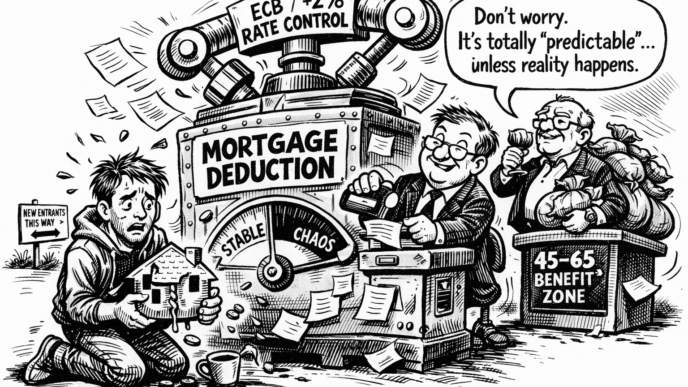






Dutch housing prices rose 5.4% year over year in January 2026, now 15.3% above the 2022 peak.
The shortage of 410,000 homes is pushing up wages, making it harder to find talent, and raising commercial real estate costs for small businesses.
Entrepreneurs should start adjusting their hiring and pay strategies right away.
Quick Answer: How Housing Prices Affect Your Business
- As average housing costs reach €500,000, employees feel more pressure to ask for higher wages. They need better pay just to afford basic living expenses.
- 25% of job seekers reject offers if suitable housing isn’t available near the workplace
- In 2026, most households can borrow €5,000 to €8,000 less than before. This makes employees push harder for higher salaries.
- Commercial real estate costs are rising along with home prices. Delays in construction and higher loan rates are making things more expensive.
- The housing shortage is expected to last until at least 2027. It’s important to update your business strategy now.
What the January 2026 Data Shows
The Centraal Bureau voor de Statistiek released January 2026 data. Existing home prices rose 5.4% year-over-year. The index hit 153.3 with 2020 at 100.
This is 15.3% higher than the July 2022 peak.
If you’re an expat entrepreneur running a small business in the Netherlands, this isn’t just real estate news; it’s a sign your operating costs are changing.
How Did the Dutch Housing Market Recover?
The Dutch housing market peaked in July 2022 at an index of 132.9. Prices dropped through spring 2023, hitting bottom at 124.6 in April-May. Since June 2023, the market has shown prolonged growth.
January 2026 showed a 1.2% month-over-month increase from December 2025. Transaction volume grew 5.5% year over year to 18,893 sales. Average transaction price hit €493,875.
The 5.4% yearly growth is slower than the 11% to 12% increases seen in late 2024. The market seems to be stabilizing, but prices are still high and continue to rise.
This isn’t just a market correction. The ongoing shortage is showing up in higher prices.
In short, prices are now 15.3% above the 2022 peak and keep going up, even with higher interest rates. This shows there’s a real supply problem.
Why Does Housing Shortage Increase Your Wage Bill?
The Netherlands faces a shortage of 410,000 homes. The number grew from 400,000 last year. 4.8% of the housing stock. Experts project the deficit will hit 453,000 homes by 2027 unless construction accelerates.
Construction fell short of targets. Only 69,200 new homes were completed last year. Far below the government’s target of 100,000 homes for 2025. Approximately 88,000 homes are expected in 2026. Still a shortfall of about 10,800 homes.
Your employees are dealing with these housing challenges, too.
Average house prices now reach €500,000. Ten times the average Dutch salary. The price-to-income ratio climbed 15% to 30% above 2015 levels, depending on the region.
Borrowing capacity dropped by €5,000 to €8,000 in 2026 for typical two-income households. Tightened mortgage lending standards caused this. For households earning around €65,000, the decrease reaches closer to €13,000.
This puts direct pressure on wages. Employees need higher pay just to keep up with basic living costs. The housing crisis is now a real part of your labor expenses.
The main takeaway: Because there are 410,000 fewer homes than needed, employees are asking for higher wages, which raises your business costs.
How Does Housing Shortage Restrict Your Talent Pool?
Around 100 key occupations face talent shortages in the Netherlands. Roughly two-thirds of those occupations face serious shortages.
Here’s what matters: 25% of job seekers turn down job offers if they don’t find housing near the office.
Amsterdam, Rotterdam, and Eindhoven are dealing with both housing and talent shortages. If your business is in or near these cities, you’re competing for a smaller group of candidates. Many people won’t even consider a job if they can’t find housing nearby.
The rental market tightened further. Over the past year, more than 26,000 rental homes were sold to owner-occupiers. Rental stock shrank. Landlords have been exiting the market since the government introduced rent regulation for mid-market rentals in July 2024. Tax changes made renting out homes less lucrative.
For expat entrepreneurs bringing in international talent, finding rental accommodation for new hires has become more challenging. The hiring mechanism breaks down:
- You identify qualified candidates.
- They accept your offer.
- They don’t find housing within a reasonable commuting distance.
- They decline or delay their start date.
- Your recruitment timeline extends, costs increase, and operational plans shift.
The housing shortage isn’t just about higher costs. It also makes it harder for you to run your business effectively.
Here’s a reality check: One out of four job seekers turns down offers because they can’t find housing, no matter what salary you offer.
What Happens to Commercial Real Estate Costs?
Rising residential real estate costs correlate with increased commercial property expenses. Construction costs surged in recent years due to higher material prices. Wage increases keep driving costs upward.
The 5-year IRS rate sits about 230 basis points higher than in 2019 and 2021. Increased financing costs for commercial real estate. Higher lease costs for small businesses looking for office or retail space.
Between 2008 and 2015, about 16% of Dutch construction workers left the sector. Investment came back relatively quickly after the financial crisis. But construction workers didn’t return. Uncertainty and long training cycles kept them away. Only in 2020 did the number of construction workers return to 2008 levels.
The labor shortage in construction slowed supply. It pushed up producer prices for new housing. This bottleneck keeps the housing shortage going. Pressure on your business persists amid higher employee housing costs and elevated commercial lease rates.
What’s the link? Not enough construction workers means fewer new homes, which keeps both home and business property costs rising.
Why Do Founders Miss This Connection?
Entrepreneurs track immediate business expenses. Rent, utilities, software, materials. These are clearly reflected in your bookkeeping.
Housing market forces work as indirect costs. They don’t show up on your P&L as “housing market impact.” They show up as:
- Higher salary demands during negotiations
- Longer time-to-hire metrics
- Increased employee turnover when people relocate for affordability
- Difficulty opening locations in high-need areas
- Reduced the applicant pool for roles requiring office presence
The cost is real, even if you don’t see it as a separate line in your budget.
Despite holding a large share of European FDI stock, the Netherlands has been declining in its attractiveness to foreign investors. The housing crisis plays a key role. Labor mobility across the country takes a hit. Your ability to relocate staff between cities or attract talent from other regions gets reduced.
Why does this matter? Housing costs show up as higher salaries, longer hiring times, and more turnover, which makes the real impact harder to spot.
What Does This Look Like in Practice?
A small company in Utrecht needs a mid-level operations manager. The role pays €55,000 annually, which is competitive for the position.
Three qualified candidates emerge. One lives in Amsterdam and won’t afford to move closer. One is relocating from abroad and won’t be able to find rental housing within 45 minutes of the office. One is local, but looking at jobs in smaller cities where housing costs less.
The company extends the search timeline by two months. They eventually hire someone at €62,000 to get a candidate who already lives nearby. The role costs €7,000 more than budgeted. The delay? Two months of lost productivity.
The housing market wasn’t mentioned in the job ad, but it still determined who got hired.
The real cost: A job meant to pay €55,000 ends up costing €62,000, plus two months of lost productivity, all because of housing issues.
What Control Points Do Founders Have?
You can’t solve the Dutch housing market, but you can change how your business handles the pressure.
Build remote work into your operating model where feasible. Positions without physical presence requirements expand your talent pool beyond housing-constrained regions. This cuts wage pressure and shortens hiring timelines.
Factor housing costs into salary benchmarking. Hiring in Amsterdam, Utrecht, or other high-cost areas? Your compensation needs to mirror local housing realities. Salary data from 2022 or 2023 might no longer be relevant.
Weigh relocation support as a recruitment tool. Offering temporary housing assistance, connections to rental agents, or flexible start dates sets your offer apart if candidates face housing barriers.
Monitor policy changes from the Rijksoverheid. Government interventions in housing construction, zoning regulations, or property tax changes can trigger sudden market transitions. These changes affect your employees’ economic security and your wage negotiations.
Evaluate location strategy for expansion. Opening a new office or retail location in a housing-constrained area increases your operational risk. Talent availability should weigh as heavily as market access in your location decisions.
Track employee retention patterns. Employees leaving over housing affordability or commute length? You’re seeing a signal. The housing market creates turnover costs you haven’t isolated yet.
What can you do? Allow remote work, update salaries to reflect housing costs, offer relocation support, monitor policy changes, rethink where you open new locations, and watch for turnover linked to housing.
What Signal Should You Track?
CBS releases this data monthly, with quarterly breakdowns by region and property type through their StatLine platform. The next quarterly regional data is scheduled for April 22.
Tracking these releases gives you advance notice of cost pressure. Prices accelerate in your region? Wage demands follow within 6 to 12 months. Transaction volumes drop sharply? A correction is easing pressure temporarily.
The sustained price growth above previous peaks, despite higher interest rates than in 2020-2021, confirms that the shortage is structural. The pressure on your business costs persists unless supply increases or demand changes.
It’s not the market itself that hurts companies; it’s waiting too long to respond.
Tracking advantage: CBS monthly releases give you 6 to 12 months’ advance warning of regional wage pressure increases.
What Happens Next?
The housing shortage is projected to worsen through 2027. Construction rates remain below targets. The rental market continues to shrink as investors exit.
For small businesses, sustained wage pressure, constrained talent pools, and higher commercial real estate costs. Companies that adjust their hiring strategies, compensation models, and location decisions now sustain less damage than those who wait.
The CBS data from January 2026 isn’t a forecast. Current state. The pressure is already here.
Your business can either adapt to these changes or face the costs of ignoring them.
Plan your response to housing market pressures before you’re forced to react.
Frequently Asked Questions
How does the Dutch housing shortage directly affect small business costs?
The 410,000-home shortage forces employees to demand higher wages to afford housing. Average home prices hit €500,000. Ten times the average salary. Your wage bill goes up as employees need higher compensation to maintain basic living standards.
Why do 25% of job seekers reject offers because of housing?
Job seekers won’t accept employment if housing isn’t available within a reasonable commuting distance. The rental market shrank by 26,000 units last year. Borrowing capacity dropped by €5,000 to €8,000 for typical households. Housing availability filters candidates before salary negotiations begin.
What regions encounter the most severe talent constraints?
Amsterdam, Rotterdam, and Eindhoven face simultaneous housing shortages and talent shortages. These cities have the highest housing costs and most competitive talent markets. Businesses operating in these hubs compete for a smaller talent pool filtered by housing availability.
When will the housing shortage improve?
The shortage worsens through 2027, reaching 453,000 homes. Construction completed only 69,200 homes in 2025 against a target of 100,000. The expected construction of 88,000 homes in 2026 still falls short by 10,800 units. Construction labor shortages persist, as 16% of workers left between 2008 and 2015 and haven’t returned.
How do I benchmark salaries when housing costs change rapidly?
Factor local housing costs into compensation planning. Salary data from 2022 or 2023 is outdated. Prices rose 15.3% above the 2022 peak. Track CBS monthly housing data for your region. Prices accelerate? Wage demands follow within 6 to 12 months.
Should I offer relocation support to candidates?
Relocation support distinguishes your offer if candidates face housing barriers. Temporary housing assistance, connections to rental agents, or flexible start dates help candidates overcome housing obstacles. This becomes necessary because 25% of job seekers reject offers due to housing unavailability.
Where can I track housing market data for my region?
CBS releases monthly housing data through its StatLine platform. Quarterly regional breakdowns, too. The next quarterly regional data drops on April 22. Track these releases to see wage pressure coming 6 to 12 months before it hits negotiations.
How does residential housing affect commercial real estate costs?
Rising residential costs align with higher commercial property expenses. Construction labor shortages push up costs for both housing types. The 5-year IRS rate sits 230 basis points higher than in 2019 and 2021. Financing costs go up. These factors translate directly into higher lease costs for office and retail space.
Key Takeaways
- Dutch housing prices rose 5.4% year-over-year, bringing them 15.3% above the 2022 peak. Sustained wage pressure for small businesses.
- The 410,000-home shortage translates directly into higher operating costs. Increased salary demands, longer hiring cycles, and restricted talent pools.
- 25% of job seekers reject offers if housing isn’t available near the workplace. This filters your candidate pool before negotiations start.
- Borrowing capacity dropped €5,000 to €8,000 for typical households in 2026. Pressure on employers to increase compensation intensifies.
- The shortage gets worse through 2027. Construction rates stay 10,800 units below annual targets.
- Entrepreneurs need to adjust hiring strategies now: enable remote work, update salary benchmarks, offer relocation support, and reassess location decisions.
- CBS’s monthly data provides 6 to 12 months of advance warning of regional wage pressure. Time to adjust before costs spike.