


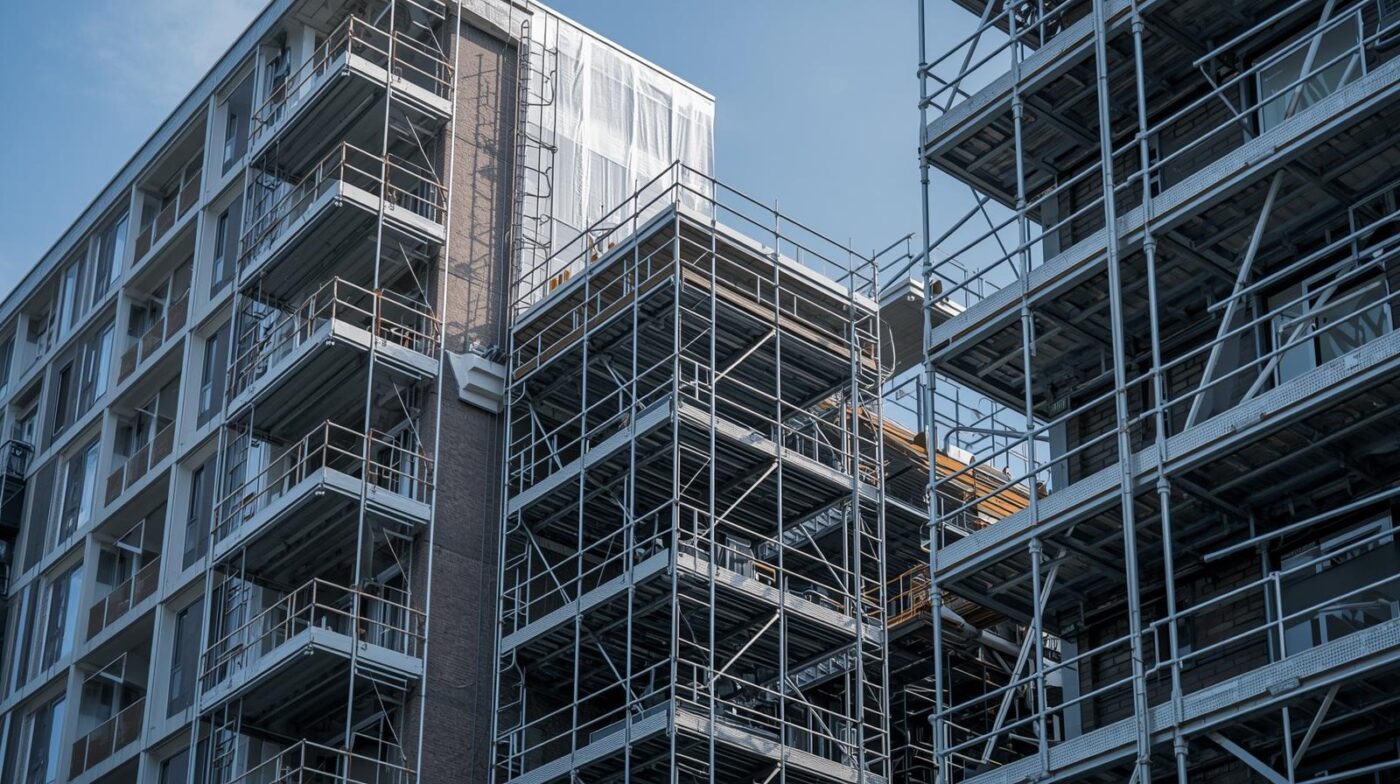

Dutch construction permits rose 1,500 units in Q4 2025, but the housing shortage isn’t going anywhere.
Residential costs dropped by 19%, while commercial costs jumped by 26%. Infrastructure investment creates resource competition.
You’ll face higher business premises costs, longer construction timelines, and ongoing employee housing issues through 2026.
Core Facts:
- Q4 2025 saw 24,200 residential permits, up from 22,700 in Q3.
- Project cancellations fell 63% for residential, rose for commercial.
- Commercial building costs increased 26%, residential decreased 19%
- Construction pipeline stabilized at 216,500 units, still insufficient to address the 400,000-unit shortage.
- Material costs resumed 2.2% inflation after a flat 2024
Why This Data Matters for Your Business
CBS released data showing 24,200 residential permits issued in Q4 2025, up 1,500 from Q3. The construction sector rebounded.
Most expat entrepreneurs read numbers like these and move on.
What’s underneath tells you more about 2026 than the headline does.
What Do the Permit Numbers Really Tell Us?
Permits increased. Sounds positive, right?
Q4 always delivers the highest permit volumes of any quarter in the Netherlands. The pattern repeats every year.
Back in 2021-2022, quarterly permits regularly topped 22,000-23,000 units. Q4 2025 shows a recovery from the 2023 slowdown, with Q3 hitting 14,400 permits. The sector stays structurally below peak capacity.
The construction pipeline (permitted but not yet completed units) reached 216,500 by Q4 2025. The pipeline grew by 1,000 units quarter over quarter, compared with Q3’s 8,100-unit expansion.
Permits granted now more closely match completion rates. The backlog isn’t growing anymore.
The housing shortage isn’t resolving quickly. The Netherlands needs an estimated 400,000+ units to close the gap. At current completion rates, the 216,500-unit pipeline represents 1-2 years of construction.
Your employees keep struggling to find housing. Your real estate costs stay elevated. Business premises are constrained by location.
Bottom line: The 216,500-unit pipeline covers 1-2 years of construction, while a 400,000-unit shortage remains. Housing constraints aren’t going away through 2026.
Are Construction Projects More Stable Now?
Residential project cancellations fell 63% in Q4 2025, dropping from 3,000 units in Q4 2024 to 1,100 units. Better project viability, lower financing risks, and improved market conditions enable developers to move forward.
Commercial building cancellations increased from 520 to 730 units.
This difference matters. Residential construction stabilizes. Commercial construction shows stress.
Planning facility expansions, renovations, or tenant improvements? The commercial sector’s fragility creates risk. Contractors fail mid-project. Material costs spike. Timelines extend.
CBS and industry data show construction bankruptcies dropped 20.9% in the first nine months of 2025, from 316 to 250 companies. Better, yes. But 28 construction firms still failed per month.
Control point: Verify contractor’s financial soundness before signing contracts. Check the KvK records. Require proof of insurance. Build payment milestones tied to verified completion stages.
Bottom line: Residential projects stabilized (63% fewer cancellations), but commercial cancellations rose. Check contractor stability before you commit to commercial construction projects.
How Are Construction Costs Moving?
Permitted building costs for residential projects totaled €3.8 billion in Q4 2025, down 19% from €4.7 billion in Q4 2024. This drop happened despite more permits being issued.
Smaller average project sizes, lower material costs, or more cost-efficient methods explain the drop.
Commercial building costs moved in the opposite direction. They rose 26% to €2.0 billion.
This creates a split reality. Residential housing sees some cost moderation. Business premises cost more.
The Netherlands construction market will grow 5% annually to reach €50.95 billion in 2025, with continued growth at 3.9% through 2029. Construction-related businesses have opportunities here, but demand pressure keeps costs elevated.
Budgeting for office space, warehouse expansions, or retail locations? Expect higher costs than residential equivalents. Strong demand (logistics centers, data centers, industrial reshoring) drives pricing in the commercial sector.
Bottom line: Residential costs dropped by 19%, while commercial costs jumped by 26%. Budget more for business premises.
Why Are Construction Timelines Getting Longer?
The GWW (Grond-, Water- en Wegenbouw) sector hit 10.9% revenue growth in 2025. The highest in 15+ years. This number dwarfs residential and commercial construction at 6.4% and specialized construction firms at 3.6%.
Government infrastructure investment drives this growth in public works. Energy transition projects (electrical grid expansion and clean energy infrastructure), climate adaptation (water management and flood defenses), and EU-funded connectivity improvements explain the boom.
The infrastructure boom creates supply chain opportunities for businesses in adjacent sectors. It also creates labor and material competition for private construction projects.
Specialized contractors grew at 3.6%. The slowest growth rate across all construction subsectors. Margin compression, labor shortages, and market consolidation choke capacity.
This bottleneck delays project finishes and increases costs for renovation or tenant improvement projects at business premises.
What this means for planning: If your business needs construction work in 2026, expect lengthier timelines and higher costs. The sector grows, but specialized labor stays constrained.
Bottom line: Infrastructure investment (10.9% growth) creates competition for labor and materials. Specialized contractors grew 3.6%, which means project delays.
What’s Happening with Material Costs?
Domestic prices for wood and building materials increased 2.2% in 2025, after remaining flat in 2024. Supply chains normalized after post-pandemic disruptions.
Inflationary forces haven’t disappeared from the construction material supply chain.
Combined with 5.9% sector revenue growth, construction firms face margin pressure if they struggle to pass through cost increases. Budgeting for facility expansions or modifications? Plan for continued material cost escalation through 2026.
The brief cost reprieve ended. Expect upward pressure on quotes, change orders, and final invoices.
Bottom line: Material costs resumed 2.2% inflation after a flat 2024. Budget for continued increases through 2026.
Will the Housing Shortage Resolve Soon?
Q4’s permit numbers look positive, but annual permit issuances remain insufficient to fix the Netherlands’ housing shortage.
69,000 new homes were built in 2025, falling short of the government’s target of 100,000 homes per year. The Economic Institute for Construction (EIB) expects 80,000 in 2026 and 84,000 in 2027.
Upward pressure on real estate costs continues. Employee housing difficulties continue. Business location constraints continue.
Housing costs for existing houses increased 10.9% year-over-year in Q1 2025, after 8.7% growth in 2024. The Netherlands’ average price increase of 7.7% for all homes beat the EU average of 5.5%. The average sale price of existing owner-occupied homes hit €487,000 in Q3 2025.
Higher living costs directly translate into greater pressure on employee compensation packages. Attracting talent to the Netherlands becomes more expensive when housing costs eat up a larger share of salaries.
Commercial real estate investment activity jumped 20% to €12.7 billion in 2025. Gazing ahead to 2026, forecasts point to €13-14 billion. Appetite for quality commercial properties continues despite elevated financing costs.
The investment activity signals confidence in the Dutch market. It also means competition for desirable business locations stays intense.
Bottom line: 69,000 homes built in 2025 against a 100,000-unit annual target. Housing shortages are pressuring employee compensation and business site selection through 2026.
What Should Expat Entrepreneurs Do in 2026?
The construction sector’s rebound is real but uneven. Residential construction stabilizes. Commercial construction shows stress. Infrastructure investment creates resource competition.
Five actions to take now:
1. Verify contractor stability
Check the KvK records. Get proof of insurance. Build payment milestones tied to verified completion stages. The bankruptcy rate improved, but 28 firms still failed per month in 2025.
2. Budget for cost escalation
Material costs resumed inflation. Specialized labor stays constrained. Commercial building costs rose 26% in Q4 2025. Your quotes reflect these pressures.
3. Extend timelines
The sector grows, but specialized contractors grew 3.6%. Labor bottlenecks delay projects. Build slack time into critical path items.
4. Account for housing constraints in talent strategy
The housing shortage continues. Your employees face elevated expenses and limited availability. Compensation packages need to reflect this.
5. Monitor regional variations
CBS reports national aggregates. The Netherlands has significant regional variation in construction activity. Check local market conditions through gemeente planning departments and KvK regional data for location-specific decisions.
Understanding the Real Pattern
The Q4 rebound signals stabilization after stress, not a boom.
Permits increased. Cancellations decreased. Revenue grew. Bankruptcies dropped.
But the housing shortage continues. Material costs resumed inflation. Specialized labor stays constrained. Commercial construction shows fragility.
The system reaches a steadier state rather than explosive growth. Plan around ongoing constraints instead of expecting rapid improvement.
Business decisions in 2026 need to reflect the construction sector’s new equilibrium: higher costs, lengthier timelines, ongoing housing pressure, and continued resource competition from infrastructure investment.
The rebound is real. The constraints stay structural.
Common Questions About the Dutch Construction Market
Will construction costs decrease in 2026?
No. Residential project costs dropped 19% in Q4 2025, but commercial costs jumped 26%. Material costs resumed 2.2% inflation. Infrastructure investment creates resource competition. Budget for continued escalation on business premises.
How long will the housing shortage last?
Years. The Netherlands needs 400,000+ units to close the gap. 69,000 homes were built in 2025 against a 100,000-unit annual target. The Economic Institute for Construction expects 80,000 in 2026 and 84,000 in 2027. The shortage is expected to pressure employee compensation through at least 2027.
Are construction companies financially stable now?
More stable, but the risk stays. Bankruptcies dropped 20.9% in 2025, falling from 316 to 250 companies. 28 failures per month. Residential projects show stability (63% fewer cancellations), but commercial cancellations rose. Always check the contractor’s financial status through KvK records before signing contracts.
Why are commercial construction costs rising faster than residential?
Strong demand for business facilities. Commercial building costs rose 26% to €2.0 billion in Q4 2025, while residential costs dropped 19% to €3.8 billion. Logistics center expansion, data center construction, and industrial reshoring drive commercial demand. Commercial real estate investment hit €12.7 billion in 2025, up 20%.
What’s causing construction project delays?
Specialized labor constraints. Specialized contractors grew only 3.6% in 2025, the slowest rate across construction subsectors. Infrastructure investment (10.9% growth) creates competition for labor and materials. Margin compression, labor shortages, or market consolidation limit capacity.
Should I delay construction projects until costs stabilize?
No clear stabilization is coming. Material costs resumed inflation. The construction market will grow at a 5% annual rate through 2029, reaching €50.95 billion. Demand pressure keeps costs elevated. Delaying won’t get you better conditions. Budget conservatively and build lengthier timelines into plans.
How do I protect my business from contractor failure?
Three controls: Check the KvK records for financial status. Get proof of insurance coverage. Structure payment milestones tied to verified completion stages, not calendar dates. Skip large upfront payments. The bankruptcy rate improved, but the risk stays.
Which construction subsectors show the strongest growth?
Infrastructure (GWW) leads at 10.9% revenue growth in 2025, the highest in 15+ years. Residential and commercial construction (Burgerlijke en Utiliteitsbouw) grew 6.4%. Specialized contractors lagged at 3.6%. Government infrastructure investment in energy transition, climate adaptation, and connectivity drives GWW growth.
Key Takeaways
- Residential permits recovered to 24,200 in Q4 2025, but the 216,500-unit pipeline covers 1-2 years of a 400,000-unit shortage.
- Commercial construction shows stress: cancellations rose, and costs jumped 26%, creating risk for business facility projects.
- Material costs resumed 2.2% inflation, and specialized labor constraints (3.6% growth) extend project schedules through 2026
- Infrastructure investment creates resource competition, pushing commercial construction costs higher than residential costs.
- The housing shortage continues, with 69,000 homes built against a 100,000-unit annual target, which puts pressure on employee compensation packages.
- Construction bankruptcies dropped, but 28 firms still failed each month in 2025, so check contractor financials before signing contracts.
- Plan for higher costs, longer timelines, and ongoing housing constraints rather than expecting rapid market improvement.