



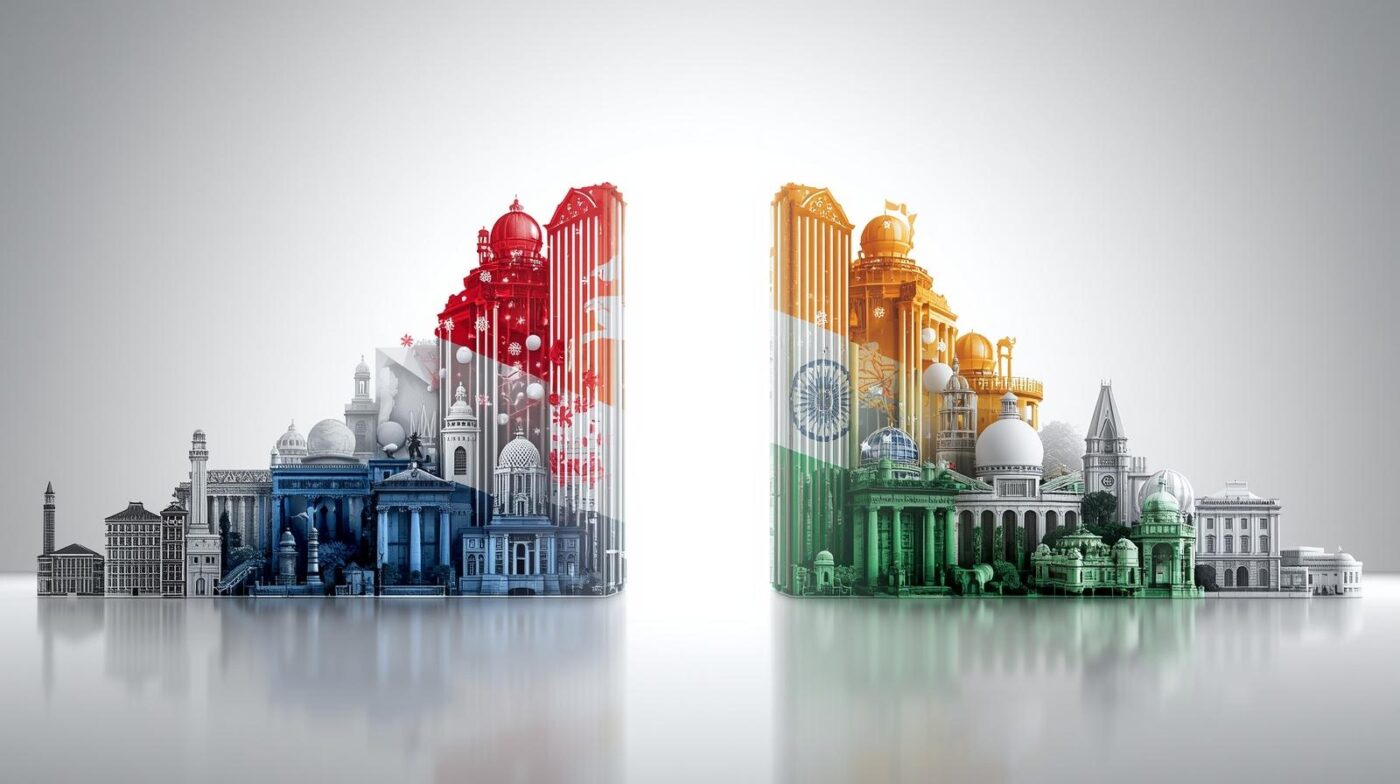

The Netherlands more than doubled imports from India between 2020 and 2024, reaching €17.4 billion. The country is now the EU’s largest importer of Indian goods. One-third of goods are transit trade, but real opportunities exist in clothing imports, computer services partnerships, and specialized value-added services. Established infrastructure reduces startup friction for expat entrepreneurs.
Core Facts:
- Dutch imports from India grew from €7.9 billion (2020) to €17.4 billion (2024)
- Goods imports nearly tripled to €10.8 billion; services grew 66% to €6.6 billion
- One-third of goods are transit trade, not genuine Dutch market demand.
- Computer services lead at €2.1 billion, with over 300 Indian companies operating in the Netherlands.
- New EU-India free trade agreement (January 2026) creates early-mover advantages.
I’ve been watching Dutch import data for years. Something changed between 2020 and 2024. Most expat business owners haven’t registered this yet.
The Netherlands more than doubled its imports from India, from €7.9 billion to €17.4 billion, according to Statistics Netherlands (CBS). We’re talking about €9.5 billion in new trade flow in four years.
The country now ranks as the largest EU importer of Indian goods, surpassing Germany, France, Italy, and Belgium. While competitors saw their Indian imports decline between 2022 and 2024, Dutch imports continued to climb.
This isn’t a statistical curiosity. This is a structural shift with specific opportunities and risks for micro and small businesses operating in the Dutch market.
Here’s what the data shows, and what this means for your business decisions.
What Is Transit Trade and Why Does It Matter?
Before you interpret any of these numbers, you need to understand one critical distinction.
One-third of Indian goods entering the Netherlands are in transit trade (doorvoer). These goods pass through Dutch ports but never enter Dutch ownership. They arrive, get logged as imports, then leave for other EU destinations. No one in the Netherlands becomes the legal owner.
This matters because headline figures distort opportunity.
Total goods imports from India hit €10.8 billion in 2024. Only €7.2 billion represents Dutch trade. The rest is logistics flow with little value to the domestic market.
For expat entrepreneurs considering import operations, this distinction separates authentic market demand from port throughput statistics.
The CBS data breaks down re-export rates by category:
- Mobile phones: 74% re-exported (primarily transit trade)
- Clothing: 26% re-exported (stronger domestic absorption)
- Petroleum products: 9% re-exported (genuine Dutch market demand)
If you’re evaluating product categories for import businesses, these percentages tell you where real Dutch consumer and business demand lives. And where Rotterdam functions as a European logistics hub.
Bottom line: Transit trade inflates headline numbers. Focus on categories with low re-export rates to find genuine Dutch market opportunities.
Which Product Categories Offer Real Opportunities?
Three categories account for 54.7% of all Indian goods imports into the Netherlands.
Mobile phones lead at €2.7 billion, but most of the flow goes straight to other EU markets. This category offers a limited opportunity for small importers unless you position yourself as a specialized distributor or service provider in the re-export chain.
Petroleum products stand at €2.6 billion, with a 9% re-export rate. This signals genuine Dutch industrial and consumer demand. The category requires capital, regulatory compliance with ecological standards, and established relationships with refineries and distributors. Not accessible for most micro businesses.
Clothing reaches €0.6 billion with 26% re-export. This is the most actionable category for small importers. Three-quarters of imported Indian clothing stays in the Dutch market. Real consumer demand without the capital barriers of petroleum or the transit-dominated structure of electronics.
The pattern reveals something useful: categories with lower re-export rates offer better positioning for businesses serving the Dutch market directly. You’re not competing in high-volume, low-margin logistics operations.
Bottom line: Clothing offers the best entry point for micro businesses. Lower capital requirements and 74% domestic absorption rate signal authentic market demand.
How Do Services Imports Create Business Opportunities?
While goods imports tripled, services imports grew 66% to €6.6 billion. India is now the Netherlands’ largest Asian services supplier.
This growth tells a different story from goods transit trade.
Computer services account for €2.1 billion, or 31.4% of all services imports from India. This category includes custom software development, web hosting, cloud services, and IT consulting.
For expat entrepreneurs, this concentration creates both competition and alliance opportunities.
The competition: Over 300 Indian companies now operate in the Netherlands, including all major IT firms (TCS, HCL, Wipro, Infosys, Tech Mahindra), according to the Indian Embassy. Those established players control large enterprise contracts.
The collaboration opportunity: Small consultancies and specialized service providers position themselves as localization partners, quality assurance intermediaries, or niche providers in areas underserved by large Indian IT firms.
The €2.1 billion in computer services imports confirms market acceptance of Indian providers. This reduces risk for smaller businesses entering similar arrangements or building combined models. Models where Indian technical capacity meets Dutch market knowledge.
Professional and management advisory services reached €1.5 billion. Another €1.5 billion in technical business services. These categories show opportunities for outsourcing partnerships, competitive analysis, and understanding where Indian providers have gained trust with Dutch clients.
Bottom line: Computer services show mature market acceptance. Position as a specialized partner or localization intermediary. Don’t compete directly with established firms.
What Infrastructure Advantages Can You Leverage?
The Netherlands became the EU’s largest importer of Indian goods because of structural advantages, not accidents.
Rotterdam’s port infrastructure, combined with established customs procedures and freight networks, creates an ecosystem advantage for any business engaging in Indian trade.
This means you get access to:
- Specialized freight forwarders experienced with Indian paperwork requirements.
- Customs brokers familiar with Indian product classifications and tariff codes
- Established banking relationships for trade finance and currency exchange
- Business networks through organizations like the Netherlands-India Chamber of Commerce
The recognition of Dutch ports as Europe’s most efficient gateway creates cost advantages. Shipping to Rotterdam typically costs less than shipping to other European ports. Strong road, rail, and waterway connectivity across the EU means you can leverage existing logistics networks. You’re not building from scratch.
For micro businesses testing import models, this infrastructure reduces startup friction.
Bottom line: Established infrastructure means lower startup costs. You get entry to specialized freight forwarders, customs brokers, and banking relationships without building them yourself.
What Regulatory Requirements Must You Navigate?
Any expat entrepreneur engaging with Indian suppliers must navigate Dutch import regulations through designated institutions.
Belastingdienst (Dutch Tax Authority) handles VAT implications. If your annual turnover stays under €20,000, you apply for the Small Businesses Scheme (kleineondernemersregeling, KOR). This exempts you from charging VAT to customers and reduces compliance complexity for micro-entrepreneurs testing import-oriented business models.
Douane (Customs) manages import duties and documentation. The growth in Indian imports tells us streamlined compliance pathways already exist. You still need proper product classifications, origin certificates, and tariff calculations.
If you handle data services (relevant given the €2.1 billion in computer services imports), the Autoriteit Persoonsgegevens governs GDPR compliance for any processing of personal data.
The established presence of over 300 Indian companies in the Netherlands shows a mature regulatory system. These companies have already managed the compliance requirements, creating precedent and reducing uncertainty for smaller businesses entering similar arrangements.
Bottom line: Regulatory pathways exist because large firms have already navigated them. Small businesses benefit from established precedents and simplified operations.
How Does the Investment Relationship Benefit Small Businesses?
The Netherlands ranks fourth among FDI sources for India, with cumulative investment of $53.3 billion from April 2000 to March 2025, according to the Indian Embassy.
This bilateral investment relationship matters for small businesses. What this signals:
- Established banking relationships between Dutch and Indian financial institutions
- Tested payment mechanisms for cross-border transactions
- Regulatory systems that reduce friction for trade finance
When large-scale investment flows function smoothly, smaller transactions typically benefit from the same infrastructure and institutional knowledge.
Bottom line: Established investment relationships mean-tested banking infrastructure and payment mechanisms for cross-border transactions at all scales.
What Does the New Free Trade Agreement Mean?
In January 2026, the European Commission and India reached an agreement on a free trade deal after 20 years of negotiations.
This creates immediate opportunities as tariff structures evolve and market access improves.
For expat entrepreneurs, this moment matters. Early movers who understand the new tariff landscape and compliance requirements position themselves before markets fully adjust.
The agreement accelerates the already vigorous growth trajectory. Businesses establishing supplier relationships and market placement now will benefit as trade barriers decrease.
Bottom line: The January 2026 free trade agreement creates early-mover advantages. Position now before markets fully adjust to new tariff structures.
What Strategic Questions Should You Ask Now?
The data shows patterns. Your business decisions depend on how you interpret them.
Where do authentic market opportunities exist beyond transit trade?
Focus on categories with low re-export rates and strong domestic absorption. Clothing, specialized industrial inputs, and niche consumer goods show better positioning than high-volume electronics transit.
What value-added services bridge the gap between bulk Indian imports and final Dutch customers?
Look at localization, quality assurance, specialized packaging, or customization services. Services where you transform generic imports into market-ready products.
How do you position yourself as a collaboration partner rather than competing directly with established Indian firms?
The €2.1 billion in computer services imports tells us there’s room for specialized providers, cultural intermediaries, or niche consultancies. You augment rather than compete with large IT firms.
What reverse opportunities exist for Dutch goods or services to enter the Indian market?
The established trade relationship creates a two-way infrastructure. If you have specialized knowledge or products, the same logistics networks and banking relationships work in both directions.
Where do concentration risks create arbitrage opportunities?
The dominance of specific categories (phones, petroleum, clothing, IT services) tells us that adjacent product lines or service categories remain underserved by large-scale importers.
Where Should You Focus Your Positioning?
The Netherlands’ position as the EU’s primary gateway to India creates structural advantages you can leverage without building from scratch.
The infrastructure exists. The banking relationships function. The regulatory pathways are established. The compliance precedents exist.
Your decision boils down to positioning: Will you compete in high-volume, low-margin categories dominated by transit trade? Or will you identify gaps where specialized knowledge, localization, or value-added services create a defensible margin?
The €17.4 billion in imports represents a flow. Your opportunity lives in the friction points. Places where flow needs translation, adaptation, or technical handling.
Structure your approach around genuine Dutch market demand, not headline import statistics. Understand the difference between logistics throughput and consumption. Position where established infrastructure reduces your startup costs while market gaps still offer margin.
The data shows the machine. Your job is to find where you fit.
Frequently Asked Questions
What is transit trade, and why should I care about it?
Transit trade (doorvoer) refers to goods passing through Dutch ports but never entering Dutch ownership. They arrive, get logged as imports, then leave for other EU destinations. One-third of Indian goods entering the Netherlands are in transit trade. This inflates headline import figures and distorts apparent market opportunities. Focus on categories with low re-export rates to find genuine Dutch demand.
Which product categories offer the best opportunities for small importers?
Clothing offers the most accessible gateway with €0.6 billion in imports and only 26% re-export rate. This means 74% stays in the Dutch market. Real consumer demand without the capital barriers of petroleum or the transit-dominated structure of electronics.
Can small businesses compete with the 300+ Indian companies already operating in the Netherlands?
Direct competition with established firms like TCS, HCL, Wipro, and Infosys is difficult. Position instead as a localization partner, quality assurance intermediary, or niche provider in areas underserved by large Indian IT firms. The €2.1 billion in computer services imports shows market acceptance. This reduces risk for specialized providers who augment rather than compete.
What regulatory requirements must I handle when importing from India?
You need to navigate three main institutions: Belastingdienst (Dutch Tax Authority) for VAT implications, Douane (Customs) for import duties and documentation, and Autoriteit Persoonsgegevens for GDPR compliance if handling data services. If your annual turnover stays under €20,000, you apply for the Small Businesses Scheme (KOR) to reduce VAT complexity.
How does the January 2026 EU-India free trade agreement change things?
The agreement reduces tariff barriers and improves market access after 20 years of negotiations. Early movers who understand the new tariff landscape and compliance requirements position themselves before markets fully adjust. This schedule offers advantages to businesses that establish supplier relationships and market placement now.
What infrastructure advantages does the Netherlands offer for Indian trade?
Rotterdam’s port infrastructure provides access to specialized freight forwarders experienced with Indian documentation, customs brokers familiar with Indian product classifications, established banking relationships for trade finance, and business networks through organizations such as the Netherlands-India Chamber of Commerce. These reduce startup friction.
How can I tell if a product category has genuine Dutch demand versus just transit trade?
Check the re-export rate. Low re-export rates indicate genuine domestic absorption. For example: petroleum products (9% re-exported), clothing (26% re-exported), versus mobile phones (74% re-exported). Categories below 30% re-export typically represent real Dutch market demand.
What value-added services work well between Indian suppliers and Dutch customers?
Services transforming bulk imports into market-ready products perform well: localization, quality assurance, specialized packaging, customization, cultural intermediation, and technical adaptation. These create a defensible margin by adding value beyond simple logistics.
Key Takeaways
- The Netherlands doubled imports from India to €17.4 billion between 2020 and 2024, becoming the EU’s largest importer of Indian goods.
- One-third of goods are in transit trade. Focus on categories with low re-export rates (below 30%) to find genuine Dutch market demand.
- Clothing imports offer the best entry point for micro businesses with 74% domestic absorption and lower capital requirements than petroleum or electronics.
- Computer services dominate at €2.1 billion. Position as a specialized partner or localization intermediary. Don’t compete with 300+ established Indian firms.
- Established infrastructure (Rotterdam port, customs procedures, banking relationships) reduces startup friction. You leverage existing networks without having to build from scratch.
- The January 2026 EU-India free trade agreement creates early-mover advantages for businesses positioning before markets fully adjust to new tariff structures.
- Structure your approach around genuine Dutch market demand, not headline statistics. Find friction points where specialized knowledge, localization, or value-added services create a defensible margin.