





The Netherlands remains one of Europe’s inflation outliers.
Dutch inflation held at 2.4% in February 2026, but services inflation surged to 4.2%.
Wage pressures and rent increases drive this gap.
If you run a service business in the Netherlands, your costs are rising faster than headlines suggest.
Energy prices stabilized at 0.0%, food costs dropped to 1.4%, and cross-border deflation reached -0.9%.
This creates sector-specific opportunities and risks for micro and small businesses.
Core Insights:
- Services inflation jumped from 3.6% to 4.2% between January and February 2026, driven by wage costs and home rents.
- Energy inflation sits at 0.0%, producing a temporary window to lock in favorable long-term contracts.
- Food and beverage inflation decelerated to 1.4%, offering margin opportunities for hospitality businesses.
- Cross-border consumption shows -0.9% inflation, pressuring domestic retailers near borders.
- CBS shifted the CPI base year to 2025=100, requiring contract indexation clause audits
Why Dutch Inflation Stays Above the Eurozone Average
The eurozone settled at 1.9% in February 2026. Dutch inflation held at 2.4%. The gap isn’t new.
What’s new is where the pressure concentrates.
Services inflation jumped to 4.2% in February, up from 3.6% in January. This marks the highest services inflation in months. Two forces drive this upsurge: wage costs and home rents.
If you run a service business, employ people, or lease office space, this number matters more than the headline rate.
Bottom line: Service inflation runs nearly twice the overall rate. Your input costs rise faster than what clients see in news headlines.
The Mechanism Behind the 4.2%
The Dutch labor market is tight. Unemployment sits at around 4.1%. Nominal wage growth is expected to run at 5.2% in 2025, easing to 3.8% in 2026. Still elevated.
Businesses face rising labor costs. Many pass those costs to customers through higher service prices. Landlords face the same wage pressures in property management and maintenance, leading to higher rents. Service providers with leases absorb both.
The result: services inflation at 4.2% while overall inflation sits at 2.4%.
This isn’t temporary. The European Commission forecasts tight labor markets through 2027, keeping wage growth above historical norms.
Key insight: Tight labor markets and elevated wage growth create structural pressure on service costs. The European Commission expects these conditions to be met by 2027.
What This Means for Your Pricing Strategy
If you run a service business, your input costs rise faster than the economy-wide average.
Your wage bill is climbing. Your rent is climbing. Your outsourced services are climbing. Your clients benchmark you against 2.4%.
You need to justify rate increases when clients see steady inflation in the news. The justification exists: service inflation runs nearly twice the headline rate.
Control point: When negotiating contracts with annual indexation clauses, specify adjustments tied to services inflation (4.2%) rather than general CPI (2.4%). The CBS publishes category-specific indices. Use them.
What matters: Clients benchmark you against 2.4%. Your actual cost increases run closer to 4.2%. Use CBS category-specific indices to justify rate changes in contract negotiations.
The Energy Stability Window
Energy inflation hit 0.0% in February.
After the 2022 to 2023 crisis, when energy costs spiked and crushed margins across sectors, this firmness is significant. It’s also temporary.
Energy markets remain volatile. Geopolitical risks persist. Climate impacts on supply chains are structural, not cyclical.
Lock in favorable energy contracts now.
If you’ve been operating on variable-rate agreements or short-term contracts, you have breathing room to negotiate fixed rates without an immediate risk of price spikes. Businesses locked in contracts during the 2022 spike paid premiums for years. Businesses locking in now benefit from calm.
Control point: Review your energy contracts. If you’re on variable pricing, get quotes for fixed-rate agreements covering 12–24 months. Energy stability won’t last forever.
Action window: Energy markets won’t stay calm forever. Political and climate risks remain structural. Lock in 12 to 24-month fixed-rate contracts while prices sit at 0.0%.
Food Deflation and the Hospitality Opportunity
Food, beverages, and tobacco inflation dropped from 2.0% in January to 1.4% in February.
This follows eight consecutive months of negative year-over-year price changes for imported food products.
If you run a restaurant, café, catering business, or any operation with significant food inventory, your input costs are easing. Your menu prices likely reflect last year’s inflation.
You have two options:
Option 1: Hold prices steady and improve gross margins.
Option 2: Lower prices selectively to gain market share while maintaining positive margins.
The choice relies on your competitive position and customer sensitivity. The opportunity exists because your costs are moving in your favor for the first time in years.
One structural caveat: climate change is adding 0.15-0.3 percentage points to Dutch food inflation over the long term. Hot summers interrupt supply. This deflation is cyclical relief, not permanent.
Control point: Review your menu pricing quarterly. If food costs are falling but your prices reflect 2024 inflation, you’re either overcharging or leaving margin on the table.
Tactical choice: Food costs are falling for the first time in years. Hold prices to capture margin, or selectively lower prices to gain market share. Review pricing quarterly.
The Cross-Border Pricing Problem
Consumption abroad showed -0.9% inflation in February.
Dutch consumers are finding better value abroad. For businesses in border regions or tourist-dependent sectors, this creates pressure.
Your domestic prices are rising. Prices across the border in Germany or Belgium are stable or falling. Your customers notice.
This isn’t theoretical. Dutch shoppers already cross borders for groceries, fuel, and consumer goods. If your business competes with cross-border alternatives, you face a structural pricing disadvantage.
The flip side: if you source products or services internationally, your purchasing power improves. Negative inflation abroad means your supplier costs are falling while domestic sales prices hold steady.
Control point: If you operate near borders, benchmark your pricing against German and Belgian competitors. If you source internationally, renegotiate supplier contracts to capture the deflationary benefit.
Two-sided pressure: If you sell domestically near borders, cross-border deflation hurts your competitiveness. If you source internationally, it improves your purchasing power. Benchmark pricing and renegotiate supplier contracts.
The Consumer Savings Signal
Dutch households are saving at a 17% rate.
A level historically seen only during major crises.
Wages are rising. Purchasing power is improving. But consumers aren’t spending the gains. They’re banking them.
For B2C businesses, this means the wage growth you’re paying your employees isn’t translating into greater consumer expenditure in your sector. Labor cost pressure is real. Revenue boost from higher consumer incomes is muted.
This creates a margin squeeze: costs up, demand flat.
The implication: You can’t rely on rising wages to drive revenue growth. Compete on value, differentiation, or process efficiency.
Control point: If your revenue model assumes consumer spending will rise with wages, adjust your forecast. Dutch consumers are cautious. Build your growth plan around retention and margin management, not volume expansion.
Revenue reality: Dutch households save at a rate of 17%. Rising wages aren’t translating to greater consumer spending. Build revenue plans around retention and margin management, not volume growth.
The CBS Base Year Change You Need to Act On
The Centraal Bureau voor de Statistiek shifted the CPI base year from 2015=100 to 2025=100 in January 2026.
This is a technical change. It doesn’t affect inflation calculations. But it affects how indices are reported and compared.
Why this matters.
Consumer price index figures are often used to adjust contracts, fees, and charges.
If your lease agreement, supplier contract, or client pricing formula includes an automatic indexation clause tied to CPI, verify which base year the contract references.
A contract written in 2023 is likely to reference 2015=100. A contract written in 2026 ought to reference 2025=100. If the contract doesn’t specify, or if parties assume different base years, your indexation calculation will be wrong.
The cost of getting this wrong: Disputes with landlords, underpayment to suppliers, or overcharging clients. All of which creates legal exposure and relationship damage.
Control point: Audit every contract with CPI indexation clauses. Confirm the base year in writing. If the contract is silent, amend it. This is a one-time administrative fix that prevents recurring errors.
Administrative risk: Mismatched CPI base years in indexation clauses create payment errors, disputes, and legal exposure. Audit contracts now. Confirm base years in writing.
Tax-Driven Inflation and the Hospitality Hit
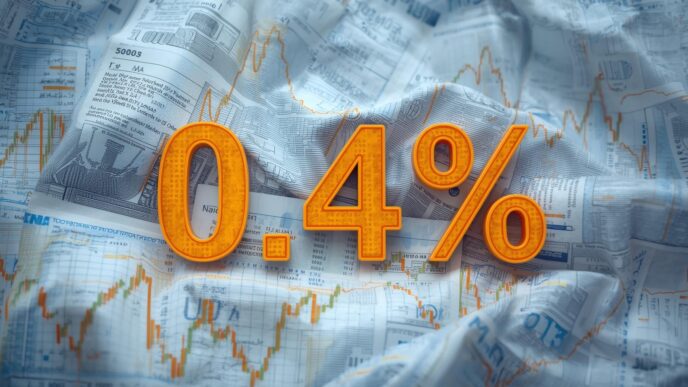
The CPB (Centraal Planbureau) estimates tax changes will add 0.4 percentage points to 2026 inflation.
This includes higher VAT rates and fuel taxes. One specific change: a higher VAT rate on overnight stays starting January 1, 2026.
If you operate a hotel, B&B, vacation rental, or any accommodation service, you’re facing both higher tax expenses and possible demand effects.
Higher VAT means higher prices for customers unless you absorb the tax increase in your margin. Most businesses pass this through. When you pass this through, you risk losing cost-conscious customers to competitors in neighboring countries with lower VAT rates.
Control point: Model the impact of the VAT increase on your pricing. Calculate the breakeven point where absorbing the tax costs is less than losing volume. If you’re near a border, compare your post-tax pricing to German or Belgian alternatives.
Tax timing: The higher VAT on accommodation took effect on January 1, 2026. Model whether absorbing the tax or passing it through incurs greater volume loss, especially if you compete with German or Belgian properties.
What Founders Should Watch Next
The European Central Bank targets inflation of 2%. The Netherlands is running above this at 2.4%, but the gap is narrowing.
Services inflation at 4.2% is the outlier. It’s driven by wage growth in a tight labor market. Structural, not temporary.
If you employ people or buy services, your costs will keep rising faster than the headline rate. If you sell services, you have justification to raise prices. If you compete with cross-border alternatives, you’re at a disadvantage.
Energy stability is a temporary window. Food deflation is cyclical relief with a climate-driven structural headwind underneath. Consumer caution is real.
The control points:
- Tie contract indexation to services inflation, not headline CPI
- Lock in energy contracts while prices are stable.
- Review food pricing quarterly to capture margin or market share.
- Benchmark cross-border pricing if you operate near Germany or Belgium
- Audit CPI indexation clauses for base year accuracy
- Model VAT impacts on accommodation pricing.
- Build revenue plans around retention, not volume growth fueled by wage increases.
Inflation at 2.4% sounds stable. The mechanism underneath is not.
Frequently Asked Questions
What is driving services inflation to 4.2% in the Netherlands?
Two primary forces: wage costs and home rents. The Dutch labor market is operating at a 4.1% unemployment rate, with nominal wage growth of 5.2% in 2025. Businesses pass rising labor costs to customers through higher service prices. Landlords face the same wage pressures in property management and maintenance, pushing rents up. Service providers absorb both.
How does Dutch inflation compare to the eurozone average?
The Netherlands sits at 2.4% in February 2026, while the eurozone average settled at 1.9%. This makes the Netherlands an EU inflation outlier. The gap persists because of systemic elements in service pricing, not temporary shocks.
Should I adjust my service business pricing based on 2.4% or 4.2% inflation?
Base adjustments on 4.2% services inflation, not the 2.4% headline rate. Your input costs (wages, rents, outsourced services) rise at the services rate. CBS publishes category-specific indices. Reference these in contract indexation clauses to justify rate increases.
Why should I lock in energy contracts now if prices are stable?
Energy inflation sits at 0.0% after the 2022 to 2023 crisis. This firmness is temporary. Energy markets remain volatile due to political risks and structural impacts from the climate crisis. Businesses locked in contracts during the 2022 spike paid premiums for years. Locking in now during calm periods captures advantageous rates before the next spike.
What does -0.9% cross-border consumption inflation mean for my business?
Dutch consumers find better value outside the Netherlands. Prices in Germany and Belgium are stable or falling, while Dutch domestic prices rise. If you sell near borders, you face pricing pressure. If you source internationally, your purchasing power improves because supplier costs are falling.
How does the CPI base year change from 2015=100 to 2025=100 affect my contracts?
The technical change doesn’t affect inflation calculations, but it affects how indices are reported. Contracts written before 2026 likely reference 2015=100. New contracts ought to reference 2025=100. If your indexation clause doesn’t specify a base year, calculations will be incorrect, leading to disputes and payment errors.
Why are Dutch consumers saving at 17% despite rising wages?
This savings rate appears only during major crises. Wages are rising and purchasing power is improving, but consumers bank the gains rather than spend them. For B2C businesses, this means wage growth doesn’t translate to higher consumer expenditure. Labor cost pressure is real, while revenue growth from higher incomes remains muted.
What is the impact of higher VAT on accommodation businesses?
Tax changes add 0.4 percentage points to 2026 inflation, including higher VAT on overnight stays effective January 1, 2026. You either absorb the tax in your margin or pass this through to customers. Passing this through risks losing cost-conscious customers to competitors in neighboring countries with lower VAT rates. Model the breakeven point.
Key Takeaways
- Services inflation at 4.2% is nearly double the 2.4% headline rate, driven by wage pressures and rent increases in a tight labor market.
- Energy prices stabilized at 0.0% inflation, yielding a temporary window to lock in 12 to 24-month fixed-rate contracts before volatility returns.
- Food and beverage inflation decelerated to 1.4%, offering hospitality businesses a choice: hold prices to improve margins or lower prices selectively to gain market share.
- Cross-border consumption deflation at -0.9% creates pricing pressure for businesses near German or Belgian borders, but improves purchasing power for international sourcing.
- CBS shifted the CPI base year to 2025=100, entailing immediate audits of contract indexation clauses to prevent payment errors and disputes
- Dutch households save at a 17% crisis level rate despite rising wages, meaning B2C businesses face margin squeezes (costs up, demand flat) and need retention-focused growth plans.
- Higher VAT on accommodation took effect in 2026, requiring accommodation businesses to model whether absorbing or passing through the tax minimizes volume loss.