




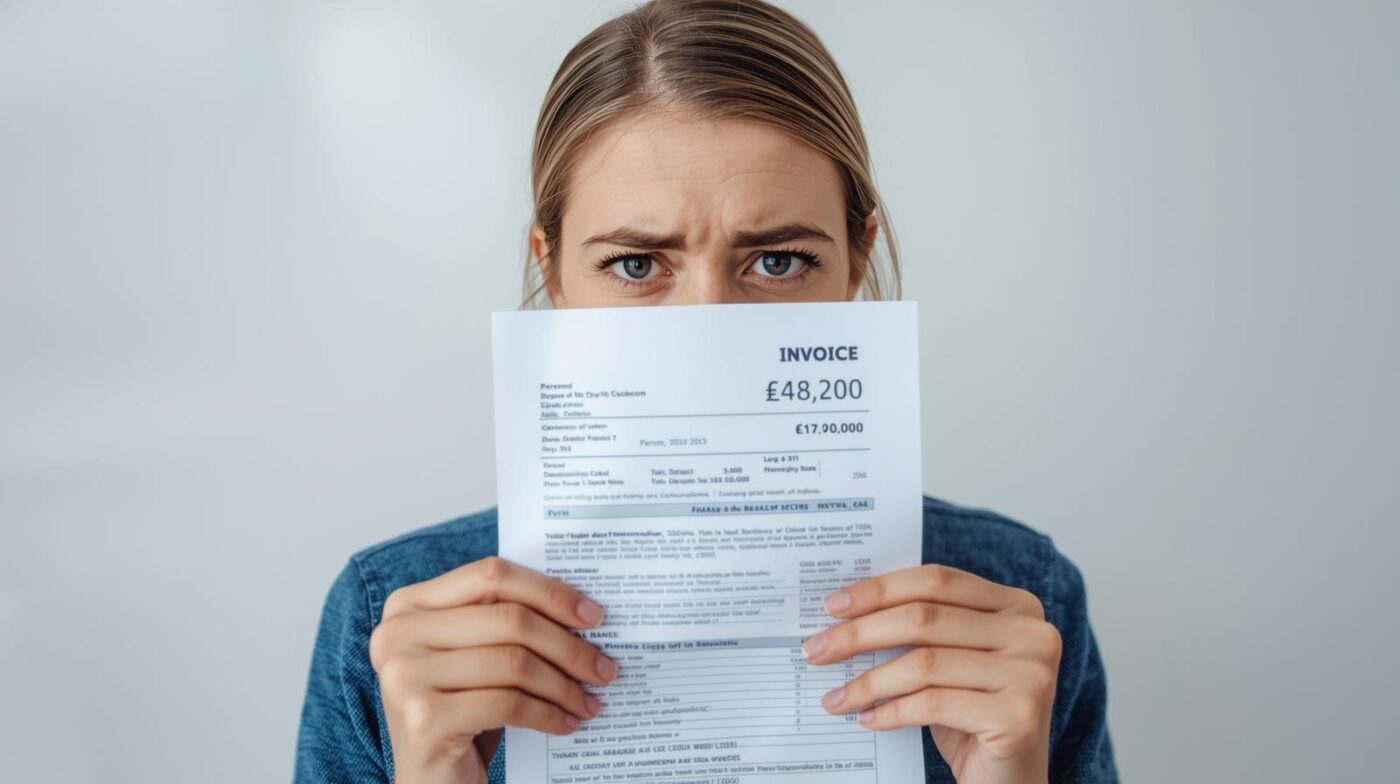

A micro BV owner lost €4,200 in VAT deductions during an audit because invoices showed a personal name instead of the company’s legal name. Documentation determines tax reality in the Netherlands. The Belastingdienst audits paper trails, not business intent. Wrong names on receipts create non-deductible VAT expenses that compound over years.
Core Answer:
- Invoices with your personal name instead of your BV’s legal name result in denied VAT deductions, even if expenses are legitimate and paid from company accounts
- The Belastingdienst treats personal-name invoices as personal expenses. Intent, payment source, and actual business use don’t override documentation errors
- Lost deductions accumulate across a five-year claim window. €4,200 in denied VAT represented €20,000 in ineligible expenses
- Penalties for invoice non-compliance reach up to €5,278. You lose the deduction and face fines for documentation failure
- Prevention requires upfront discipline: provide your BV’s legal name at checkout, verify receipts before leaving, establish correct documentation for recurring contracts
What triggers denied VAT deductions in the Netherlands
I thought I understood VAT compliance until I watched a micro BV owner receive an audit adjustment for €4,200 in denied deductions.
The expenses were legitimate. The purchases were business-related. The payments came from the company account.
The invoices had his personal name on them.
That was enough.
How documentation errors create tax liability
When you buy something for your business but the invoice shows your personal name instead of your BV’s legal name, the Belastingdienst treats it as a personal expense.
Your intentions don’t matter. The payment source doesn’t matter. The actual business use doesn’t matter.
Documentation determines tax reality.
The tax authority audits paper trails, not intent. If the receipt says “John Smith” and your company is “Smith Consulting BV,” you’ve created a legal separation that makes the VAT non-deductible.
You paid €210 including VAT, but you expense €173.55. The €36.45 VAT portion stays with you.
Multiply that across dozens of purchases over multiple quarters, and you’re looking at thousands in lost deductions.
Mechanism insight: Documentation accuracy determines whether VAT is deductible. Personal names on business invoices create automatic disqualification during audits.
Why founders make this mistake repeatedly
The blind spot isn’t ignorance. It’s operational velocity.
You’re standing at a hardware store checkout. The cashier asks for your information. You give your name because it’s faster than spelling out “Innovate Digital Solutions BV” and providing a KVK number.
The receipt prints. You move on.
That 30-second interaction created a compliance gap that compounds monthly.
The problem intensifies with recurring expenses. A mobile phone contract under your personal name. A software subscription that auto-renews. A lease agreement signed before you incorporated.
These aren’t one-time documentation errors. They’re systematic VAT leakage.
The five-year claim window means these errors accumulate silently. By the time an audit surfaces the issue, you’ve lost years of deductions that will never be recovered.
Pattern recognition: Speed at checkout creates documentation errors. Recurring expenses multiply single mistakes into systematic compliance failures.
The three-level cost structure of documentation failure
The financial damage operates on three levels.
First: denied deductions. You pay VAT twice. Once when you purchase, and again when you don’t reclaim it. That €4,200 adjustment I mentioned? It represented roughly €20,000 in documented expenses that became ineligible.
Second: penalty exposure. Invoice non-compliance carries penalties up to €5,278. The Belastingdienst doesn’t only deny your deduction. They fine you for the documentation failure itself.
Third: administrative recovery cost. Fixing retroactive documentation is nearly impossible. Retailers don’t reissue receipts from months ago. Subscription services resist changing historical invoices. You’re left reconstructing proof that no longer exists.
Risk concentration: Total cost of documentation errors includes lost deductions, statutory penalties, and impossible retroactive fixes. Small mistakes create large liabilities.
Why micro and small BVs face higher vulnerability
The micro and small BV sector faces concentrated risk here. These companies are exempt from mandatory audits, which creates a false sense of safety.
Founders assume they’re too small to worry about documentation precision.
They’re wrong.
VAT compliance requirements apply universally. Company size doesn’t reduce your documentation burden. It increases your vulnerability because you lack the institutional knowledge that larger corporations build into their procurement systems.
Structural insight: Audit exemptions create compliance complacency. Universal VAT requirements apply regardless of company size. Smaller companies face higher risk due to institutional knowledge gaps.
Five control points that prevent expensive corrections
The fix isn’t complex. It’s positional.
Recurring expenses: establish accuracy at inception
Establish correct documentation at contract inception. When you sign up for a subscription, lease, or service agreement, provide your BV’s legal name and details immediately.
Correcting this upfront takes two minutes. Fixing it later takes hours and often fails.
Point-of-sale purchases: request company details at checkout
Request company details at checkout. Most modern cash register systems have built-in functionality to add business information to receipts.
The cashier won’t offer it automatically, but the system supports it. Ask explicitly.
Small purchases under €100: know the threshold rule
The receipt threshold rule allows VAT deduction without company name documentation when expenses fall below €100.
This creates a practical boundary. Purchases above this threshold require proper invoicing. Purchases below it don’t. Know where that line sits.
Payment traceability: use company payment methods exclusively
Use company payment methods exclusively for business expenses. The Belastingdienst requires proof that your identity as client is traced through the payment method.
Cash purchases weaken this trail. Card payments linked to your BV strengthen it.
Record retention: maintain documentation for seven years
Maintain documentation for seven years. This isn’t optional. The extended retention period means documentation errors surface years after the original transaction.
Your 2024 receipts become audit evidence in 2031.
Implementation framework: Prevention requires positional control at five decision points: contract inception, point of sale, threshold awareness, payment method selection, and retention discipline.
What prevention looks like in practice
I now watch for documentation accuracy at the moment of transaction, not during quarterly bookkeeping.
When a vendor asks for my details, I provide the BV name first. When I receive a receipt, I verify the company information before leaving the counter. When I sign a contract, I confirm the legal entity matches my registration.
This isn’t perfectionism. It’s cost avoidance.
The €4,200 adjustment I witnessed didn’t result from fraud or negligence. It resulted from accumulated small decisions made under time pressure. Each individual receipt seemed insignificant. Collectively, they created substantial liability.
The system doesn’t measure your business intent. It measures your documentation discipline.
Structure prevents crisis. Install the control once. Save the panic forever.
Frequently Asked Questions
What happens if my invoice has my personal name instead of my BV name?
The Belastingdienst treats it as a personal expense and denies the VAT deduction. You lose the right to reclaim the VAT portion of the purchase, even if the expense was legitimate and paid from your company account. Documentation overrides intent in Dutch tax law.
How much does invoice documentation error cost Dutch BVs?
A single audit adjustment resulted in €4,200 in denied VAT deductions, representing €20,000 in ineligible expenses. Penalties for invoice non-compliance reach up to €5,278. Total cost includes lost deductions, fines, and administrative recovery attempts that usually fail.
Do small purchases under €100 need company name on receipts?
No. The receipt threshold rule allows VAT deduction without company name documentation for purchases below €100. Above this threshold, proper invoicing with your BV’s legal name becomes mandatory for VAT reclaim eligibility.
How long must I keep business receipts in the Netherlands?
Seven years. The Belastingdienst requires documentation retention for seven years. Documentation errors surface years after the original transaction. Your 2024 receipts become audit evidence in 2031.
Why do micro BVs face higher VAT documentation risk?
Micro and small BVs are exempt from mandatory audits, creating a false sense of safety. Founders assume they’re too small for documentation precision. VAT compliance requirements apply universally. Smaller companies lack the institutional knowledge that larger corporations build into procurement systems.
How do I fix receipts that already have wrong names?
Fixing retroactive documentation is nearly impossible. Retailers don’t reissue receipts from months ago. Subscription services resist changing historical invoices. Prevention at the point of transaction is the only reliable control.
What should I say at checkout to get correct documentation?
Request company details explicitly. Provide your BV’s legal name and KVK number. Most modern cash register systems have functionality to add business information to receipts. Cashiers won’t offer it automatically, but the system supports it. Ask before the receipt prints.
Do cash purchases affect VAT deduction eligibility?
Cash purchases weaken payment traceability. The Belastingdienst requires proof that your identity as client is traced through the payment method. Card payments linked to your BV strengthen this trail and support deduction claims during audits.
Key Takeaways
- Documentation determines VAT deduction eligibility in the Netherlands. Personal names on business invoices result in denied deductions regardless of payment source or business intent
- A €4,200 audit adjustment represented €20,000 in ineligible expenses. Invoice non-compliance penalties reach €5,278. Retroactive fixes are nearly impossible
- Speed at checkout creates systematic errors. Providing your BV’s legal name takes two minutes upfront but hours to fix later, with frequent failure
- Recurring expenses multiply single documentation mistakes into systematic VAT leakage. Mobile contracts, subscriptions, and leases under personal names compound monthly
- The €100 receipt threshold rule allows VAT deduction without company documentation below this limit. Above €100, proper invoicing with your BV’s legal name becomes mandatory
- Micro BVs face higher risk despite audit exemptions. VAT compliance requirements apply universally. Company size increases vulnerability through institutional knowledge gaps
- Prevention requires positional control at transaction moment, not quarterly bookkeeping. Verify receipts before leaving the counter. Establish correct documentation at contract inception