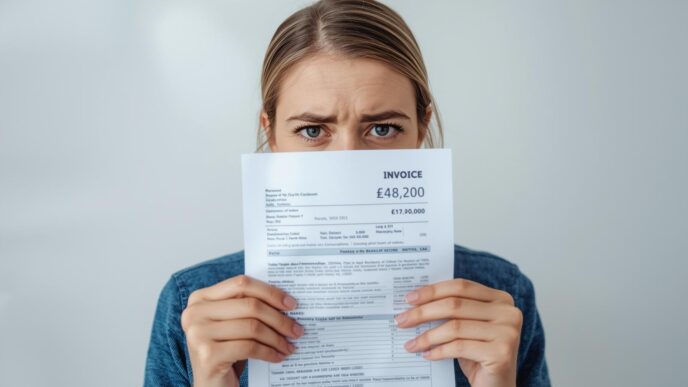






VAT audits in the Netherlands fail because of technical violations in routine bookkeeping, not fraud.
Three main issues trigger denied deductions: incomplete invoice documentation, unverified supplier VAT numbers, and timing differences between invoicing and payment.
As of January 2025, errors over €1,000 must be corrected within eight weeks, or penalties reach 100%.
Prevention costs less than fixing mistakes later.
Core Answer:
- VAT liability starts when you issue an invoice, not when payment arrives
- Supplier VAT numbers must be verified in VIES before claiming deductions.
- Absent invoice elements (KvK number, correct VAT rates) invalidate deductions.
- Errors compound across the seven-year retention period.
- Verification during onboarding prevents multi-year exposure.
You file quarterly. You track invoices. You pay on time.
VAT compliance becomes routine. Then the Belastingdienst announces an audit.
The problem isn’t fraud. Routine administrative habits create technical violations accumulating quietly over multiple quarters. Auditors see patterns you stopped noticing.
Here’s what triggers denied deductions and unexpected cash corrections during VAT audits in the Netherlands.
How Do VAT Audits Work in the Netherlands?
VAT audits examine coherence, not perfection.
The Belastingdienst checks whether your invoices match your bank statements. They verify your VAT returns match your bookkeeping. They examine whether you proved the legitimacy of every supplier whose VAT you reclaimed.
Most failures happen in three places:
Invoice documentation. Missing or incomplete VAT numbers, incorrect company details, or invoices not meeting legal minimum requirements under Dutch law. The standard feels bureaucratic until an auditor denies €3,000 in deductions because your template lacked the KvK number.
Supplier verification. You paid an invoice in good faith. The supplier looked legitimate. But if their VAT number wasn’t active in the VIES system when you processed the transaction, the Belastingdienst denies your input VAT claim. The risk transfers to you.
Timing mismatches. VAT becomes due when you issue an invoice, not when your customer pays. You invoiced ha10,000 in Q3, but the payment arrived in Q4? You still owed €2,100 in VAT during Q3. When the invoice becomes uncollectible, and you never correct it via proper channels, you are financing the tax authority’s portion of your bad debt.
The audit doesn’t care about your workload or intentions. The audit measures whether your administrative structure produces proof.
Bottom line: Audits measure proof, not intention. Your administrative structure must demonstrate harmony across invoices, bank statements, and VAT returns.
Why Do Expat Entrepreneurs Miss VAT Errors?
You’re managing a business in a second language. You’re navigating Dutch administrative systems designed for people familiar with local norms. You’re often handling bookkeeping without a dedicated finance team.
The mistakes feel minor in the moment:
You use a standard invoice template without verifying that the template meets Dutch legal requirements. You assume your accounting software auto-fills the right VAT rate. You trust suppliers with professional websites have valid registration. You reclaim VAT on mixed-use expenses without documenting the business percentage.
Each decision saves time. Each feels reasonable under pressure.
Dutch VAT compliance operates on a seven-year record retention requirement. Audits review multiple years at once. Small errors compound across quarters into substantial corrections. These corrections hit your cash flow simultaneously.
As of January 1, 2025, the enforcement rules shifted. If you discover errors exceeding €1,000 in previous returns, you must correct them within eight weeks, or penalties reach 100% of the VAT amount. The window for quiet correction closed.
Bottom line: Small time-saving decisions compound across the seven-year retention period. The January 2025 enforcement change eliminated the grace period for voluntary corrections.
What Does a VAT Audit Actually Cost?
When VAT mistakes surface during an audit, the financial impact arrives in layers.
Denied deductions. When the auditor determines that your supplier verification was insufficient or your invoices were incomplete, they deny the input VAT you claimed. The ha5,000 in deductions you took last year turns into €5,000 you now owe, plus interest.
Penalties. Late or missing VAT returns trigger penalties starting at €131. Non-compliance with invoicing obligations reaches €5,278. Careless errors in payment max out at €5,278, while gross negligence brings 25-50% penalties. Fraud cases result in 100% penalties plus potential criminal prosecution.
Cash flow disruption. You already spent the money. The correction arrives as an immediate liability during a quarter when you budgeted for normal operations, not retroactive tax payments.
Administrative burden. Fixing multi-year errors requires reconstructing documentation, correcting multiple quarters of returns, and handling correspondence with the Belastingdienst while running your business.
The structure of Dutch VAT creates a timing vulnerability. You pay VAT on invoices before collecting payment from customers. If your typical quarterly VAT obligation exceeds €15,000, you’re required to file monthly returns. This increases administrative frequency when cash flow is already constrained.
For businesses under the €20,000 annual turnover threshold, the Small Business Scheme (KOR) offers an exit from VAT obligations. Cross the threshold, and you need immediate administrative discipline. The transition happens fast.
Bottom line: Audit corrections hit as immediate cash liabilities plus penalties plus administrative burden. The timing creates cash flow shocks during quarters when you budgeted for normal operations.
What Specific Mistakes Trigger VAT Corrections?
Incomplete invoice requirements. Dutch law mandates specific elements: your company name and address, KvK number, VAT identification number, invoice date and unique number, customer details, description of goods or services, amounts excluding and including VAT, applicable VAT rate, and payment terms. Missing one element invalidates the invoice for VAT purposes.
Unverified supplier VAT numbers. Before applying 0% VAT rates or reverse-charge mechanisms for intra-EU transactions, verify the supplier’s VAT number through VIES. The KvK states you should print the verification page and attach the page to your invoice to show you applied the correct rate. Skip this step, and the Belastingdienst reclassifies the transaction and denies your deduction.
Incorrect VAT rate application. The Netherlands uses 21% standard rate, 9% reduced rate for specific goods and services, and 0% for certain exports and intra-EU supplies. Applying the default 21% without verification creates overpayments. Applying reduced rates without correct classification creates underpayments surfacing in audits.
Mixed-use expense claims. Reclaiming 100% of VAT on expenses with private use triggers scrutiny. Company cars, home office costs, and mobile phone bills require documented business-use percentages. Without proof, auditors deny the claim.
Uncorrected bad debt. When an invoice becomes uncollectible, you reclaim the VAT you already paid to the Belastingdienst, but only through proper correction procedures. Letting the receivable sit on your books means you continue financing VAT on revenue you never collected.
Bottom line: Five recurring mistakes account for most audit corrections: incomplete invoices, unverified suppliers, wrong VAT rates, undocumented mixed-use claims, and uncorrected bad debt.
How Do You Prevent VAT Audit Problems?
Verify suppliers during onboarding. Check every new supplier’s VAT number in the VIES system before processing the first invoice. Confirm their KvK registration. Save the verification documentation. This takes three minutes per supplier and prevents multi-year exposure.
Review your invoice template annually. Dutch requirements change. Your template from 2022 might be lacking elements that are mandatory in 2025. Run your template past a bookkeeper or accountant once per year to confirm compliance.
Reconcile your VAT account before filing. Match your VAT return to your bookkeeping prior to submission. If the numbers don’t align, investigate before filing. Catching errors in-house costs time. Catching them during an audit costs money.
Document mixed-use calculations. If you reclaim VAT on expenses with private components, maintain written documentation of how you calculated the business percentage. Auditors accept reasonable estimates supported by records. They reject unsupported claims.
Review outstanding invoices quarterly. Identify receivables older than 90 days. When an invoice becomes uncollectible, initiate the VAT correction process immediately rather than waiting for an audit to surface the issue.
Separate approval and payment functions. When the same person approves invoices, processes payments, and records transactions, you create an environment where errors and irregularities enter without resistance. Even in a micro business, adding one authentication step increases control.
Bottom line: Prevention requires verification at six decision points: supplier onboarding, template review, pre-filing reconciliation, mixed-use documentation, quarterly receivables review, and payment approval separation.
What Does Effective VAT Administration Look Like?
Good VAT administration doesn’t require expensive software or dedicated finance staff.
Good VAT administration requires systematic verification at decision points: onboard a supplier, create an invoice template, process a mixed-use expense, and file a return.
The discipline is front-loaded. You verify once during setup. You review once per quarter. You reconcile before filing.
The alternative is retroactive correction under audit pressure. This costs more in both cash and attention than preventive structure ever does.
Attention, in a small business, is a scarce resource. VAT compliance either consumes attention in small, predictable doses during routine operations or in large, disruptive chunks during enforcement.
The choice is structural, not technical.
If you can’t prove it during an audit, you don’t control it.
Bottom line: Good administration means front-loaded verification at decision points, not expensive software. The alternative is retroactive correction under audit pressure, which costs more in both cash and attention.
Frequently Asked Questions
When does VAT liability start?
VAT becomes due when you issue an invoice, not when your customer pays. If you invoice €10,000 in Q3 but receive payment in Q4, you owe the VAT in Q3.
How do I verify a supplier’s VAT number?
Check the VAT number in the VIES system before processing your first invoice from that supplier. Confirm their KvK registration. Print and save the verification page as proof.
What happens when I claim VAT from an invalid supplier?
The Belastingdienst denies your input VAT claim. You become liable for the full amount you deducted, plus interest, even when you paid the supplier in good faith.
Do I need to correct old VAT errors?
Yes. As of January 1, 2025, errors exceeding €1,000 must be corrected within eight weeks, or you face penalties up to 100% of the VAT amount.
What invoice elements are legally required in the Netherlands?
Company name and address, KvK number, VAT identification number, invoice date and unique number, customer details, description of goods or services, amounts excluding and including VAT, applicable VAT rate, and payment terms.
What are the VAT rates in the Netherlands?
21% standard rate, 9% reduced rate for specific goods and services, and 0% for certain exports and intra-EU supplies. Applying the wrong rate creates corrections in audits.
How long must I keep VAT records?
Seven years. Audits review multiple years at once, so small errors compound across quarters into substantial corrections.
What is the Small Business Scheme (KOR)?
Businesses under €20,000 annual turnover exit VAT obligations through KOR. Cross the threshold, and you need immediate administrative discipline.
Key Takeaways
- VAT audits fail because of technical violations in routine bookkeeping, not fraud. Three triggers dominate: incomplete invoices, unverified suppliers, and timing mismatches.
- Supplier verification transfers legal risk to you as the buyer. Verify VAT numbers in VIES and KvK registration before processing invoices.
- As of January 2025, errors over €1,000 must be corrected within eight weeks. The grace period for quiet corrections ended.
- Dutch VAT operates on a seven-year retention requirement. Small errors compound across quarters into cash flow shocks in audits.
- Prevention costs less than correction. Three minutes of verification per supplier prevents multi-year exposure.
- Good administration means front-loaded verification at decision points: onboarding, template review, reconciliation, documentation, receivables review, and payment separation.
- If you can’t prove it during an audit, you don’t control it. Administrative coherence matters more than perfection.