


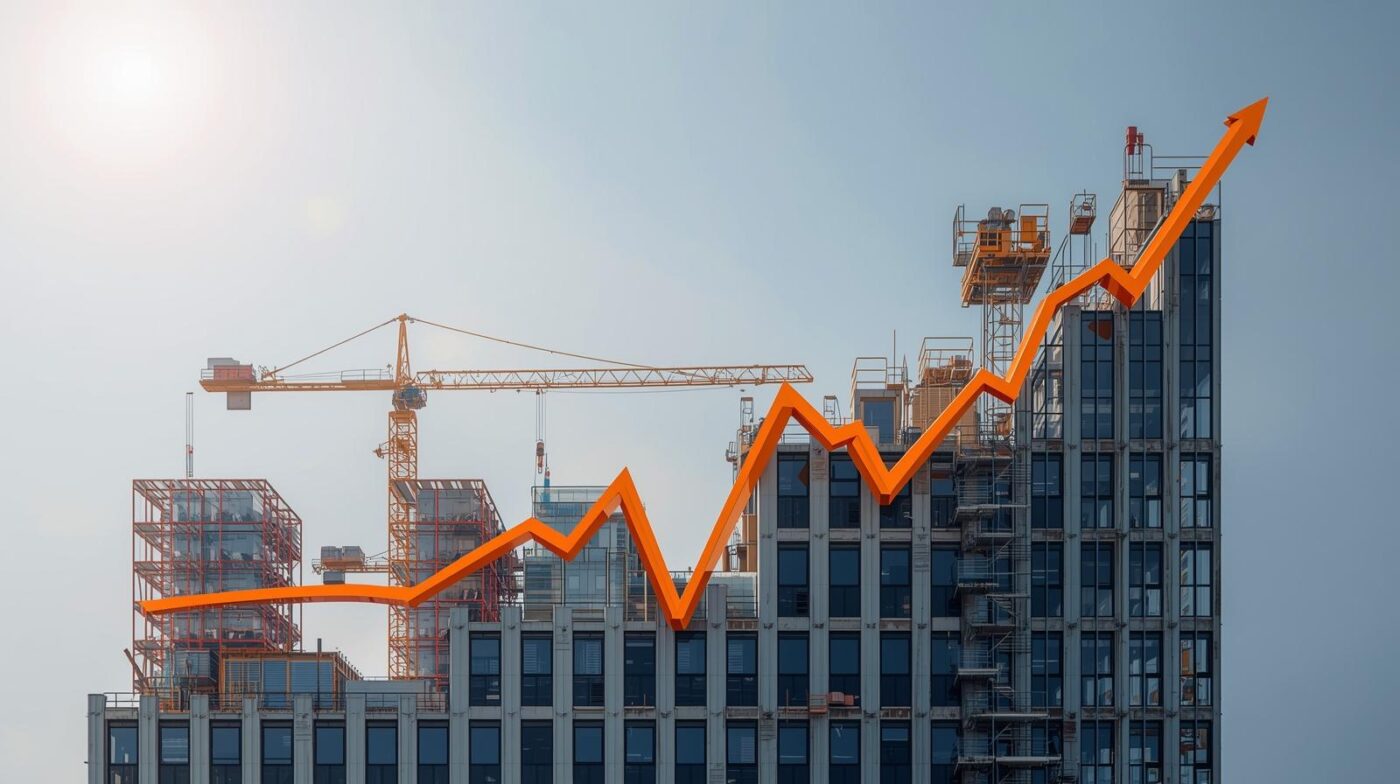


The Netherlands saw tangible fixed asset investments drop 4.1% year-over-year in November 2025.
The same month, the CBS Investment Radar improved. Export growth strengthened. Economic signals pointed up.
The investments still fell.
This isn’t a calendar quirk or a data error. This is what happens when conditions improve but confidence doesn’t follow. When the system sends positive signals but founders and finance teams refuse to commit capital.
I’ve watched this pattern before. The gap between “things are getting better” and “we’re ready to invest” isn’t small. The gap is structural. And the gap reveals something uncomfortable about how Dutch businesses make capital allocation decisions under uncertainty.
The Mechanism Behind the Lag
Here’s what happens:
Step 1: Economic indicators improve. The CBS Investment Radar tracks export performance, producer confidence, and capacity utilization. These metrics climb.
Step 2: Businesses acknowledge the improvement. They see the data. They read the reports. They nod in meetings.
Step 3: They don’t act. Capital stays parked. Projects stay on hold. Investment decisions get pushed to next quarter.
The CBS itself notes improved circumstances don’t necessarily translate into higher growth or smaller declines in investment. The correlation exists historically, but the lag is real.
This isn’t hesitation. This is rational caution in a system where one wrong capital commitment damages the business for years.
Why Dutch Founders Miss the Real Risk
Most founders treat investment timing as a confidence problem.
They think: “When I feel more certain, I’ll invest.”
The real issue is structural exposure. Investment decisions in uncertain environments aren’t about optimism. They’re about proof the conditions will hold long enough to justify the capital.
The Netherlands faces a specific vulnerability here. Net exports accounted for more than 12% of GDP in 2024. The OECD explicitly warns strong reliance on trade and global value chains exposes the economy to global shocks, geopolitical fragmentation, and supply chain disruptions.
Translation: Your investment decision depends on variables you don’t control.
When export growth drives the Investment Radar up, founders know growth reverses fast. They’ve seen this happen. The 2021-2025 pattern tells the story: significant growth in 2022-2023, followed by contractions in 2024, then mixed performance in 2025.
Volatility itself becomes a deterrent. You don’t build a five-year capital plan when the environment shifts every 18 months.
What This Costs
The cost of delayed investment isn’t always visible as lost revenue.
It shows up as:
Operational drift. Teams work around missing infrastructure. Processes stay manual. Efficiency gains don’t materialize. The gap between what the business does and what the business should do widens quietly.
Competitive erosion. Competitors who do invest pull ahead. Not dramatically. Steadily. By the time you’re ready to move, the advantage is gone.
Talent friction. Good people leave when they see the company refusing to invest in the tools, systems, or capacity they need to do their jobs well.
Strategic fragility. When you finally do need to invest under pressure, you have no margin. You make decisions fast, with incomplete information, because delay is no longer an option.
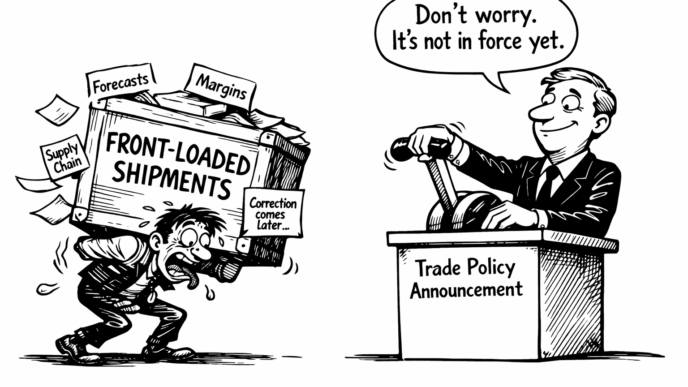
The ECB noted in September 2025 business investment is likely to be postponed and remain subdued throughout 2025 due to heightened trade tensions and associated uncertainty. The pattern isn’t cancellation. The pattern is postponement.
The postponement has a cost structure most founders underestimate.
The Confidence Gap Across Europe
This isn’t only a Dutch problem, but Dutch businesses feel it acutely.
The 2025 EIB Investment Survey found 83% of EU firms cite uncertainty as a barrier to investment, compared with only 68% of US firms. A 15-percentage-point gap.
European businesses, including those in the Netherlands, are structurally more cautious. The regulatory environment is denser. The trade dependencies are deeper. The geopolitical exposure is higher.
When uncertainty rises, European firms pull back faster and harder than their US counterparts. The data confirms what founders already feel: you’re operating in a system punishing bold capital moves more than rewarding them.
The Shift Toward Intangible Assets
There’s another mechanism at work the tangible fixed asset data doesn’t capture.
Between 1977 and 2014, investment in tangible assets fell by 35% while intangible asset investment increased by 60%. By 2014, intangible and tangible investment rates were nearly mirror images of their 1977 levels.
Translation: The decline in tangible fixed assets reflects a structural shift toward digital transformation and intellectual capital, not pure economic weakness.
Founders are investing. They’re just investing in software, data infrastructure, process automation, and skills development instead of machinery and buildings.
This shift creates a measurement problem. The CBS tracks tangible fixed assets. The CBS doesn’t fully capture the capital flowing into intangible infrastructure.
If you’re a founder watching these investment statistics and thinking “this doesn’t match what I’m seeing in my business,” you’re investing in systems and capabilities not showing up in traditional fixed asset categories.
What Selective Investment Looks Like
Despite the overall weakness, some investment is happening.
Rabobank projects business investment will recover modestly after declining in recent years. Government investments are expected to grow by 3.0% in 2026 and 4.5% in 2027, partly due to defense expansion.
This tells you something important: Investment isn’t dead. It’s selective.
Capital flows to strategic priorities. Defense. Infrastructure. Digital capacity. Areas where the business case is clear, the risk is manageable, or the decision is non-optional.
Founders are making the same calculation. They’re investing where they must and deferring where they can.
The problem is “where they defer” often includes investments improving efficiency, reducing operational risk, or building competitive advantage. These get postponed because they’re not urgent.
Until they are.
The Investment Bottleneck Problem
The European Commission identified weak domestic investments as one of the structural drivers of the Netherlands’ persistent current account surplus of around 9% of GDP.
This creates a paradox: investment bottlenecks contribute to savings surpluses across the economy.
The Commission points to obstacles related to labor shortages, electricity grid capacity, and environmental regulations as factors hampering capital deployment.
Translation: Even when founders want to invest, the infrastructure to absorb the investment doesn’t always exist.
You don’t expand production if you don’t get grid capacity. You don’t build a new facility if environmental permitting takes two years. You don’t scale operations if you don’t hire the people you need.
The system creates friction at exactly the point where investment should flow.
Control Points for Founders
If you’re running a business in this environment, here’s what reduces exposure:
Build decision criteria separating signal from noise. Define the specific conditions triggering investment. Not “when things feel better,” but “when export growth holds above X% for Y quarters” or “when our capacity utilization exceeds Z% for three consecutive months.” Make the decision rule explicit before the pressure hits.
Track your intangible investments with the same discipline you track tangible ones. If you’re shifting capital toward software, automation, or skills development, measure the shift. Treat the shift as capital allocation, not operating expense. You need visibility into where the money goes.
Stress-test your investment decisions against volatility, not stability. Assume the current conditions will change within 18 months. If the investment still makes sense under this assumption, the investment is defensible. If the investment only works in a stable environment, you’re taking more risk than you think.
Separate strategic investments from efficiency investments. Strategic investments build future capacity. Efficiency investments reduce current costs. When uncertainty rises, efficiency investments become more defensible. They pay back faster and reduce operational exposure.
Install a postponement review process. Every time you postpone an investment decision, document why. Review those decisions quarterly. Postponement is rational. Indefinite postponement without review is drift.
Monitor your competitive position relative to investment decisions. If your competitors are investing and you’re not, the gap compounds. Track the gap. Measure the gap. Make sure the decision to wait is based on analysis, not inertia.
The Real Cost of Waiting for Certainty
The CBS Investment Radar improves. Founders wait.
Export growth strengthens. Founders wait.
Economic signals turn positive. Founders wait.
This pattern isn’t irrational. It’s a response to structural uncertainty in a trade-dependent economy with high regulatory friction and geopolitical exposure.
But waiting has a cost structure accumulating quietly.
Operational capacity stagnates. Competitive position erodes. Talent frustration builds. Strategic options narrow.
By the time certainty arrives, the opportunity moves.
The mechanism is simple: Better conditions don’t trigger better decisions when the confidence gap is structural, not emotional.
You fix this by building decision discipline working under uncertainty. By defining investment criteria not depending on perfect information. By separating strategic bets from efficiency plays. By tracking postponement as a decision, not a default.
The system won’t give you certainty. It will give you signals.
Your job is to decide which signals justify capital deployment.
Structure the decision process now, or spend the next three years postponing investments you should have made today.