Market date: Monday 15 June 2026. Amsterdam closed at 1,075.52 (-0.52%), and this Market Close separates the price move from the business signal.
AEX fell 0.52%; Amsterdam lagged Europe, keeping cost and export discipline in view.
The day in numbers
| Index | Market | Close | Move |
|---|---|---|---|
| AEX | Amsterdam | 1,075.52 | -0.52% |
| CAC 40 | Paris | 8,384.01 | +0.40% |
| BEL 20 | Brussels | 5,683.73 | -0.93% |
| PSI 20 | Lisbon | 9,046.15 | -0.52% |
The Day's Ledger
The AEX closed at 1075.52 on Monday 15 June 2026, down 5.66 points, or 0.52%. The day started stronger at 1090.95 and briefly touched 1091.71, but the close came close to the session low of 1073.96. That is the useful fact of the day: Amsterdam did not collapse, but it gave up the morning with little ceremony.
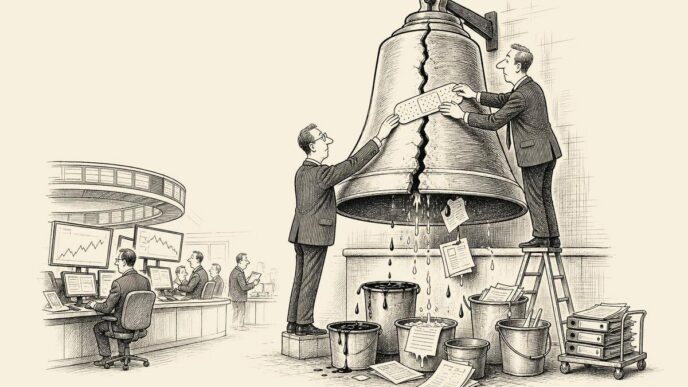
This matters because the move followed two strong sessions last week. The index had risen 1.06% on Thursday and 1.70% on Friday. Today was not a fresh crisis. It was a check on the rebound. Paris managed a gain of 0.40%, while Brussels lost 0.93% and Lisbon fell 0.52%. The AEX therefore sat with the weaker Benelux tone, not with the broader relief visible elsewhere in Europe.
Why the market chose this tempo
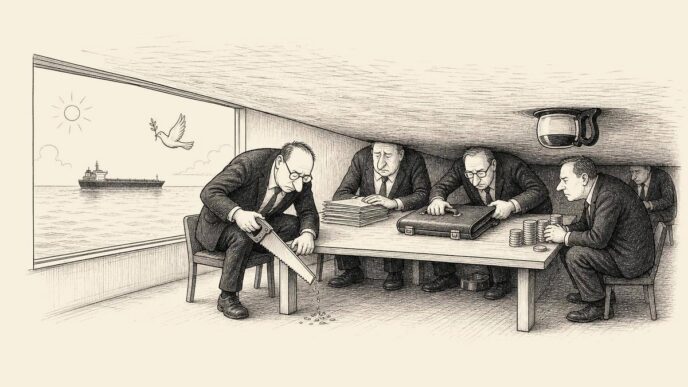
The easy market story would be that Europe rallied on geopolitical relief and Amsterdam should have joined. Reuters, via Kitco, reported that the STOXX 600 hit a record high after a preliminary US-Iran agreement that would reopen the Strait of Hormuz and end the three-month Middle East war. That was a real driver for European mood. But the AEX did not confirm it. When an index falls on a day of wider European relief, the local reading becomes more selective.
Part of that selectivity is structural. The AEX is heavily shaped by a small number of very large names, especially ASML, Shell and Unilever, according to Euronext index materials. If the largest names do not carry the day together, the index can look colder than the continental headline. I could verify Shell’s dividend currency announcement for 15 June and ASML’s earlier 2026 guidance, but I could not verify a clean, company-specific news cause for the AEX’s late weakness today. So the honest line is simple: the tape weakened, but the single-stock cause was not verified.
The rate backdrop did not help the mood. The ECB raised its three key interest rates by 25 basis points on 11 June and explicitly linked the move to inflation pressure from the Middle East war and higher energy prices. That keeps financing costs in the room for Dutch firms, even on days when oil or geopolitics look less frightening.
The domestic pulse for Dutch business
For entrepreneurs, ZZP professionals and BV directors, today’s market is less about drama and more about pricing power. CBS reported Dutch inflation at 3.5% in May, up from April. That means wage demands, rent discussions, insurance, logistics and energy-sensitive inputs remain boardroom items, not background noise.
CBS has also reported that many Dutch companies are leaning harder on automation because of staff shortages. That is the domestic mirror of the AEX’s global theme. Capital is expensive, labour is scarce, and technology is no longer a luxury story. It is becoming a margin defence story.
Tomorrow 09:00 plan
First, check whether Amsterdam catches up with Europe’s relief or stays behind it. A second weak open after today’s low close would say that investors still want proof.
Second, watch the euro, oil and rates together. If geopolitical relief lowers energy stress but bond yields stay firm, business costs may not ease much.
Third, keep the Fed meeting of 16-17 June in view. The Federal Reserve calendar confirms the meeting, and global markets will listen for how the US central bank frames inflation and growth. For Dutch exporters, the dollar and US demand matter as much as the AEX headline.
In short
Amsterdam closed lower after a strong recent run, while the broader European story was more cheerful. That mismatch is the message. The market is not rejecting the Netherlands, but it is refusing lazy optimism. For business readers, the practical lesson is disciplined: protect margins, keep financing assumptions sober, and do not confuse a geopolitical relief rally with a lower-cost operating environment.
What moved the reading
| Driver | Business reading |
|---|---|
| Verified AEX close | The supplied index tape shows the AEX closing at 1075.52, down 0.52%, after opening higher and finishing near the day low. That makes the day a failed follow-through after last week’s rebound, not a broad panic. |
| European relief did not fully translate to Amsterdam | Reuters, carried by Kitco, reported that the STOXX 600 hit a record high after a preliminary US-Iran agreement. The AEX’s fall despite that backdrop shows local index composition and selective pressure mattered. |
| ECB rate pressure stayed relevant | The ECB raised its three key rates by 25 basis points on 11 June, citing Middle East war-related inflation pressure and higher energy-price assumptions. That keeps the cost of money central for European equities and Dutch companies. |
| Fed meeting risk sat immediately ahead | The Federal Reserve’s official calendar shows a 16-17 June 2026 FOMC meeting. European markets entered the week with US rate communication still capable of moving currencies, yields and global equity appetite. |
| Dutch cost pressure remained visible | CBS reported Dutch inflation at 3.5% in May 2026. For businesses, this keeps wage, supplier and pricing discipline relevant even when market sentiment improves. |
| Large-cap concentration shaped the reading | Euronext index materials show the AEX is heavily influenced by large constituents such as ASML, Shell and Unilever. No verified single-company cause for today’s late AEX weakness was found, so causality should not be overclaimed. |
Tomorrow morning
- Whether the AEX opens above or below today’s close at 1075.52.
- Oil, euro-dollar and eurozone bond yields after the reported US-Iran relief.
- Fed meeting positioning ahead of the 16-17 June policy decision.
Market Close note: The Polder Market Close is published for business context and financial education. It is not investment advice, trading advice, or a recommendation to buy, sell, or hold any financial instrument.
Sources
- Public historical index close fallback
- Reuters via Kitco: STOXX 600 hits record high after US-Iran preliminary peace deal
- European Central Bank: Combined monetary policy decisions and statement, 11 June 2026
- Federal Reserve: Meeting calendars and information
- CBS Economy dashboard
- Euronext AEX Index Factsheet
- ASML: Q1 2026 financial results
- Shell: First quarter 2026 interim dividend
Referenced in the article
Column | Market Pulse
Dutch Inflation Rose, but Your Margin Has Its Own Clock
CBS put May inflation at 3.5 percent. Small firms need a sharper reading than the headline.
AEX Closing Brief | Market Pulse
AEX firm, with the cost of money back in the room
AEX rose 0.48%; Amsterdam held firm, but costs and ECB risk still set the business test.
The Polder is written for readers who need the Dutch business environment translated into practical meaning. Corrections, source policy and editorial accountability are part of the publication record.