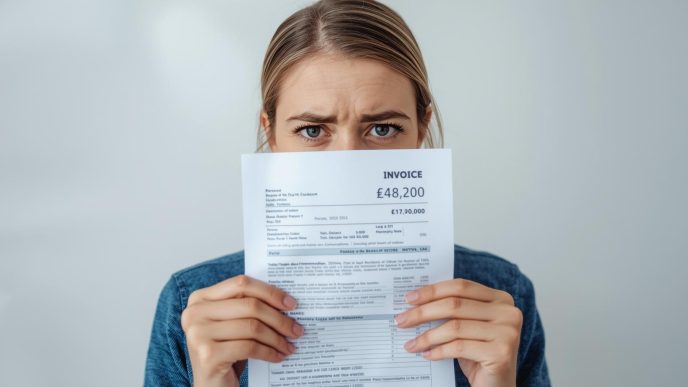
From 1 July 2026, low-value non-EU parcels lose their old customs shelter.
A small webshop can look polished until a parcel reaches the border. The product page is clean. The checkout works. The supplier ships from outside the EU. The customer sees a low price and expects an easy delivery. That is where the old comfort ends. The Dutch €150 parcel habit is about to meet a real customs cost.
The signal has to become readable
From 1 July 2026, packages from outside the EU with a value up to and including €150 can face a new import levy of €3 per kind of product. The Finance Ministry describes the change more technically: the customs-duty exemption for low-value e-commerce consignments ends, with a temporary fixed rate of €3 per declaration line until 2028.
For a founder, that is a margin story, a promise story, and a ledger story.
A checkout price is not the full price
The flow is narrow but common: individually addressed consignments below €150, sent directly from non-EU suppliers to EU consumers. That is the world of cheap accessories, fashion add-ons, gadgets, household items, and dropshipping orders.
A €3 charge on a €120 basket is an irritation. On a €7 phone case, it can decide whether the sale makes sense. Rijksoverheid gives a plain example: T-shirts plus a phone case can add up to €6 extra. Once the basket has mixed items, the real question becomes pricing, not law.
CBS gives the market context. In April 2026, Dutch online retail turnover was 5.9 percent higher than a year earlier. Webshops whose main activity is internet sales rose 6.2 percent. Online consumer electronics and clothing also grew. A market that is still buying gives a small charge more force.
The ledger gets crowded fast
The mistake is to treat a low-value parcel as light admin. It is small in value, not small in evidence. One order can carry a product description, declared value, customs data, VAT treatment, courier invoice, payment record, delivery proof, and a return trail.
The €150 threshold still matters for the VAT Import scheme. Belastingdienst says it can apply to distance sales of goods from outside the EU to EU customers who do not file VAT returns, when the value is no more than €150 and excise goods are excluded. Under that scheme, VAT is reported monthly and paid in one payment. No VAT is paid at import.
What the signal changes
That does not erase the customs charge. It means the ledger must separate customs duty, import VAT where relevant, VAT under the Import scheme, courier charges, customer receipts, refunds, and platform settlements. If those lines blur, the shop may still sell. The file will stop telling the truth.
Douane has used DECO for e-commerce imports since 2021. The system works with a reduced dataset compared with broader customs declarations, and Douane can carry out physical checks after the presentation notification. The Finance Ministry also links extra parcel supervision to structural funding of €100 million a year, with about 560 extra FTE in the appendix.
Dropshipping loses its old cover
Dropshipping is not banned. ACM ConsuWijzer describes it simply: a webshop takes the order and then buys from a foreign webshop that ships directly to the customer. The weak point is not the label. The weak point is control over the promise.
In a Dutch-facing dropshipping model, the seller may own the customer relationship while the supplier controls the product data. The courier controls the delivery message. The platform may control part of the payment trail. When border cost was easy to ignore, that weakness could hide. With a visible €3 line, it moves closer to the customer.
More cost may follow. The Finance Ministry expects an EU handling fee from 1 November 2026, at €2 per declaration line for individual consignments. Before 2028, the combined amount can reach €5 per declaration line when both apply. From 2028, actual customs-duty tariffs are expected for packages up to €150.
That makes one real order the best test. Does the product page show what the customer will pay? Does checkout explain import-related cost before payment? Does the courier invoice match the order? Does the VAT record match the scheme used? If the parcel comes back, who refunds what?
Price is only half the promise
The biggest risk is not always the €3. It is surprise. A customer who learns about import cost only through a delivery message may feel the deal changed after purchase. That leads to refused parcels, complaints, payment disputes, return costs, and poor reviews. None of that appears neatly in a customs table.
What founders should check
The consumer-law neighbour matters too. From 19 June 2026, ACM says webshops and apps must provide a clear digital cancellation or withdrawal function during the statutory 14-day cooling-off period. That rule is separate from customs, but daily operations do not keep them apart. Higher landed costs and weak delivery promises often end up as cancellations, returns, and service tickets.
For a micro-business, the practical question is simple. Can the shop absorb the cost, pass it on, or redesign around it without breaking trust? Absorbing it protects conversion but cuts margin. Passing it on protects margin but may reduce orders. Hiding it badly is the most expensive option.
A calmer way to decide
Some sellers will keep direct non-EU fulfilment. Others will move selected products into EU stock, bundle differently, raise prices, remove very cheap add-ons, or import in bulk before dispatching to customers. The Finance Ministry describes that shift as a possible move from individual parcels to bulk import followed by EU dispatch. It may suit some businesses. It will not suit all.
Each choice carries its own cost. EU stock reduces parcel-border friction, but it ties up cash and adds stock risk. Bundling protects margin, but it can reduce choice. Repricing cleans up the ledger, but it tests customer tolerance. There is no universal answer. There is only a cleaner calculation.
The founder from the opening scene does not need panic. She needs a table with low-value non-EU products, margins, return rates, supplier countries, and usual basket combinations. She needs to know who files the customs declaration, who uses the VAT Import scheme, who receives the courier invoice, and where the customer sees the cost.
The €150 line used to feel like shelter. From 1 July 2026, it is a control boundary. The parcel is still small. The discipline around it is not.
Sources
- Regeling met afschaffing vrijstelling invoerrechten e-commercezendingen tot € 150 gepubliceerd – Taxence
- Ministerie van Financiën / Rijksoverheid – Abolition of the €150 de-minimis customs exemption
- Rijksoverheid – Consumer-facing change from 2026-07-01
- Ministerie van Financiën / Rijksoverheid – National handling-fee decision deferred
- Belastingdienst / Douane – DECO and e-commerce customs declarations
- Belastingdienst / Douane – DECO data and physical-control readiness
- Belastingdienst – VAT Import scheme for distance sales from outside the EU
- Wettenbank / Overheid.nl – Official legal framework for the General Customs Regulation
Referenced in the article
Column | Market Pulse
Pax Silica Gives Dutch Suppliers a Bigger Market, With Tighter Gates
The chip and AI promise reaches smaller firms through contracts, staff, cash and ownership records.
Column | Governance
Schiphol Invoice Suspicions Raise the Price of Weak Rosters
A parking case shows why borrowed labour needs name-level control before the bill is paid.
Column | Governance
Dutch Clients Do Not Keep Your Business Dutch
KVK’s updated guidance turns emigration into a record, tax, and address decision.
The Polder is written for readers who need the Dutch business environment translated into practical meaning. Corrections, source policy and editorial accountability are part of the publication record.