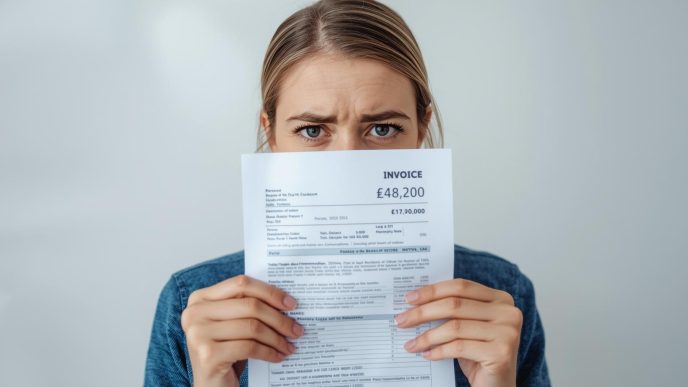




A simpler route through OSS still asks Dutch sellers to prove every cross-border sale.
In a Dutch webshop, the VAT problem rarely arrives as European law. It shows up as three ordinary orders before lunch: a Belgian consumer, a German business customer, and a French buyer whose VAT number was entered months ago. The parcel is packed, the invoice goes out, and only later someone asks whether the VAT treatment was right.
Where the work shifts
The bill on single VAT registration, published by the Ministry of Finance on 26 March 2026, implements the single VAT registration part of Directive (EU) 2025/516. It is a proposed change, not yet enacted law. Its practical effect is simple: fewer foreign VAT registrations for some cross-border activity, but more reliance on central reporting and clean records.
The signal has to become readable
The timetable matters. The Wet op de omzetbelasting 1968 is planned to change in stages, with entry dates of 1 January 2027, 1 July 2028, and 1 July 2029. The wider ViDA package also includes electronic invoicing, digital reporting, and platform rules. Those run on separate tracks.
From 1 January 2027, cross-border supplies of gas, electricity, heating, and cooling treated as intra-Community distance sales enter the expansion. From 1 July 2028, the proposed Union scheme widens further to specific goods supplies, including installation or assembly work, supplies on board ships, aircraft or trains, and certain domestic supplies to consumers.
For a webshop owner, that sounds technical. In practice, it reaches into the sales table, the VAT rate table, the customer record, and the invoice text. A foreign registration may disappear for one flow, but the country of supply still matters. So does proof.
The sale still needs proof
Belastingdienst guidance on the OSS scheme already shows the pace of this work. Union scheme VAT notifications are filed quarterly, including quarters with no relevant supplies. Corrections go into a later notification, usually within three years. Records must be kept for ten years after the year of supply.
That is not a light back office. It is a central VAT route with a clock attached to it. Repeated missing notifications or repeated non-payment after reminders can lead to exclusion from the Union scheme and the import scheme for two years.
What the signal changes
The same discipline applies to the Opgaaf ICP. Current guidance requires the ICP total to match the amount reported in VAT return field 3b for EU supplies and services. If the customer VAT number is invalid or the customer data is wrong, an additional assessment and penalty can follow.
For a small seller, that is the real risk line. The tax authority will not see a busy morning in the office. It will see data, dates, and the trail behind each sale.
Stock is not a side note
From 1 July 2028, the bill proposes an optional transfer scheme for moving a business's own goods to another member state through the one-stop system. The existing call-off stock arrangement stays available for goods moved before or on 30 June 2028 and is phased out no later than 1 July 2029.
The transfer scheme also brings bookkeeping for all covered movements and a ten-year retention period. That matters far beyond classic e-commerce. Think of spare parts in a Belgian warehouse, demo stock sent to Germany, goods for installation work in France, or stock moved before a final customer is known.
The proposed broader cross-border reverse charge keeps one old question alive: who owes the VAT, and can the invoice, ICP report, and customer data prove it? From 1 July 2028, that reverse charge is proposed to apply more broadly and become mandatory where the supplier is not VAT identified in the member state of taxation and the customer already is.
That change also pulls the ICP form back into view. Entrepreneurs will be required to file Opgaaf ICP for the relevant reverse-charged supplies and services. So the work does not vanish. It moves.
Growth makes this ordinary
CBS reported that Dutch retail turnover in May 2026 was 2.9 percent higher than a year earlier, with online turnover 4.8 percent higher. In 2024, 27 percent of Dutch businesses with 10 or more employed persons had electronic sales through a website, app, or EDI. In trade, the share was 50 percent.
What founders should check
Those figures do not turn every Dutch webshop into a cross-border VAT case. They do show why the subject has left the specialist corner. Digital selling makes distance feel smaller. VAT does not follow that feeling. It follows the customer, the country, the supply, and the proof behind it.
A founder who sells across borders feels that shift in the daily rhythm of the business. The order looks simple. The ledger does not.
What to check before the change arrives
In a small business, I would start with the transactions, not the law book. Which EU sales are B2C goods, B2B services, installation supplies, domestic supplies abroad, or own-goods movements? Which foreign VAT registrations exist today, and which transaction created them? Which country VAT rates sit in the webshop? How are corrections, nil OSS returns, and ten-year storage handled?
A sample of EU B2B invoices often shows the weak point quickly. Does the VAT ID evidence exist? Does the invoice wording match the treatment? Does the ICP total match field 3b? For a microbusiness using the EU-KOR, the map can still be country by country. Current Belastingdienst guidance allows the Union scheme in certain cases where EU turnover is no more than €100,000, while the import scheme cannot be used at the same time.
The cash effect is modest but real. Administrative relief can save time and outside filing costs. It does not automatically improve cash. Destination VAT rates can eat into fixed gross consumer prices. Quarterly OSS payments can bunch VAT outflows. Foreign input VAT may still need separate recovery handling.
Back at the webshop, the best preparation is not panic and not a thick memo. It is a cleaner sales setup, a better VAT-rate table, verified customer data, and software that can explain the 2027, 2028, and 2029 stages in ordinary language. Single VAT registration may reduce the number of doors a Dutch business has to open. It does not remove the need to know what is behind each sale.
Referenced in the article
Column | Ledger & Tax
Fewer VAT Registrations Still Ask More From Your Sales Records
The Dutch ViDA bill reduces some foreign doors, but clean VAT data becomes more valuable.
The Polder is written for readers who need the Dutch business environment translated into practical meaning. Corrections, source policy and editorial accountability are part of the publication record.