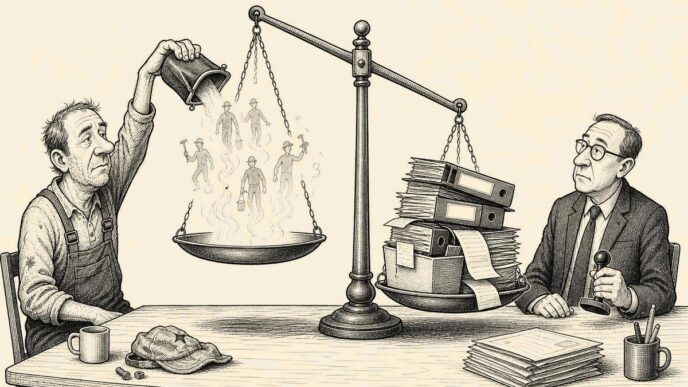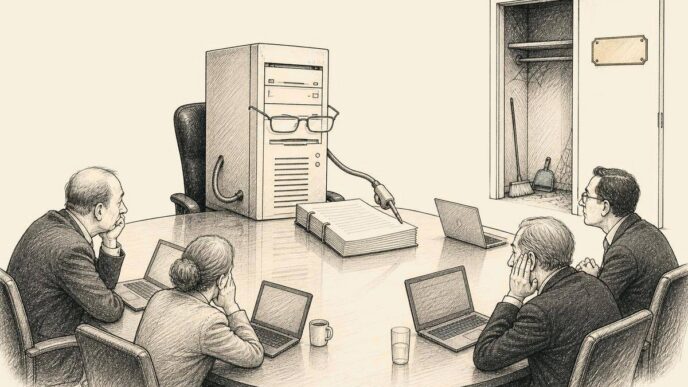
Dutch pay transparency asks employers to explain pay before memory and negotiation become weak evidence.
Salary is one of the places where a small company keeps its history. The first employee accepted a modest starting wage because the business was young. The second arrived during a tight labour market and negotiated harder. A key worker received an allowance after a difficult year. Someone else returned from leave and did not move up at the same pace. None of this is automatically wrong. It is how many real companies grow.
The problem begins when the history lives only in the founder’s head.
The signal has to become readable
That is the practical meaning of the Dutch pay transparency bill submitted to the Tweede Kamer on 21 May 2026. Rijksoverheid says the government wants the law to enter into force on 1 January 2027, if both chambers agree. The bill implements Directive (EU) 2023/970, the European pay transparency directive. Equal pay itself is not new in Dutch law. The current Wet gelijke behandeling van mannen en vrouwen already contains an equal-pay framework. The new pressure is different: employers will have to make the reasoning behind pay more visible, more consistent and easier to produce.
This is Dutch governance intelligence in a practical form. A company must be able to explain its own salary history before memory, habit and negotiation become weak evidence.
From equal pay to explainable pay
I read this bill less as a symbolic equality text and more as a governance signal. It asks a company to know why one job is valued in a certain way, why a salary range is set where it is, why a raise was granted, why a bonus was paid, and why two people doing equal or equivalent work are not paid the same.
The European directive requires applicants to receive information on initial pay or a pay range before pay negotiations. Employers may not ask applicants about current or previous pay history. Workers also have a right to request written information about their own pay level and average pay levels, broken down by sex, for workers doing the same work or work of equal value. The answer must come within a reasonable time and no later than two months.
The Dutch draft adds the company machinery around that. It proposes a job valuation and classification system based on objective and gender-neutral criteria, including skills, effort, responsibilities and working conditions. Employers would have to give workers easy access to criteria used for pay and pay levels. From 50 employees, access to pay development criteria also enters the picture. Employers with at least 100 employees move into formal pay-gap reporting.
Those with 100 to 249 employees report every three years, and those with 250 or more report annually. For reporting employers, the board confirms the reliability of the information.
That last point deserves attention. Once the board confirms reliability, pay data is no longer only an HR topic. It becomes a control statement.
The small-company version
Imagine a technical services company with twelve employees. Two planners coordinate similar work. One started earlier. The other arrived later during a recruitment shortage. One has a small monthly allowance that began as a temporary fix and never disappeared. A new vacancy goes out with a clear salary range because the market demands it and the law is moving that way. An existing employee sees the range and asks how her pay compares with others doing equivalent work.
What the signal changes
If the company has clear job descriptions, salary bands, records of raises, written reasons for allowances and clean payroll data, the conversation may still be sensitive. It can stay factual. If the answer is built from memory, old emails, vague titles and scattered exceptions, the discussion becomes harder than it needs to be.
That is the governance lesson for micro and small employers. Many will never file a formal pay-gap report. They can still feel the reform through recruitment, employee questions, agency-worker arrangements, payroll records and the expectations of the labour market. A small company does not need a corporate bureaucracy. It does need enough structure to explain itself.
The wage gap is also a ladder question
CBS data gives useful background. In 2024, women in the private sector earned on average 14.5 percent less per hour than men. After correction for worker, employer and job characteristics, the private-sector difference was 6.1 percent. In government, the average hourly difference was 4.5 percent, and the corrected difference was 1.7 percent.
Newer CBS figures show that the headline gap narrowed in 2025. The preliminary StatLine figure says the average hourly wage of women was 90.3 percent of the average hourly wage of men. CBS also reports an average hourly wage of €31.79 for men and €28.71 for women in 2025, with a median hourly wage gap of 5 percent. It notes that the difference is mainly in jobs paid above €39 per hour, where men are overrepresented.
For an employer, that moves the question beyond one salary comparison. It also asks who reaches the higher-paid work, how promotion works, whether part-time work slows progression, how variable pay is awarded, and whether scarce specialist roles are priced through objective criteria or through old negotiation habits.
A national number cannot answer the company question. The company question is simpler and stricter: can this employer explain its own pay structure from its own records?
The calendar is tighter than it looks
There is also a timing issue. Rijksoverheid’s intended Dutch start date is 1 January 2027. The European directive sets 7 June 2026 as the date by which Member States must bring implementing rules into force. The Raad van State has already pointed to tension around first reporting dates for employers with 150 or more workers. The reason is practical: the directive requires first reporting by 7 June 2027.
For a very small employer, this may sound distant. I would not read it that way. Salary architecture is not something a company repairs well in the final weeks before a deadline. It sits across vacancies, contracts, function descriptions, payroll mutations, bonuses, allowances, payslips and the general ledger. It also touches trust. If a business starts explaining pay only after a worker asks, it is already explaining under pressure.
What founders should check
The Nederlandse Arbeidsinspectie has described its role around the bill as focused on pay structure: drawing up, using and making known how employees are paid and promoted. Individual pay disputes remain a civil-law route. That distinction matters. The supervisor looks at the system. The worker may look at the personal outcome. The employer needs both files to make sense.
Privacy belongs in the same discipline. Pay transparency does not mean turning the company into an open salary spreadsheet. The draft contains limits on the use of personal data processed for equal-pay purposes. The point is explainable pay, not careless exposure of personal payroll information.
Where the owner can start
The useful starting point is modest. A business owner can look at every role and ask what work is actually being done, not only what the title says. Comparable work may sit behind different labels. The owner can check which salaries include allowances, bonuses, commissions or other variable components. Raises can be reviewed for reasons that can still be understood by someone who was not in the room when the decision was made.
The next hiring round deserves special care. A salary range prepared before negotiation is no longer just a recruitment convenience. It becomes part of the company’s evidence of fairness and consistency. Salary-history questions in interviews, recruiter scripts or intake forms are a poor anchor. They import the past into a new pay decision at the very moment the law is trying to make pay more objective.
For larger SMEs, the governance step is sharper. If the company is near 50, 100, 150 or 250 employees, the thresholds are not abstract. They affect access to pay-development criteria, reporting rhythm, data extraction and sign-off. Agency workers add another layer, because part of the pay information may sit with the intermediary and part with the user company.
Good governance is often unglamorous. It is the calm ability to answer a difficult question without searching through fragments. Dutch pay governance will reward that ability.
The deeper change is cultural, but not soft. It moves salary from private memory into accountable reasoning. It does not prevent a founder from valuing experience, responsibility, scarcity or performance. It does ask those reasons to be objective, gender-neutral and visible in the records.
That is not a threat to a serious employer. It is a test of whether the company knows itself. When an employee asks why comparable work is paid differently, the strongest answer is not confidence, seniority or habit. The strongest answer is a clean explanation, supported by records, given without panic.
Sources
- Rijksoverheid
- Overheid.nl Wetgevingskalender
- EUR-Lex
- European Commission
- Overheid.nl Wetgevingskalender
- Overheid.nl Wetgevingskalender
- Wettenbank
- CBS
Referenced in the article
Column | Market Pulse
Fewer Dutch Bankruptcies, but Payment Pressure Still Needs Attention
April's CBS figures show fewer court failures. Closures, cautious consumers and sector stress still leave.
Column | Compliance
The File Has To Tell One Story
Why a Dutch tax-criminal case about a consultant, a CV, and a BV matters far beyond.
Column | Human Resources
The Labour Reserve Already Has a Badge
Many Dutch part-time workers want more hours. For small employers, the real question is whether.
The Polder is written for readers who need the Dutch business environment translated into practical meaning. Corrections, source policy and editorial accountability are part of the publication record.