



A binding promise to ACM is not a press line, but a discipline for boards, invoices and trust.
A small payment line can carry more weight than it first appears to carry.
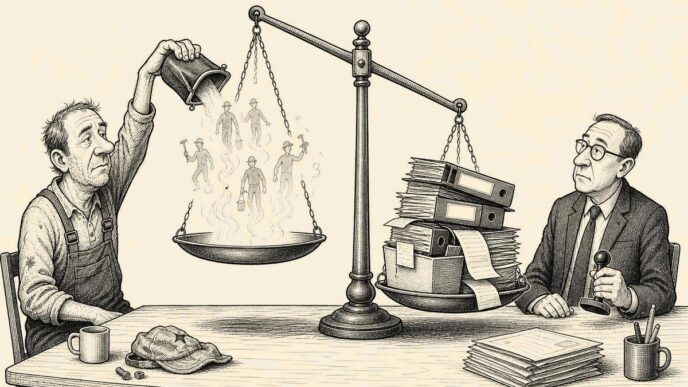
For a dairy farmer, a contribution deducted or collected around the milk relationship affects the net amount left after delivery, cost and uncertainty. For a processor or sector organisation, that same line may look like routine administration. The ZuivelNL ruling shows why those two views cannot drift too far apart in a regulated chain.
The signal has to become readable
On 29 May 2026, ACM reported that the Rotterdam court confirmed ACM’s decision to make ZuivelNL’s commitment binding. The case followed an enforcement request by Leveranciersvereniging Leerdammer Collectief against Royal Lactalis Leerdammer. LVLC argued that dairy farmers were being made to pay a contribution for ZuivelNL, and that this could breach the Wet oneerlijke handelspraktijken landbouw- en voedselvoorzieningsketen because the payment was allegedly unrelated to the supply of milk.
ZuivelNL offered a commitment. It would make transparent what farmers’ contributions are used for. ACM considered that sufficient because, according to ACM, the contribution is used for activities serving collective farmer interests, including sustainability and animal welfare. ACM stopped its investigation. The court agreed that the commitment addressed the risk of a possible breach effectively and efficiently.
Read properly, this is less a dairy technicality than a governance lesson. When a regulator accepts a promise and makes it binding, the promise leaves the world of wording. It enters administration, budgeting, reporting and board responsibility.
The invoice line is never just an invoice line
The Wet OHP Landbouw implements the EU unfair trading practices directive in Dutch law. One of its rules prohibits a buyer from requiring a supplier to make payments that are not connected with the sale of the supplier’s agricultural and food products. ACM supervises compliance. A supplier, a member organisation or an association of such organisations can ask for enforcement when an alleged prohibited practice is at stake.
That legal frame matters, but the daily business point is simpler. In supply chains with unequal bargaining power, recurring charges need a clean explanation. Who pays? Why do they pay? What is the money used for? Who controls it? How can the payer see that the stated purpose is real?
Imagine a small food processor that charges suppliers a modest sustainability contribution. The invoice says sustainability. The bookkeeping books it under general income. A board note calls it sector promotion. The website says quality improvement. None of those words has to be dishonest, but together they create confusion. If a supplier group asks questions later, the organisation may have to reconstruct its own reasoning under pressure.
What the signal changes
That is poor governance. Not because every contribution is suspect, but because a contribution justified by collective purpose needs a visible route from collection to spending.
A binding commitment changes the work
Under Article 12h of the Instellingswet ACM, ACM can make a market organisation’s commitment binding when that is more efficient than imposing a fine or an order subject to periodic penalty. For the matter covered by the commitment, ACM’s power to impose such a sanction on that organisation lapses.
That can look like a softer outcome. In one sense, it is tailored and efficient. In another, it creates a different burden. The organisation has traded one kind of exposure for another: execution, evidence and consistency.
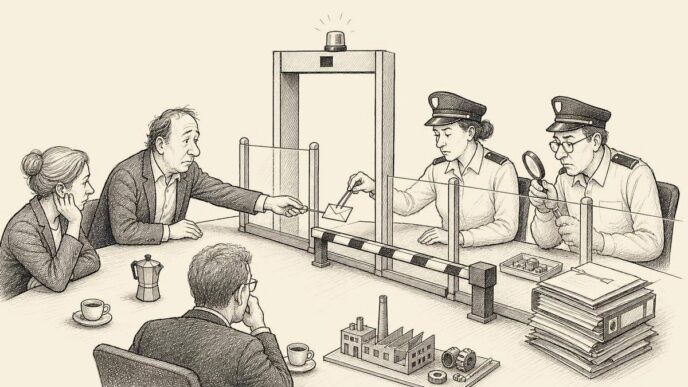
A board cannot treat a binding commitment as a communication exercise. If the commitment says that contribution spending will be made transparent, then the budget, ledger coding, internal approvals, public explanation and supplier communication should point in the same direction. If the money supports sustainability or animal welfare, the spending record should make that understandable without heroic interpretation.
The useful lesson is not that every sector contribution is safe. It is that a contested contribution survives on more than legal language. It needs purpose, basis, ownership and evidence.
Why dairy sharpens the point
Dairy is not a small corner of the Dutch economy. CBS states that Dutch dairy farmers deliver about 96 percent of their milk to dairy factories. Its latest dairy table recorded preliminary March 2026 milk supply to dairy factories at 1,264,850 thousand kilograms. CBS also reported almost 12.5 thousand dairy farms in 2025, using 668 thousand hectares of grassland.
Those numbers explain why contribution transparency matters. A sector contribution may be modest per farmer, but it moves through a chain where production is large, policy pressure is constant and trust is practical currency.
The income context is also sober. CBS estimated agricultural income for 2025 at €11.1 billion, 0.5 percent lower than a year earlier. The production value of milk was estimated at almost €8.3 billion. At the same time, dairy farmers face environmental and land-use choices that are no longer abstract. Rijksoverheid’s extensification scheme opens from 1 June to 29 July 2026, with a €627 million budget for dairy farmers who keep 10 to 20 percent fewer cows for three years to reduce ammonia emissions, greenhouse gases and manure production.
What founders should check
In that climate, words such as sustainability and animal welfare are not decorative. They sit close to herd size, phosphate rights, investment choices and family income. If a sector organisation collects money under those headings, clarity is not a courtesy. It is part of the chain’s trust infrastructure.
Transparency is not a price remedy
There is one more limit to keep in view. The official 2025 evaluation of the Wet OHP Landbouw gave an early picture of the law’s effect. It found that the first cases mainly produced more transparency over price formation and contributions, not higher prices as such.
That matters for small suppliers. The law can help make practices visible and can support prevention. It should not be read as an automatic route to a better price or compensation. A supplier who feels pressure from deductions, contributions or charges still needs the commercial and administrative record before drawing conclusions.
It matters for buyers and sector bodies as well. A transparent contribution is easier to defend than a vague one. If the explanation depends on collective benefit, the organisation should be able to show the collective activity, the spending logic and the link with the supplier group concerned.
The small company version
Most micro and small businesses will never sit in a national dairy dispute. Yet the pattern appears in ordinary forms: marketing fees, platform deductions, purchasing charges, sustainability levies, membership contributions, group service fees and rebates.
The governance habit is the same. A recurring charge should have a plain name, a clear basis, a known owner and a traceable destination. The contract should not tell one story while the invoice tells another. The ledger should not hide the money in a category that nobody can explain. The person who speaks to suppliers should not rely on language that the administration cannot support.
This is not about making every small firm sound like a regulated institution. It is about avoiding needless fragility. Dutch business life often runs on practical compromise. Regulators also use tailored routes when those routes solve the problem more efficiently than punishment. But tailored does not mean casual.
The Dutch word toezegging can sound gentle to foreign founders. In this setting, it is not gentle in the way a polite promise is gentle. Once ACM makes it binding, it becomes part of how the organisation has to operate.
The calm conclusion is also the sharp one. Trust is not proven by saying that money serves a collective purpose. Trust grows when the records, decisions and explanations make that purpose visible. The ZuivelNL ruling reminds boards that transparency begins long before a court reads the papers. It begins when someone decides what an invoice line really means.
Sources
Referenced in the article
Column | Compliance
Low-Value Imports Are Losing Their Quiet Customs Shortcut
From July 2026, small consignments will demand sharper customs records from Dutch.
Column | Compliance
Customs Representation Ties Dutch Import Authority to Cash and Recovery
The name on the declaration can decide who faces duty, VAT pressure and recourse when an import.
AEX Closing Brief | Market Pulse
AEX slips slightly as Amsterdam keeps one eye on energy, rates and business resilience
The AEX slipped slightly while energy, rates and business resilience shaped the close.
The Polder is written for readers who need the Dutch business environment translated into practical meaning. Corrections, source policy and editorial accountability are part of the publication record.