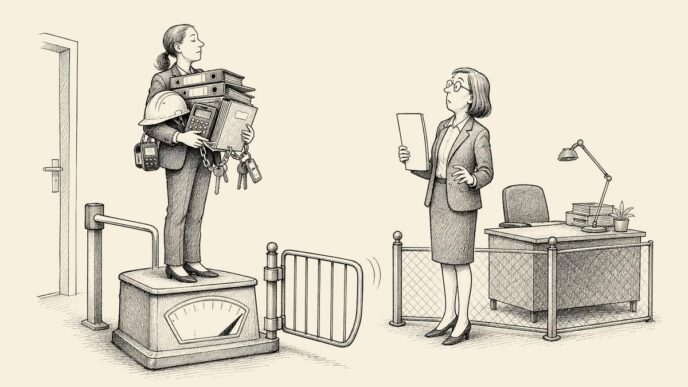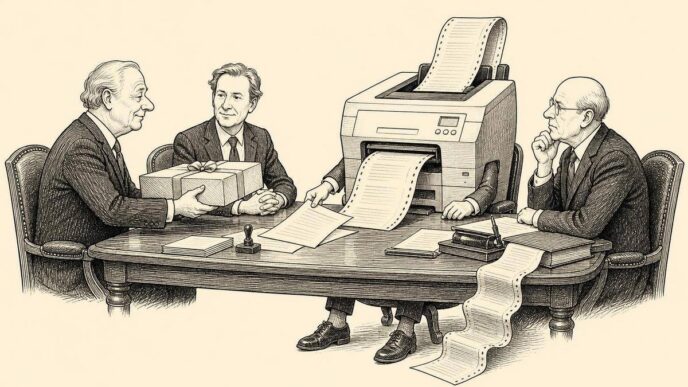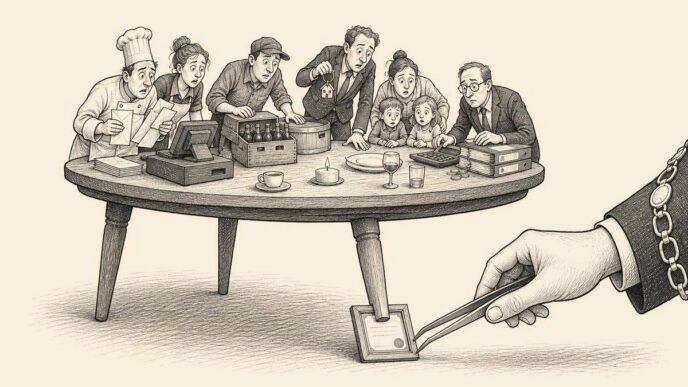
The shortage is easing on paper, but small firms still have to redesign work, hours, and payroll risk.
On a Monday morning in a small installation business near Ede, the labour market shows up as a half-finished roster. One mechanic is ill. A senior fitter is teaching a new hire who cannot yet work alone. The office colleague, three days a week, may take a fourth if school pickup still fits. A customer is waiting for a signed-off job, and the invoice sits open.
The signal has to become readable
That is where the Dutch labour shortage now lives: not only in the vacancy count, but in the shape of the work.
CBS counted 378,000 open vacancies at the end of the first quarter of 2026, 6,000 fewer than in the previous quarter. The tension measure fell to 91 vacancies per 100 unemployed people. UWV still calls the labour market tight, and 13 regions remain very tight in its 2025-2026 Regio in Beeld update.
The shop floor is not the national average
I read that as a warning against lazy averages. A national number can cool while one trade, town, or shift stays hard to staff. CBS says care, trade, and business services together account for more than half of open vacancies. Construction still has the highest vacancy rate, at 74 vacancies per 1,000 employee jobs.
UWV still points to care, education, childcare, safety, technology, ICT, construction, and installation as shortage areas. For the small employer, the question is no longer just whether a person can be found. It is which work needs a fully trained person, which tasks can move, and which employee may want more hours.
That last question matters because the ready-made worker is harder to buy. UWV says 52 percent of employers with recent vacancies more often hire people who still need training because labour is tight. In a small firm, that training is not hidden inside a department. It is a senior worker stopping, explaining, checking, and sometimes repairing.
The nearest worker may already be inside
One of the most practical numbers this spring did not come from vacancies. CBS counted 574,000 underused part-time workers in the first quarter of 2026 who wanted more hours and were available. They wanted an average of 8.5 extra hours a week.
For small employers, that deserves attention. The nearest candidate may already know the customers, systems, routes, machines, children, patients, or clients. Extra hours can be faster than a vacancy campaign.
What the signal changes
They are not free, though. More hours touch childcare, travel time, fatigue, preferences, contract wording, roster fairness, payroll cost, and AWf premium rules. Belastingdienst says the low AWf premium can need revision when an employee with a contract of 30 hours or less is paid more than 30 percent extra hours in a calendar year.
That makes extra hours a payroll decision, not a casual roster fix. The owner should not discover the cost shape after the new pattern has become routine.
Wages keep the pressure on
The wage side is still moving. CBS says collectively negotiated hourly wages, including special remuneration, were 4.5 percent higher in the first quarter of 2026 than a year earlier. Contractual wage costs rose by 4.4 percent. From 1 July 2026, the statutory gross minimum hourly wage for workers aged 21 and older is €14.99.
That is where HR meets margin. CBS also reported negative entrepreneur confidence at the start of the second quarter, while labour shortage remained the most frequently named business constraint. The familiar pattern is plain enough. The work is there, but not every staffing answer fits the cash shape.
Back in the installation firm, the owner can post another vacancy. He can ask the office colleague for the fourth day. He can hire a trainee. He can bring in an agency worker. He can call a zzp technician. Each route solves one problem and creates another.
A trainee needs supervision. Agency labour may protect delivery but squeeze margin. A zzp contractor can be legitimate for independent work, yet Belastingdienst ended the enforcement moratorium on labour relations on 1 January 2025. From 1 January 2026, culpability penalties can be imposed in false self-employment cases. The invoice label is not enough if the working reality looks like employment.
Agency labour deserves the same care. The Wet toelating terbeschikkingstelling van arbeidskrachten enters into force on 1 January 2027, with enforcement from 1 January 2028. For a small employer, the agency is not just a number to call in a planning crisis. It is part of the supplier-risk chain.
Design the work first
UWV keeps pointing employers toward technology, more efficient work processes, training, combination jobs, and the question of whether staff can and want to work more hours. That list is easy to read and harder to do well.
What founders should check
The serious version starts with a plain task map. What is not getting done? Which tasks need a licence, diploma, language level, safety instruction, or client trust? Which tasks sit with one experienced worker because nobody wrote them down? Which hours are truly scarce, and which are badly arranged?
Skills-based matching can help, especially as UWV develops CompetentNL for describing skills, knowledge, and language proficiency. Yet a better vacancy text is not enough. If an employer says a skill can be trained, someone must have the time to train it. If technology is introduced, someone should check whether it removes hours or only adds another screen.
Werkcentra may also help. Rijksoverheid says they are available across the country as a central place where employers can seek help finding staff and ask about schemes and subsidies. They will not produce a perfect candidate on command. They can, however, turn a vague vacancy into a matching, training, or regional conversation.
The calm decision
The labour market is not easy. It is also not one story. Vacancies have fallen, unemployment exists, part-time workers may want more hours, wages are higher, and some regions remain very tight. All of that can be true at once.
For the small employer, the mature response is not panic hiring and not waiting for the old market to come back. It is to slow the decision just enough to name the real gap. Is this a capacity gap, a skills gap, a planning gap, a wage gap, or a risk gap?
On Monday morning near Ede, the owner still needs the schedule to close. The difference is that he should not treat every open hour as a vacancy. Some hours can be redesigned. Some can be bought. Some can be trained. Some already belong to a colleague who wants more work.
The best employers will not be the ones who shout loudest. They will be the ones who organise work clearly enough that people, payroll, and records can carry it.
Sources
Referenced in the article
Column | Real Estate
Temporary Housing Permits Fell, and Dutch Employers Feel the Strain
A smaller permit flow is now part of the labour problem, not only the housing problem.
Column | Governance
Dutch Tax Refunds Put Identity, Evidence and Cash in One Chain
A refund is not only tax arithmetic when access, data, evidence and payment meet at the same.
Column | Human Resources
The Labour Reserve Already Has a Badge
Many Dutch part-time workers want more hours. For small employers, the real question is whether.
The Polder is written for readers who need the Dutch business environment translated into practical meaning. Corrections, source policy and editorial accountability are part of the publication record.