April output rose sharply, yet small suppliers still need to test orders against margin and cash.
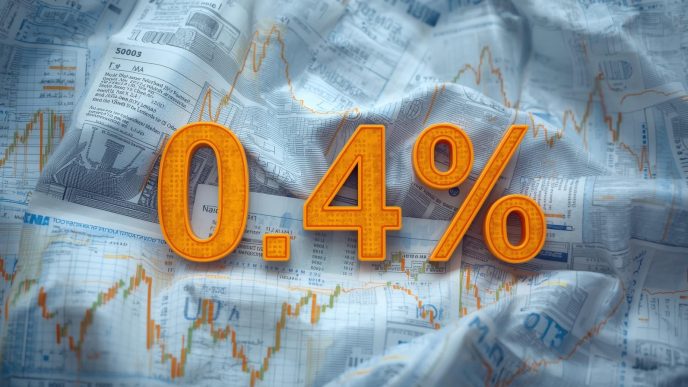
Imagine a small supplier in Brabant getting a call before lunch. A machine builder wants faster delivery, maybe more volume, and preferably the same price. CBS reported on 10 June that calendar-adjusted Dutch manufacturing production in April was 4.7 percent higher than a year earlier. Output also rose 1.4 percent from March after seasonal and calendar adjustment.
The signal has to become readable
That is a real change in tone. After a weak 2024 and a hesitant 2025, the workshop feels busier. It does not yet feel safer. A line can run harder while the bank account tightens.
The order book is not one market
The CBS detail matters more than the headline. About 60 percent of manufacturing classes produced more than a year earlier. Among the eight largest branches, machinery led with a 21.6 percent rise. Chemicals moved the other way, down 4.1 percent. Metal products, electrical and electronic equipment, rubber and plastics, and repair and installation of machines were also lower.
That split is the real market. A small firm does not sell to Dutch manufacturing as a whole. It sells to three large customers, one export chain, a local food producer, a machine builder, or a chemicals buyer with a hard purchasing desk. The national figure can be true while the company’s own market stays mixed.
CBS’s wider picture adds caution. Manufacturing turnover in the first quarter was 2.3 percent higher than a year earlier. Domestic turnover fell 0.5 percent, while foreign turnover rose 4.0 percent. Producer confidence also weakened in May, from minus 0.7 to minus 2.0, below its 20-year average. Expected activity also dropped, to 4.6.
When growth eats cash
Return to the supplier in Brabant. The customer wants parts sooner. The owner buys material, plans overtime, calls a temporary worker, books transport and uses more power. The invoice goes out after delivery. Payment may arrive weeks later. If the customer changes the call-off, rejects a batch, or stretches approval, the supplier carries the cost first.
What the signal changes
That is why April’s output-price data matter. CBS reported that Dutch industrial output prices were 4.9 percent higher in April than a year earlier. Petroleum industry prices were 48.8 percent higher and chemical industry prices 11.6 percent higher. Food industry output prices were 5.8 percent lower. One price story will not fit every chain.
A higher selling price can protect a firm. It can also hide pressure. If input costs move today and customer prices move next month, cash leaves before margin arrives. If a quote stays open too long, the supplier ends up financing the customer’s price comfort. In a busy month, weak price clauses are not paperwork. They are margin leakage.
Capacity still decides the real ceiling
More production also tests people. CBS counted 29.1 thousand open vacancies in private-sector manufacturing in the first quarter of 2026. That is below the first quarter of 2025, but labour is still not loose. Skills, rosters, maintenance windows and replacement capacity still decide how much work a small producer can accept without hurting quality.
Overtime can solve one week and create the next problem. Agency labour can fill a gap, but it brings supervision, safety and payroll attention. A founder who promises shorter lead times because the market sounds better may discover a different bottleneck. It may be the one operator who knows the machine, the one supplier with the right part, or the one customer who pays slowly.
DNB has also warned that global supply-chain disruptions are no longer an exception. It says higher oil and gas prices can still raise inflation pressure and hit industrial firms that rely on those inputs. For small firms, the vulnerable item is often not the expensive item. It is the small component that stops shipment when it is missing.
Power is now a production issue
Electricity now belongs in the same file. Rijksoverheid says the grid is almost full in much of the Netherlands because of net congestion. From 1 July 2026, requests for a new or heavier connection in congestion areas will be assessed under priority rules. Grid-relieving solutions, national security needs, and basic public needs such as homes, schools and public transport get priority.
What founders should check
For a production firm, that changes the shape of investment. An extra machine, a new compressor, charging, cooling, electrification or a second shift can no longer be treated as a separate question. Power capacity now sits next to the order book, the payroll and the delivery promise.
What the owner should hear
There is some breathing space in the bankruptcy data. CBS reported 293 bankruptcies of businesses, institutions and sole proprietorships in April after adjustment for court session days, 12 percent fewer than a year earlier. The manufacturing bankruptcy rate also fell, from 33.4 to 24.1 per 100 thousand businesses.
That is useful context, not a comfort blanket. Bankruptcy figures do not show every stretched supplier, delayed tax payment, postponed investment or owner salary quietly reduced to keep the company moving. The warning still stands: production volume is not profit, and turnover is not cash.
For the ledger, the message is simple. Rising output pulls VAT, stock, payroll and debtor timing into the same conversation as sales. That is how a small firm keeps a rebound from turning into a funding gap.
So the Brabant owner should not reject a faster order because the market is uneven. Nor should she accept it because the CBS headline is strong. The better question is simpler and harder: does this order have a clean price, reliable materials, enough people, known energy capacity and payment terms the company can carry?
If the answer is yes, April may be the start of a better run. If the answer is unclear, busier can mean more exposed. Dutch factories are moving faster again, especially around machinery. The wise founder will welcome that movement, then count the cash, the hours, the parts and the promises before calling it recovery.
Sources
- CBS source
- DNB supply-chain warning
- CBS – Producer confidence weakens after production rise
- CBS – Output prices and margin pressure
- CBS – Industrial turnover and domestic versus foreign demand
- CBS – Q1 macro context and exports
- CBS – Entrepreneur confidence and pricing expectations
- CBS – Labour availability in manufacturing
Referenced in the article
Column | Editorial
The Netherlands Is Raising the Price of Unproven Business
This week showed a country where cash, tax, housing, labour and trust increasingly depend.
Column | Compliance
Fast Dutch Prices Put Honest Checkout Screens Under Pressure
When costs move quickly, the first price a customer sees has to survive the whole booking.
The Polder is written for readers who need the Dutch business environment translated into practical meaning. Corrections, source policy and editorial accountability are part of the publication record.