



A new Dutch proposal turns missing payroll evidence into a possible repayment problem.
On a busy Friday afternoon, the payslips look done. The payroll provider has sent the run. The roster is closed. A worker asks why a deduction appears on the payslip, and the owner says the accountant will check it on Monday.
Proof now opens the door
That small moment is where Dutch minimum wage compliance is heading. The question is no longer only whether the payslip looks right. The real question is whether the business can explain the wage, the hours, the payment and the deduction as one file.
On 2 June 2026, Rijksoverheid announced that Minister Vijlbrief is working on a proposal for the Wet minimumloon en minimumvakantiebijslag, the WML. The proposal targets cases where it cannot be established whether workers received at least the statutory minimum wage. The issue is especially sharp where labour migrants and weak administration meet.
The payslip is only the start
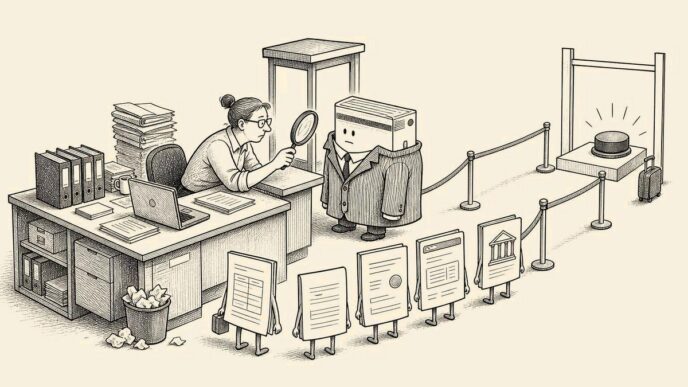
Under the announced measure, if the Labour Inspectorate suspects underpayment and the employer cannot show the requested administration, the Inspectorate may calculate a fictitious underpayment. The employer could then be required to pay that amount to the worker. In court, the employer would also have to prove that the statutory minimum wage was paid.
The bill text is still to come. The entry date and the exact mechanics are not fixed yet. Even so, the signal is clear for small employers with flexible hours, agency labour, part-time contracts or workers close to the minimum wage.
Since 1 January 2024, the Netherlands has had a statutory minimum hourly wage. Fixed statutory minimum daily, weekly and monthly amounts disappeared. For workers aged 21 and over, the gross statutory minimum hourly wage was €14.71 from 1 January 2026 and is €14.99 from 1 July 2026. Younger workers have age-specific rates.
That hourly system changes the evidence. A monthly amount can look right while the underlying hours tell a different story. Worked hours, paid leave and sickness hours with continued pay all matter.
Where the weak spot appears
Current enforcement already treats missing wage records seriously. The Labour Inspectorate says employers must provide records on paid wage, paid holiday allowance and worked hours within the period set by inspectors. Failure can lead to a fine of €12,000 per worker. Underpayment fines are also imposed per worker and depend on duration and percentage.
Wages, hours and work identity
The new step would make weak records expensive in another way. Poor administration would not only risk a fine for missing documents. It could also trigger a calculated wage repayment.
That matters because weak payroll files often grow through ordinary drift inside small businesses. A roster changes by WhatsApp. A break is not logged. A correction lands in the next payroll period. Housing is charged separately. An agency invoice arrives without enough hour detail. Nobody intends to underpay, but the file no longer hangs together cleanly.
The Friday afternoon worker is not asking a theoretical question. The answer has to sit in the payslip, the bank payment, the roster, the time record and the agreement behind the deduction.
Minimum wage work is not a niche
CBS reported that in 2025 an average of 610,000 employee jobs had an hourly wage at most 5 percent away from the statutory minimum hourly wage. That was 6.7 percent of employee jobs. CBS also reported that flexible contracts were far more often near the minimum wage than permanent contracts, 13 percent against 3 percent.
Those figures do not describe underpayment. They do show scale. Many employers operate close to a line where one wrong hour, one unclear deduction or one late correction can matter.
The court line is visible too. In April 2026, Rechtbank Zeeland-West-Brabant upheld a €34,200 fine and a warning for preventive work stoppage in a WML records case. The court accepted that the employer had to include, keep and provide documents that allowed control of wage, holiday allowance, worked hours, deductions or set-offs and other WML-relevant data.
In May 2026, the Labour Inspectorate ordered an Amsterdam transport company to stop work for two months after repeated WML violations. The company had already received fines in 2023 and 2025. At the last inspection, WML compliance could again not be checked for four workers.
For a small business, a stoppage is not an abstract sanction. It is vehicles standing still, clients waiting and cash not coming in.
The wider wage chain
The proposal also sits inside a wider Dutch labour-control picture. The Labour Inspectorate has pointed to stacked revenue models around labour migration, where work, housing, transport and other charged services can become linked. Rijksoverheid decided in 2025 that employers may continue to charge up to 25 percent of the minimum wage for housing costs for labour migrants, while also recognising the dependence risk.
The small employer risk
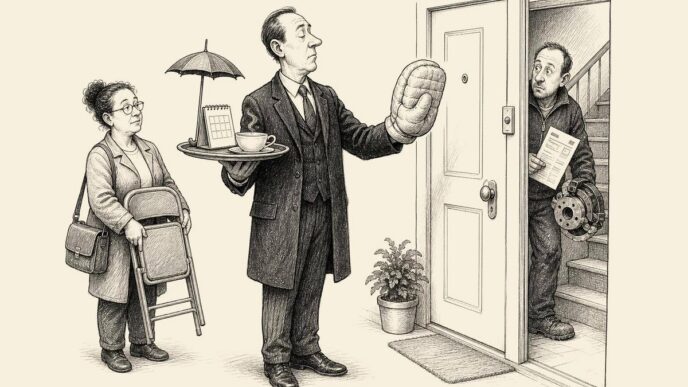
That does not make housing deductions automatically wrong. It does make the file more sensitive. If housing, transport, recruitment and payroll sit together in the worker’s reality, they will not stay neatly separate in a wage dispute.
Agency labour adds another layer. CBS reported that in 2024 the Netherlands had more than 2,300 temporary employment agencies responsible for 407,000 agency jobs. More than half of agency jobs were performed by workers born abroad who had lived in the Netherlands for less than eight years. Among agency workers, that share was 52.4 percent. From 1 January 2027, the Wtta admission system for labour suppliers adds more pressure to that market.
A company using agency labour may not be the formal employer. It can still carry continuity and procurement risk if its labour supplier cannot explain hours, pay, identity, deductions and bank payment.
Calm control before the question arrives
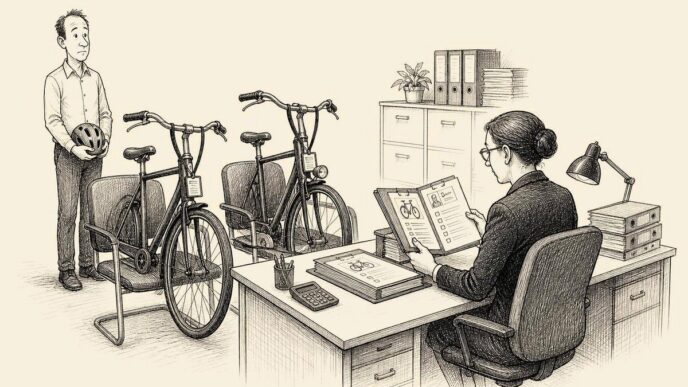
The practical control question is simple. Can the business reconstruct the wage position of workers close to the statutory minimum wage without panic?
That reconstruction starts with one worker and two recent payroll periods. Follow the roster to the actual hours. Then follow the hours to the payslip. Check the payslip against the bank transfer. Read every deduction, expense reimbursement, housing charge or correction beside that trail.
The payroll tax file also matters. The Belastingdienst expects employers who withhold payroll taxes to keep payroll records, establish worker identity, file payroll tax returns, provide payslips and issue annual statements. The labour-law story and the payroll-tax story should not contradict each other.
The 2026 proposal should be read as a reminder that wage compliance is moving closer to lived proof. The employer who can explain the hours, the money and the deductions holds a stronger position. The employer who relies on fragments already has a problem before the bill arrives.
Back at the Friday payroll desk, the useful answer is not that the payslip has been sent. The useful answer is that the business can show how it got there.
Sources
- CBS source
- Accountant.nl
- Rijksoverheid
- Rijksoverheid via Open Overheid
- Nederlandse Arbeidsinspectie
- Nederlandse Arbeidsinspectie
- Rijksoverheid
- Nederlandse Arbeidsinspectie
Referenced in the article
Column | Compliance
Hospitality Sales Are Rising, but the Till Must Explain the Margin
Dutch hospitality growth is thin, and 2026 turns VAT, wages and cash records into daily business.
Column | Human Resources
The Labour Reserve Already Has a Badge
Many Dutch part-time workers want more hours. For small employers, the real question is whether.
Column | Ledger & Tax
In Box 3, Refund Hope Still Has to Meet the Calendar
A lower actual return may matter less than the date.
The Polder is written for readers who need the Dutch business environment translated into practical meaning. Corrections, source policy and editorial accountability are part of the publication record.