



April’s goods-led lift asks small firms to check margin before reading demand as recovery.
On a Monday after a strong April, a home-goods shop owner in Zwolle looks at the gaps where washing machines stood. The till says the month was decent. The supplier list says replacements will cost more. The installer says his roster is full. The real question is simple: was April demand, or just timing?
The signal has to become readable
CBS published provisional April figures on 9 June 2026. Dutch households bought 1.0 percent more goods and services than a year earlier, after price changes and the shopping-day mix. March had already shown 0.9 percent growth. The direction was positive. The shape was narrow.
A number with a narrow shape
The split matters more than the headline. Durable goods rose 4.9 percent, with cars, electrical appliances, and home-related items doing much of the work. Food and beverages were up 0.9 percent. Other goods rose 0.5 percent. Services slipped 0.1 percent.
That is selective spending, not a broad consumer comeback. Some aisles opened. Others stayed closed. For an owner, that means the order book can look healthier than the whole customer base.
Retail numbers point the same way. April retail turnover was 3.4 percent higher than a year earlier, while volume rose 2.6 percent. Online turnover grew 5.9 percent. Existing owner-occupied homes were also almost 3 percent more often sold than a year earlier. That can support demand for appliances, furniture, DIY goods, and moving-related items.
The margin behind the sale
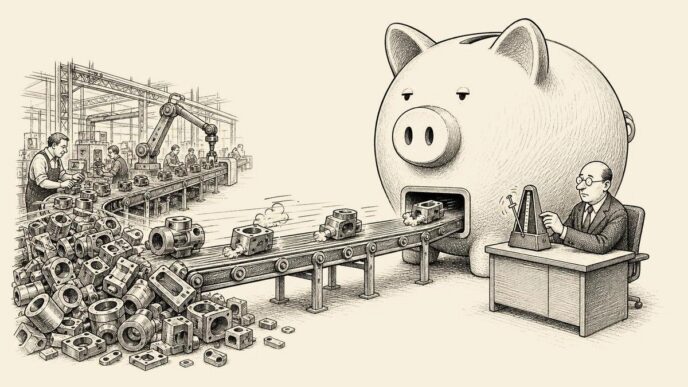
This is where a small shop should slow down before ordering too much stock. More sales can still tighten cash. Durable goods ask for upfront buying, delivery capacity, warranty handling, and after-sales service. If replacement stock costs more, April turnover can look healthy while June liquidity feels thinner.
What the signal changes
May added another layer. Inflation rose to 3.5 percent, after 2.8 percent in April. Dutch HICP services inflation reached 5.2 percent, above the eurozone figure of 3.5 percent. Consumer confidence also stayed weak. It stood at -46 in May, and willingness to buy worsened to -28.
That mix matters because price acceptance comes with a delay. A household may buy the appliance in April, accept the delivery charge in May, and cut back somewhere else in June. Spending can rise and caution can rise with it. For the owner in Zwolle, the useful question is not whether demand exists. It is which lines sold with margin after staff hours, rent, transport, returns, payment fees, VAT timing, and supplier terms.
Services feel the pressure
The service side tells a different story. April household services consumption was slightly lower than a year earlier. Hospitality also entered the second quarter under pressure. First-quarter hospitality turnover was up 2.2 percent year on year, the smallest rise in five years. Hospitality confidence then fell to -30.1 at the start of the second quarter.
A restaurant can be full on Saturday and still have a weak week. A café can sell more coffee and lose the gain through wages, waste, rent, and energy. A small hotel can raise room prices and still see guests spend less at the bar. Services live on timing, people, occupancy, and repetition, not on demand alone.
Labour adds another layer. Collectively agreed wages were 4.5 percent higher in the first quarter than a year earlier. That supports household income, but it also raises employer cost. CBS also reported that 64 percent of businesses faced staff shortages. Among small firms with 5 to 50 employees, 20.1 percent limited production or supply to available capacity.
What founders should check
So the Zwolle owner may sell the appliance, but not have enough hands to install it quickly. The sale is real. The bottleneck is real too. In a small company, demand that cannot be served well becomes complaints, overtime, returns, or a weaker next sale.
What the owner should read
Business confidence fell to -14.8 at the start of the second quarter, with negative confidence across all industries. More businesses also expected selling prices to rise. That is a difficult mix. Customers still buy selected goods, but both sides of the counter feel pressure.
A sensible owner reads April through three questions. Are sales repeatable, or did customers pull purchases forward? Are the sales collectable and profitable after direct costs? Does the administration show the split between goods, services, online orders, returns, deposits, and VAT?
That is not paperwork for its own sake. Higher taxable turnover can bring a VAT payment before the owner feels stronger liquidity. Online growth can add customers, but also fulfilment, returns, and service costs. A strong appliance month can hide slow stock in another corner of the warehouse.
The national number still matters because it clears some fog. Dutch households did spend more in April. The better reading is disciplined, not gloomy. The consumer is not gone. The consumer is selective. Firms that handle this well will not ask whether the market is back. They will ask where demand still pays, where costs moved faster than prices, and what the numbers say before the next order is placed.
Sources
- Consumptie huishoudens groeit met 1 procent in april | CBS
- CBS – May inflation after April consumption
- CBS – Consumer confidence and willingness to buy
- CBS – Retail sales and online demand in April
- CBS – Hospitality and service-side weakness
- CBS – General business cycle context
- CBS – Labour market and household income support
- CBS – Vacancies and labour-market tension
Referenced in the article
Column | Real Estate
Empty Shops Do Not Set the WOZ Bill by Themselves
For retail users, vacancy matters only when rent, timing and evidence point to the same.
Column | Market Pulse
Dutch Inflation Rose, but Your Margin Has Its Own Clock
CBS put May inflation at 3.5 percent. Small firms need a sharper reading than the headline.
Column | Market Pulse
A Thin Dutch Quarter Puts Margins Back on the Table
A weak quarter keeps the economy moving, but energy, credit and cautious customers narrow the space for small.
The Polder is written for readers who need the Dutch business environment translated into practical meaning. Corrections, source policy and editorial accountability are part of the publication record.