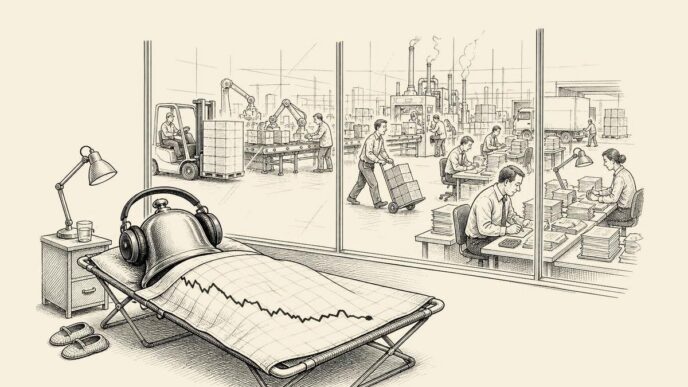
A lagged valuation can reach tax, charges and books before it reaches the bank account.
The envelope rarely looks dramatic. A municipal notice arrives, the value is higher, and the first reaction is often personal: that feels too much, or perhaps about right. For a small business owner, the better question comes later, usually at the kitchen table or beside the bookkeeping screen: where else will this number appear?
The signal has to become readable
On 17 June 2026, CBS reported that the average WOZ value of a Dutch home is now €439,000, 10.3 percent higher than one year earlier. The 2026 WOZ value is based on the municipal market value on 1 January 2025.
That timing makes the number more than housing news. A value from an earlier, stronger market now enters municipal charges, tax calculations, rental logic, property records and sometimes the line between a founder's private balance sheet and company books.
A valuation from another moment
WOZ values follow existing owner-occupied home prices with a one-year lag. That lag explains why the WOZ rise can feel sharper than current market figures. Kadaster reported that existing owner-occupied home prices in April 2026 were 4.3 percent higher than one year earlier and unchanged from March.
CBS had already shown first-quarter 2026 price growth of 5.2 percent, with the pace slowing for five consecutive quarters. The public number can therefore rise while the owner feels a cooler market. That gap matters. The value can climb in the administration before cash improves in the shop, practice, rental account or household.
Picture a baker who owns a small premises with a flat above it. Turnover depends on morning customers, wage costs, energy bills and whether nearby offices are full. The WOZ notice sells no extra bread. Still, it can touch charges, tax positions and the building's record in the accounts.
The number travels
Rijksoverheid explains that municipalities, the Belastingdienst and water boards use the same WOZ value. Municipalities use it for OZB and sometimes sewerage charges. The Belastingdienst uses it for income tax, corporate income tax, gift tax and inheritance tax. Water boards use it for the watersysteemheffing. It also matters in the points calculation for rental housing.
What the signal changes
So the WOZ value deserves a cross-file reading. It can move from a municipal notice into a tax return, from a property record into a rental calculation, and from a home address into an owner-manager's wider financial picture.
CBS also reported that Dutch municipalities budgeted €15.3 billion in levy revenue for 2026, up 6.5 percent from one year earlier. Budgeted OZB revenue rises to €6.3 billion. For non-residential property, the expected OZB revenue rise is 7.7 percent, compared with 5.1 percent for residential property.
Each address remains local. Rates, ownership, use and object details decide the actual bill. For a small firm, the wider direction is enough to deserve attention: property-linked costs are moving while margins may have little room.
Where property meets the business
For a company that owns its workshop, shop, office or practice space, the WOZ value can meet the fixed-asset record. The Belastingdienst says that since 2024 the fiscal floor value for depreciation of all business buildings equals the WOZ value. If book value sits near that floor, a higher WOZ value can reduce depreciation room.
That is a ledger issue with cash consequences. Less depreciation can mean more taxable profit without more money in the bank. The building may look stronger on paper, while wages, VAT, suppliers and loan instalments still need cash.
Mixed-use property needs a cleaner file. A founder living above a shop, running a practice from home, or holding a business building with residential space may need a clear split between business and private use. For a dwelling that belongs to business assets, the Belastingdienst links private use to the WOZ value of the residential part.
What founders should check
Private property can also affect the founder's resilience. The eigenwoningforfait for a main residence uses WOZ value. A second home in the Netherlands belongs in box 3 and uses the WOZ value with value date 1 January of the previous year. For rented dwellings, the leegwaarderatio can matter where it applies.
Evidence before irritation
The useful response is evidence. Rijksoverheid says municipalities value property using land and building data and comparable sales around the valuation date. A valuer does not have to visit every property. For business premises, municipalities may use other methods, including rental value or replacement value.
A January 2026 Rechtspraak judgment, ECLI:NL:RBOBR:2026:132, points in the same practical direction. Broad price figures can frame the market, but WOZ disputes turn on the object, the comparable sales, the valuation date and the method. Listed properties that were not sold carried less weight in that case.
Back to the baker. A useful review would look at the taxatieverslag, the object boundary, the split between shop and flat, the condition of the building, comparable sales and the bookkeeping impact. That is sober work, not drama.
The calm reading
DNB says the Dutch housing market is cooling and expects house-price growth of 3 to 4 percent per year between 2026 and 2028. It also points to high Dutch mortgage debt. For founders, property wealth and liquid resilience need separate treatment.
A higher WOZ value can make an owner feel richer and a cash plan feel tighter at the same time. The better reading separates paper value from cash, market price from tax base, and national average from the individual address.
For small businesses, the 2026 WOZ rise is not a reason for panic. It is a reason to read one number across all the places where it may land. The number came from 1 January 2025. The decisions are being made in 2026. That difference deserves attention before the next bill, tax return or set of accounts turns it into a surprise.
Sources
- CBS source
- Rijksoverheid – How municipalities determine WOZ
- Rijksoverheid – Where WOZ is used
- CBS – Municipal levies and OZB budget pressure
- Kadaster – Current existing-home prices after the WOZ valuation date
- CBS – Regional price cooling and property-type differences
- CBS – Housing supply pipeline
- Kadaster – Investor sales and transaction composition
Referenced in the article
Column | Ledger & Tax
A Short Tax Ruling Shows How Long BV Memory Runs
A Hoge Raad closure turns old group debt, losses, and tax interest into present-day discipline.
Column | Editorial
The Dutch Proof Habit Has a Price
Dutch compromise is pushing more unresolved choices into the files of small firms before the rules feel settled.
Column | Compliance
A BV Property Price Needs More Than a Notary Stamp
A deed closes the transfer. The tax file still has to explain the number years later.
The Polder is written for readers who need the Dutch business environment translated into practical meaning. Corrections, source policy and editorial accountability are part of the publication record.