A Dutch ruling on process costs shows why dismissal records need separate causes, dates and tax logic.
A dismissal rarely ends on the day someone leaves. In a small company, the hard part often comes later. The owner is tired of the conflict. The lawyer has sent the final bill. Payroll has moved on. The accountant asks what was paid, to whom, and why.
The signal has to become readable
That is why a recent ruling by Rechtbank Den Haag deserves attention beyond the tax desk. On 17 March 2026, the court dealt with a former employee who wanted to treat process costs paid to his former employer as negative wage in his 2020 income-tax return. The amount was €16,487.95. In the return, it was grossed up to €34,350 with €17,862 of wage tax.
It rejected that treatment. The process costs were linked to a civil procedure, including court fees, attachment costs and lawyer costs. They were not treated as damage caused during the employment itself. The court also noted that the payment took place in 2018, while the deduction was claimed for 2020.
This is less a tax curiosity than an HR administration lesson. After a bad exit, people often remember one story. The records cannot afford to.
The conflict is not the classification
In ordinary language, almost everything after a dismissal feels employment-related. Anger began at work. Letters name the former employer. Lawyers refer to the old relationship. Money may still move between the same two people.
Tax and payroll logic are narrower. They ask what the payment legally is, what caused it, when it was paid, and whether the documents support the chosen treatment. A payment can be emotionally tied to a job and still be a civil litigation cost rather than wage.
That distinction matters because negative wage has its own place in Dutch tax practice. Belastingdienst public guidance mainly frames it as repayment of too much or wrongly received wage or benefit. The 2026 payroll handbook points to two common cases: repayment of overpaid wage, or repayment of a remuneration or allowance. If repayment happens in a later year, timing can decide the year to which the negative amount belongs.
What the signal changes
Payroll can process a real payroll correction. It cannot give a civil cost order a wage character simply because the dispute began with employment.
A small employer's ordinary trap
Picture a seven-person installation company. An employee leaves after a serious dispute. There is a settlement conversation, a lawyer's letter, a possible damage claim, a final salary run, holiday pay, perhaps a transition payment, and later a civil cost order. The owner wants the matter closed. Meanwhile, the payroll provider sees only the numbers it receives. Months later, the accountant sees them. The former employee may tell the tax story from a different angle.
None of that is unusual. It is how small companies work under pressure. The point is to run next week, not build a legal archive.
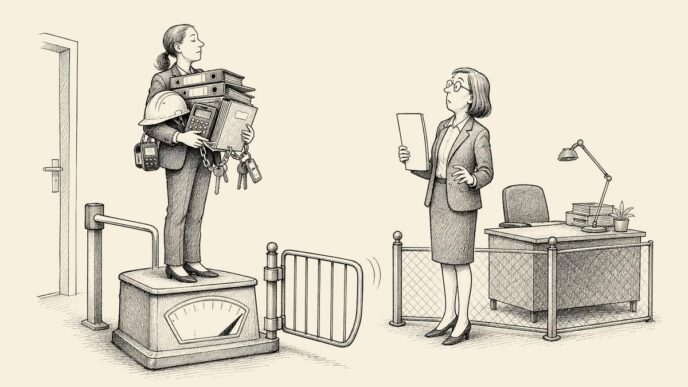
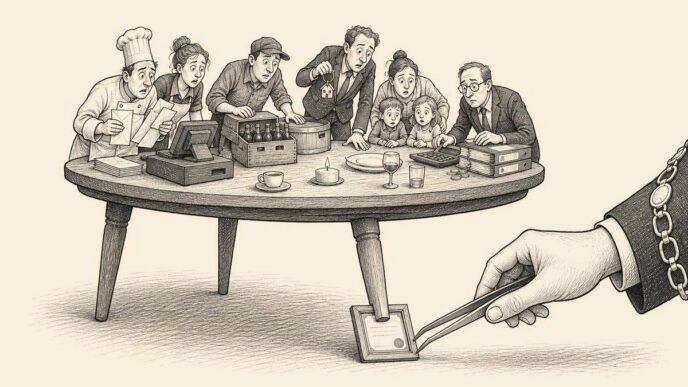
But this is where confusion becomes expensive. One folder called dismissal is not enough if it holds wage correction, damages, legal fees, process costs and tax assumptions without clear labels. The cash may belong to one business crisis, but the administration needs separate causes.
The ruling shows the risk of letting the dispute's emotional centre decide tax treatment. The court viewed the process-cost order as a litigation cost. That category has its own legal character. Rechtspraak explains process costs as costs made to conduct a procedure, and in civil cases the losing party can be ordered to pay the other party's process costs and extrajudicial costs. That is different from a payroll correction.
Cash pressure still counts
None of this makes legal costs painless. For a small employer, a dismissal dispute can bring lawyer time, court fees, management distraction, possible damages exposure and a damaged working atmosphere. These are real costs, even when they do not sit in payroll.
That is the practical point. The business should see the cash pressure without forcing every euro into the wage category. Payroll, legal costs and damages each need their own line of reasoning. If they are mixed too early, the records may look convenient in the moment and weak years later.
The case also shows how quickly the financial effect can grow when the wrong tax character is chosen. A process-cost amount of €16,487.95 became a much larger grossed-up tax position in the 2020 return. Once that position failed, the issue was no longer only the original payment. The tax treatment itself became a second dispute.
What founders should check
Employers should care about this even when the court case concerns the former employee's income tax. Belastingdienst states that payroll-administration data are leading for payroll tax returns, and that the employer remains responsible even if an intermediary files the return. If the company records are thin, inconsistent or reconstructed from memory, the employer may not control the later narrative.
The useful discipline is modest
A small business does not need theatrical paperwork. It needs enough discipline to prevent one conflict from becoming several unclear records.
For an open or recent exit, the useful habit is to let each amount keep its own name. Final salary is final salary. Holiday pay is holiday pay. A transition payment is not a lawyer fee. A damage payment is not automatically wage. A process-cost order is first a litigation cost unless the facts support another treatment. The payment date is not decoration. It can decide the tax year.
The same applies to documents. A settlement agreement, civil judgment, payroll correction, lawyer invoice and annual statement do not do the same work. When they describe the same event in different language, somebody later has to explain why. In a small company, that somebody is often the owner.
There is also a governance lesson here. Outsourcing payroll does not outsource judgement about the whole exit story. The payroll office can handle the wage record. The lawyer can draft the settlement. The accountant can process the accounts. But if no one sees the complete chain, the company can end up with a technically neat fragment and a messy whole.
That is why I would treat this ruling as a reminder to slow down at the boundary. Before a difficult exit becomes old history, the company benefits from a short internal note that records the nature of each amount, the source document, the payment date, and the payroll treatment if any. Add the tax position assumed as well. Not a novel. Just enough memory for the business to stand behind its own records.
The calm conclusion is simple. A conflict may start in employment, but not every later cost is payroll. Dutch tax treatment follows cause, character, timing and evidence. For micro and small employers, that means the exit record should be cleaner than the exit itself felt. The human story can be complicated. The administration should not be.
Sources
- Taxence
- Rechtspraak
- Rechtspraak
- Belastingdienst
- Belastingdienst
- Belastingdienst
- Belastingdienst
- Belastingdienst
Referenced in the article
Column | Governance
Dutch Tax Refunds Put Identity, Evidence and Cash in One Chain
A refund is not only tax arithmetic when access, data, evidence and payment meet at the same.
Column | Governance
One Founder, Two Dutch BVs, and the Salary Risk Between Them
A Belastingdienst position on connected bodies shows why ownership, work, and payroll evidence must be read.
The Polder is written for readers who need the Dutch business environment translated into practical meaning. Corrections, source policy and editorial accountability are part of the publication record.