Small employers are not facing a wage shock anymore, only a harder baseline.
The bill arrives in the roster
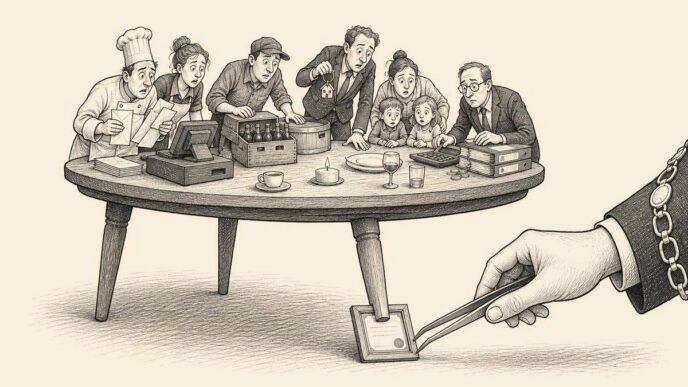
A small cafe owner looking at the July roster will not feel a wage statistic. She will feel Friday payroll, a cleaner asking for a few more hours, a cook who knows what competing kitchens pay, and a menu price that cannot wait forever. That is the real meaning of the latest Dutch wage picture.
CBS says collectively negotiated hourly wages were 4.5 percent higher in Q1 2026 than a year earlier, including special remuneration. In the private sector, the rise was 4.9 percent. The pace has cooled from the 2024 peak, when negotiated wage growth reached 6.8 percent in Q3. But it still sits above April consumer inflation of 2.8 percent.
The signal has to become readable
So the story is not panic. It is not relief either. Dutch wage growth is slower, but payroll has already moved to a higher floor. For a small employer, that floor turns into hours, payslips, holiday pay, sickness pay, and the quiet question of whether the next price increase will arrive before the next wage obligation.
The old cheap baseline is gone
I read this as a new cost habit, not a temporary shock. CPB's medium-term forecast points in the same direction, with cao wages in companies averaging 3.6 percent per year in 2026 to 2029 and 3.1 percent per year in 2030 to 2033. That is calmer than the peak, but it is not a return to the old low-cost years.
This matters because a wage bill rarely moves alone. When an experienced employee leaves, the replacement now starts from a higher pay floor. A delayed price review does not delay the payroll month. And when productivity stays the same while hourly rates rise, the difference comes out of margin, cash, or the owner's own room to breathe.
What the signal changes
The labour market also keeps the pressure alive. CBS counted 378,000 open vacancies at the end of Q1 2026, with 91 vacancies for every 100 unemployed people. That is less extreme than 2022, but it is not loose. At the same time, CBS counted 559,000 underutilised part-time workers. Before assuming the answer is another vacancy, some employers may need to look harder at hours, rosters, workload, and the people already inside the business.
Payroll starts with proof
The July minimum wage update makes the same point in a very practical way. For workers aged 21 and older, the gross hourly floor rises to EUR 14.99 on 1 July 2026. Since the Netherlands now works with an hourly statutory minimum, monthly pay depends on the hours actually worked, including leave and sickness with continued pay.
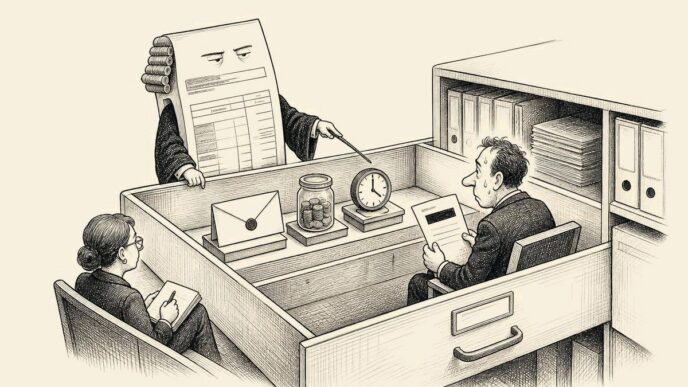
That makes time records part of payroll control, not a side habit of HR. Loose rosters can become loose payslips. One forgotten hour can become a correction. An unchecked cao table can become a cost surprise at exactly the wrong moment.
The cao question sits underneath all of this. Rijksoverheid says a cao applies because the employer concluded it, because the employer is bound through an employers' organisation, or because the sector cao is generally binding. So the first task is simple and not glamorous: know which wage table governs your business. Then make sure the rate, the hours, the payslip, and the wage-tax return tell the same story.
Cash decides how hard it feels
The wider business mood is not helping. CBS measured entrepreneurial confidence at minus 14.8 at the start of Q2 2026, the weakest level since late 2022. Labour shortage remains the most named constraint, but insufficient demand and financial pressure are also in the picture. That is why wage growth feels heavier now than it would in an easy market.
What founders should check
The cafe owner does not need a speech about macroeconomics. She needs to know whether Friday payroll, supplier invoices, rent, and card receipts still fit together. If the answer is becoming tight, waiting is not neutral. It only moves the decision closer to the cash account.
This is where The Polder reading becomes practical. Protect the roles that keep the business moving. Review hours before hiring blindly. Check the cao table before the worker asks. Treat payroll as part of cash planning, not as something the accountant cleans up later.
Wage growth is not exploding anymore. But it has settled into the business. The firms that handle 2026 best will not be the ones that ignore the new floor. They will be the ones that read it early, keep their records clean, and make pay decisions with enough realism to keep both people and margins intact.
Sources
Referenced in the article
Column | Human Resources
The Labour Reserve Already Has a Badge
Many Dutch part-time workers want more hours. For small employers, the real question is whether.
Column | Market Pulse
Fewer Dutch Bankruptcies, but Payment Pressure Still Needs Attention
April's CBS figures show fewer court failures. Closures, cautious consumers and sector stress still leave.
Column | Governance
Dutch Tax Refunds Put Identity, Evidence and Cash in One Chain
A refund is not only tax arithmetic when access, data, evidence and payment meet at the same.
The Polder is written for readers who need the Dutch business environment translated into practical meaning. Corrections, source policy and editorial accountability are part of the publication record.