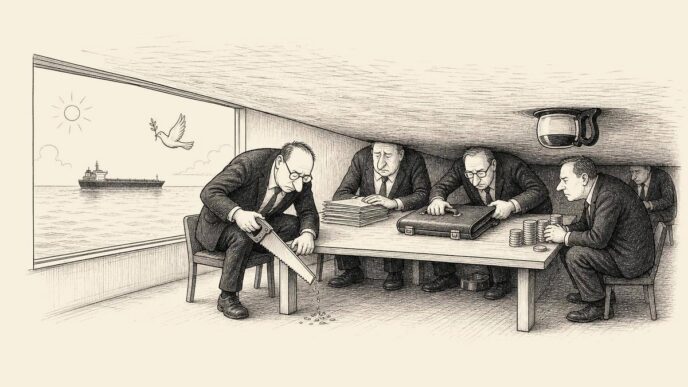
The labour market still has work, but many starter routes are too narrow to carry people into it.
A small employer does not meet the labour market in a chart. She meets it on Thursday afternoon, when the Saturday roster still has a hole, the regular part-timer cannot take extra hours, and the first applicant needs more guidance than the team can give during peak trade.
The signal has to become readable
That scene is the practical meaning of the latest CBS figures. On 12 June 2026, Statistics Netherlands reported 411,000 people under AOW age on general social assistance at the end of March. That was 3,100 more than one year earlier. The count has been higher year on year for eleven consecutive quarters.
The sharper movement is among the young. People under 27 rose 3.4 percent to 42,500. Youth social assistance has been higher than a year earlier for thirteen consecutive quarters. Read together with vacancies and labour tension, the pattern points to a weak bridge into work.
The bridge is narrower than the vacancy
Vacancies do not automatically create starter jobs. A care role may need qualifications and client safety. A technical role may need tools, certificates, travel to sites and an experienced person nearby. A willing worker can still miss the shift that is open tomorrow morning.
The reverse is common too. Some firms complain about applicants while offering thin hours, changing shifts, weak onboarding or tasks no beginner can learn in a reasonable week. The vacancy is real. The bridge into it is weak. In a micro business, that bridge is often one owner, one senior worker and one cash forecast.
What the signal changes
Think of a lunchroom that needs three evening shifts, not a full job. It needs someone calm at the till, quick with dishes and reliable after school hours. That sounds simple until the owner has no time to train, customers are watching, and the worker needs predictable income.
Hours decide whether a job can hold
CBS also reported 559,000 underused part-time workers in the first quarter. That is the highest number in more than four years. These people already had work, wanted more hours and were available for them. The message is plain: the problem often sits in the shape of work.
At the lower end of the income ladder, a few uncertain paid hours may not carry someone out of benefit dependency. The step depends on hours, gross wage, net income, allowances, travel costs, debts, household situation and municipal assessment. For the employer, the same hours bring wage cost, payroll work and supervision.
The statutory minimum hourly wage for workers aged 21 and older was €14.71 gross from January 2026 and rises to €14.99 from July. Since the Netherlands moved to a statutory hourly minimum wage, monthly wage cost depends on paid hours. Roster design and time registration now decide more than many owners admit.
CBS also said in June that 64 percent of companies were affected by staff shortages. Among companies with a shortage, automation, including robotisation or AI support, was the most cited main response. Small companies more often said they limited production because of staff shortages.
Automation may protect output, but it can also remove routine tasks that once helped beginners learn. That matters in shops, kitchens, warehouses, care settings and small offices. When the easy tasks disappear, the first rung on the ladder disappears with them.
Municipal rules now touch the match
The 2026 Participatiewet in balans changes belong in this reading. Rijksoverheid says municipalities can work more from trust and take personal circumstances into account more often. Vulnerable young people can receive social assistance immediately instead of waiting four weeks. In certain cases, municipalities may grant assistance up to three months retroactively.
What founders should check
That changes the operating context around re-entry into work. The market route and the municipal route now touch each other more visibly. If a small employer wants to create a realistic starter or re-entry job, the municipality sits in the background of timing, income and paperwork.
Risk sits there too. Trial days, internships, on-call hours, volunteer arrangements and informal paid work can create payroll, legal and benefit questions. Keep the work relationship clear before work starts. Keep the hour records clean. Keep the benefit effect understandable for the worker and the employer.
A company review, not a slogan
For a founder, the useful review is not a speech about the labour market. It is a role-by-role check. Which tasks truly need experience? Which tasks can be learned with supervision? Which hours match customer demand? Which vacancy is really a full job, and which is a pile of fragments that no one can live on?
The same check belongs in the cash forecast. Compare the cost of an entry worker with overtime, agency labour, owner exhaustion and lost sales. Add the first month of lower productivity. Then ask whether the role gives the worker enough stability to stay. If either side fails, the match will break.
Sector matters as well. UWV expects growth in care and welfare, specialist business services, and information and communication over 2026 to 2028, but those routes often need skills before they absorb people. Technical occupations still face large shortages, yet training costs time and cash. Industry, trade and financial services have a more cautious job outlook.
Rising social assistance is not only a welfare figure. It is a signal about the bridge between the benefit file and the empty shift. The lunchroom owner still needs Saturday covered. The young applicant still needs a first stable record. Between them sits the real work: hours that add up, tasks that can be learned, payroll that is clean, and a job designed well enough to hold.
Sources
- Aantal mensen met bijstand elf kwartalen op rij hoger dan een jaar eerder | CBS
- CBS – Latest monthly unemployment update
- CBS – Vacancies, jobs and underused labour
- UWV – UWV labour-market tightness by occupation
- UWV – Labour-market outlook to 2028
- CBS – Company response to staff shortages
- CBS – Entrepreneurial confidence and operating constraints
- CBS – Consumer confidence and demand pressure
Referenced in the article
Column | Market Pulse
Higher Dutch Service Invoices Meet a Colder Client Mood
CBS shows turnover rising, but prices, staff and demand decide what reaches.
Column | Market Pulse
Dutch Volunteers Returned, but Local Capacity Feels Thinner
CBS reported on 11 June 2026 that 47.0 percent of Dutch residents aged 15 or older did volunteer work.
Column | Human Resources
Dutch Hiring Slows Where Energy Eats the Margin
A cooling labour market still leaves small employers with hard choices on pay, work and risk.
The Polder is written for readers who need the Dutch business environment translated into practical meaning. Corrections, source policy and editorial accountability are part of the publication record.