April goods exports rose, but the useful test is margin, proof, delivery capacity, and cash.
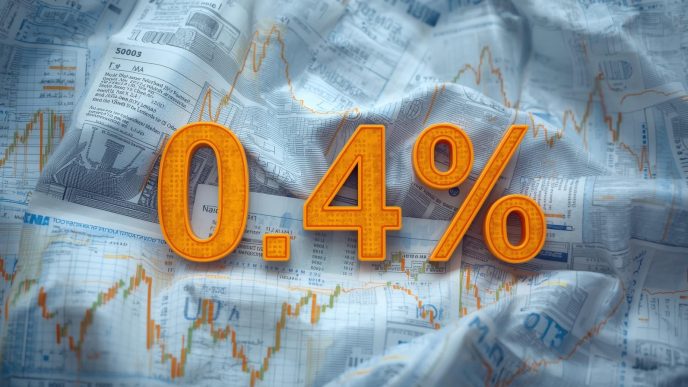
When a foreign order lands on Monday morning, it rarely arrives as a national statistic. It arrives as a line in the inbox: twenty pallets, a short delivery window, and a customer asking whether last month's price still holds. CBS reported on 15 June that the workday-adjusted volume of Dutch goods exports was 4.4 percent higher in April 2026 than one year earlier. March had already shown 3.8 percent growth.
The signal has to become readable
That is a stronger reading than much of 2023 and early 2024. CBS names petroleum products, electrotechnical machinery and equipment, and transport equipment as visible contributors. Goods imports also rose, by 1.2 percent. For a small exporter, that matters because the market may start asking for more stock, more speed, more credit, and more certainty.
April reads as movement, not comfort. CBS is talking about goods, which account for about three quarters of total Dutch exports. Services are not reported monthly. The figures are provisional, so April is useful for direction, not enough for a clean recovery story.
A good number in a rougher setting
The stronger export figure sits beside a wider picture that is still uneven. CBS reported that Dutch industrial production was 4.7 percent higher in April than one year earlier, with machinery showing a strong rise among the large branches. That helps explain why some order books feel busier.
Yet the same official picture carries pressure. CBS reported that manufacturing output prices were 4.9 percent higher in April than one year earlier. Petroleum industry output prices were 48.8 percent higher, while chemical industry output prices were 11.6 percent higher. In a company, those numbers do not arrive as statistics. They arrive as supplier emails, freight surcharges, revised quotations, and harder talks with customers.
What the signal changes
Confidence also matters. CBS put overall business confidence in the non-financial business economy at minus 14.8 at the start of the second quarter. Industrial confidence was minus 10.9 in April. DNB expects Dutch GDP growth of 0.8 percent in 2026 and says goods and services exports are growing more slowly, partly because global trade growth is slowing.
The order book is not the result
Founders know the temptation. After thin months, a larger foreign order feels like proof that the company is moving again. It may be. It may also be a polite way for the market to hand over risk. More volume can mean more cash tied up in stock, hours, packaging, certificates, transport, insurance, and debtor days before the customer pays.
A small technical supplier in Brabant may see this in one order. The customer wants a larger batch for Germany or Spain. The production team can make it, but only by moving Dutch customers back one week. The quote was written before the latest transport price. The payment term is 45 days. The margin looks good until the owner adds the real freight cost and the extra service call.
That is where the national export number becomes a company decision. The useful question is not whether exports are growing. They are. The useful question is which orders deserve scarce capacity. A clean answer needs current margin by customer, not only turnover by month. It also needs a sober view of country exposure, payment behaviour, delivery terms, and who inside the business carries the knowledge.
Documents are part of the sale
Export paperwork is not decoration. KVK points to revised preferential-origin rules under the PEM Regional Convention since 1 January 2026, with exceptions for Algeria, Lebanon, and Syria. KVK also states that from 1 May 2026 lower import duties apply under the EU-Mercosur trade agreement if products are of preferential origin, with a statement of origin needed.
That sounds technical until it reaches the customer. If a statement of origin is incorrect or incomplete, KVK says the importer will not receive the duty reduction. Then a paperwork weakness becomes a commercial problem. The customer may still need the goods, but trust has been damaged. The discussion moves from price to blame.
What founders should check
For a micro or small business, this does not call for a thick manual. It calls for discipline in ordinary records. The order, invoice, transport evidence, origin support, VAT treatment, and ledger posting should tell the same story. If they do not, the export sale is weaker than it looks.
The small decision before the big one
Logistics adds another layer. From 1 July 2026, KVK notes that international vehicles from 2,500 kilograms must have a smart tachograph type 2, subject to exceptions. The Netherlands also introduces a truck toll for trucks of 3,500 kilograms or more on certain roads. KVK states that the toll averages 20 eurocents per kilometre.
Transport partners will do their own arithmetic. Some prices, routes, and contract lines may move. An exporter who signs a fixed price too quickly may discover later that the delivery cost has eaten the gain. This is not a reason to freeze. It is a reason to make quotation validity, surcharge logic, and delivery responsibility visible before the order is accepted.
Back to that Monday inbox. The right answer to the foreign customer may still be yes. But it should be a priced yes, not a hopeful yes. It should know what happens to cash this month, what happens to staff planning next week, and what happens if the customer pays late. It should know whether the documents support the promise made in the quotation.
April's export growth is welcome because movement matters. Dutch trade does not live on caution alone. But small companies do not survive on volume alone either. They survive when the owner can see which orders create cash, which orders consume it, and which orders need stronger proof before they leave the warehouse.
Sources
- CBS source
- CBS – Export conditions
- CBS – Industrial production behind export capacity
- CBS – Producer prices and oil-linked cost pressure
- CBS – Industrial turnover and domestic versus foreign demand
- CBS – Business confidence, export judgement, and uncertainty
- CBS – Business failures and sector pressure
- CBS – Consumer inflation and price setting climate
Referenced in the article
Column | Market Pulse
Dutch Volunteers Returned, but Local Capacity Feels Thinner
CBS reported on 11 June 2026 that 47.0 percent of Dutch residents aged 15 or older did volunteer work.
Column | Market Pulse
Dutch Factories Are Busier, but Cash Still Sets the Pace
April output rose sharply, yet small suppliers still need to test orders against margin and cash.
Column | Ledger & Tax
Low Contractor Rates Put Dutch Payroll Risk on the Table
The proposed €38 presumption is civil law, but the tax pressure is already real.
The Polder is written for readers who need the Dutch business environment translated into practical meaning. Corrections, source policy and editorial accountability are part of the publication record.