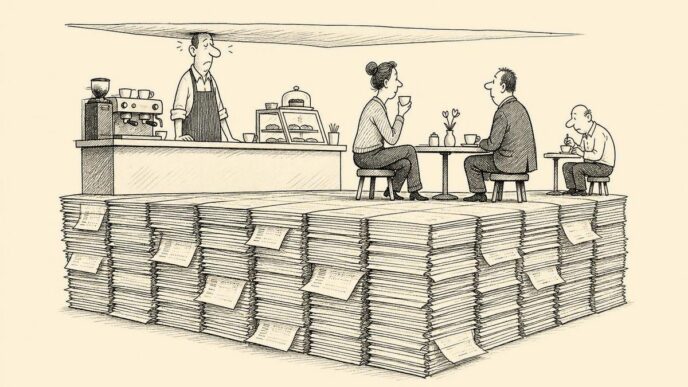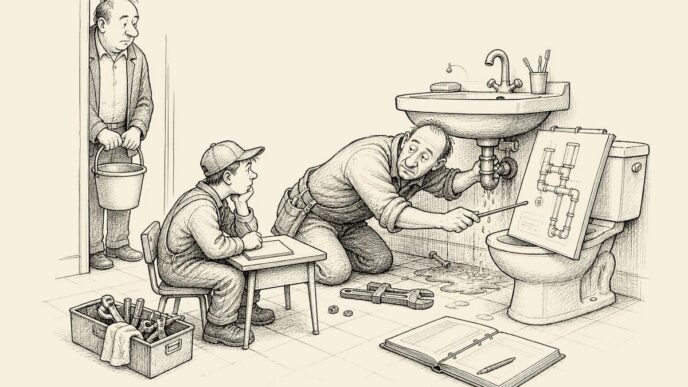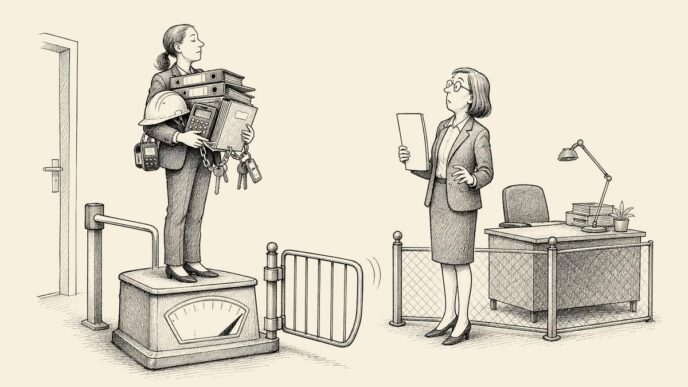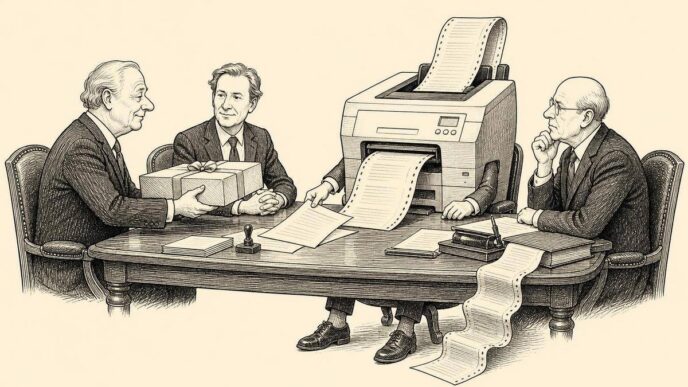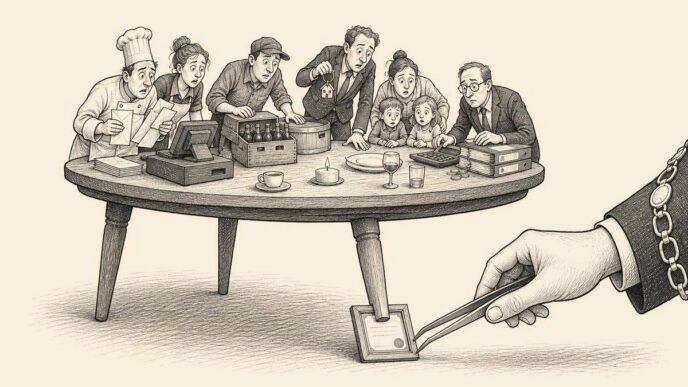
The payment stays. The refund route is set to disappear from 2027.
The Dutch government has opened a practical question for employers: who carries the final cash cost when a long sickness case ends?
The signal has to become readable
On 29 May 2026, Rijksoverheid announced that the cabinet intends to abolish two transition-payment compensation schemes from 1 January 2027. One concerns dismissal after long-term incapacity for work. The other concerns business closure because the employer retires or dies. The amendment is now moving to the Tweede Kamer.
For small employers, the point is simple. The transition payment itself stays in the system. What disappears is the reimbursement route that now allows qualifying employers to pay first and then apply to UWV for compensation.
That turns a familiar HR file into a cash-planning issue. A cost that could circle back through a public scheme may become a final employer cost.
The end of a sickness case starts much earlier
Think of a five-person care support business. One employee becomes ill. The owner keeps wages moving, works with the company doctor, makes the action plan, monitors reintegration, shifts hours among colleagues and brings in temporary support when the roster no longer holds.
After two years, the employee still cannot return. If dismissal after long-term incapacity follows, the employer still has to deal with the transition payment. The amount is linked to monthly salary and length of service. Rijksoverheid says sickness before or at dismissal does not reduce the agreed working hours or the basic gross monthly salary used for the calculation.
Under the current route, UWV can compensate qualifying employers after the transition payment has been made, if the conditions are met. UWV says the application for long-term incapacity compensation must be made within six months after payment. Under the cabinet plan for 2027, that recovery route is set to disappear.
The legal event may sit at the end of the file. The financial exposure starts much earlier.
That is why the proposal belongs in the same conversation as sickness absence, reintegration evidence, replacement capacity, wage growth and cash timing.
Small firms have lower absence, but higher concentration
CBS reports sickness absence of 5.6 percent in the fourth quarter of 2025. Among companies with fewer than ten employees, the rate was 2.4 percent.
The lower average can sound reassuring until it meets real business life. In a very small company, one long-term sickness case is not an average. It is one client route, one machine, one reception desk, one planning role or one trusted pair of hands.
What the signal changes
The percentage may be low nationally. Inside the company, the concentration risk can still be high.
Sector pressure matters too. CBS reports the highest sickness absence in health and welfare, at 7.9 percent in the fourth quarter of 2025. That is also a sector where replacing people can be difficult and expensive. Care, trade and business services still had the most vacancies at the end of the first quarter of 2026, even as labour-market tension eased.
For a small employer, the pressure is rarely one clean number. It is the combination of wages during sickness, lost capacity, temporary cover, owner time, adviser costs, reintegration duties and the transition payment. If the refund disappears, the last item no longer behaves like a bridge. It behaves like an employer bill.
The record matters because the cash matters
The Dutch sickness system already asks employers to work through the Wet verbetering poortwachter. The company doctor gives input. Employer and employee make an action plan. Progress has to be monitored. Reintegration has to be taken seriously.
That discipline is not paperwork for its own sake. If UWV finds that an employer has done too little on reintegration, wage continuation can be extended by up to one extra year. That sanction already has weight. If compensation for the later transition payment disappears, the quality of the sickness file becomes even more important for cash control.
There is also a payroll point. Belastingdienst treats dismissal compensation, such as a transition payment, as income from former employment. The employer thinks in gross cash outflow. The employee sees a net amount after payroll handling. Those two numbers are not the same, and confusion at the end of a strained employment relationship rarely helps anyone.
Wage growth adds another layer. CBS reported that collectively agreed wages were 4.5 percent higher year on year in the first quarter of 2026, while contractual wage costs rose 4.4 percent. Since the transition payment depends on salary and service, higher wages can also lift future termination exposure.
For most micro employers, the maximum transition payment will not be the ordinary case. Even so, the 2026 maximum of €102,000 gross, or one gross annual salary if that is higher, shows the scale of the legal architecture. A far smaller amount can still matter if it lands in the same month as VAT, payroll tax, holiday allowance, rent or a supplier catch-up.
Sleeping contracts may return to the conversation
Small employers should understand one legal phrase without turning into lawyers: the sleeping employment relationship. Rijksoverheid describes this as a situation where a long-term sick employee remains employed, receives no salary and receives no transition payment because there is no dismissal.
The Raad voor de rechtspraak warned in May 2026 that full abolition of long-term incapacity compensation may create uncertainty around these sleeping relationships and may lead to extra court cases. The reason is practical as well as legal. The earlier Xella line was tied to the existence of statutory compensation for employers.
No one can say yet how future disputes will land in every case. What is clear is the direction of travel. Employers should expect more attention to the choice between ending the employment relationship, paying the transition payment and leaving the contract dormant.
What founders should check
For a founder, that is not an abstract court problem. It can become a negotiation problem, a relationship problem and a balance-sheet problem at the same time.
Founder exit is part of the same story
The second compensation scheme matters for another reason. The cabinet also intends to abolish the compensation route for business closure because the employer retires or dies. UWV currently describes a route for small businesses under conditions, after the employer has paid transition payments to employees dismissed because of the closure.
That makes succession less sentimental and more concrete. If a small owner-managed company has employees, staff-exit costs may affect the value of the business, the retirement plan or the position of heirs after death. This is not only an HR issue. It sits inside owner-risk planning.
Many small firms postpone succession because daily work keeps winning. That is understandable. The disappearance of this compensation route would make postponement more expensive in the wrong moment, when the founder is leaving or no longer able to manage the company.
A calm employer response
The useful response is not panic. It is earlier visibility.
A small employer with current sickness cases should know which files may approach the two-year point in 2026 or 2027. The Poortwachter record should be complete and dated. Payroll or the salary administrator can estimate the gross transition-payment exposure for relevant employees, using salary and length of service rather than reduced sick pay as a shortcut.
That estimate belongs in the cash calendar. It should sit beside VAT, wage tax, holiday allowance, rent, loan repayments and major suppliers. The question is not only whether the company is profitable over a year. It is whether the bank balance can absorb a gross payment in the week it falls due.
Employers with files that may cross 1 January 2027 should keep the legislative status visible. The cabinet has announced the intended abolition and moved the proposal toward Parliament, but final law and updated UWV rules will decide the exact handling of individual cases.
For a ZZP entrepreneur considering a first employee, this is not a reason to avoid hiring. It is a reason to price employment honestly. Staff bring capacity, continuity and growth. They also bring duties that last beyond the good weeks.
The transition payment debate is often discussed as if it lives at the end of employment. In a small company, it starts much earlier. It starts with the first employment contract, the first wage increase, the first sickness day, the first reintegration note and the first choice to keep or spend the cash reserve.
If the refund route disappears in 2027, the employer still has a sober path. Keep the sickness process clean. Calculate exposure early. Separate gross cost from net expectation. Treat founder exit as part of employment governance. No drama is needed. Only timing, evidence and cash discipline.
Sources
Referenced in the article
Column | Governance
One Founder, Two Dutch BVs, and the Salary Risk Between Them
A Belastingdienst position on connected bodies shows why ownership, work, and payroll evidence must be read.
Column | Human Resources
The First Contract Can Break the Dutch Expat Payroll Promise
A zero-hour start may be lawful, but it can still fail the 30% facility before the specialist.
The Polder is written for readers who need the Dutch business environment translated into practical meaning. Corrections, source policy and editorial accountability are part of the publication record.