Dutch vehicle tax is moving online, but registration still depends on identity, mandate and payment discipline.
A company vehicle is never only a vehicle. A small contractor uses it to reach the site. A trader sees stock. An installer sees the morning route, the tools and the promise made to the client. So when Dutch BPM filing moves further online, the first question is not whether the form looks easier. It is whether the business is ready for the sequence behind it.
The signal has to become readable
Since 20 May 2026, entrepreneurs who file their own BPM return can file online with eHerkenning. That helps. It is still narrower than it sounds. The online route applies to new motor vehicles. For used motor vehicles, it applies only when the return uses the forfaitaire table. Used-vehicle cases that rely on a koerslijst or a taxatierapport still belong on paper.
The weak point has shifted
The tax calculation may be correct. The RDW inspection may be done. The buyer may be ready to pay. Still, the transaction can stall if the wrong person tries to file, if eHerkenning is not in place, if an adviser lacks authorisation, or if the chosen valuation method does not fit the online route.
BPM is the Dutch private motor vehicle and motorcycle tax. A return is required when applying for a Dutch registration number. Before that return, the vehicle must first be inspected or identified by RDW. After that, the route depends on the vehicle data, the taxpayer, the access method, the valuation method and the payment step.
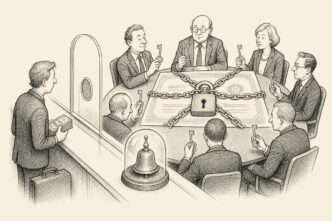
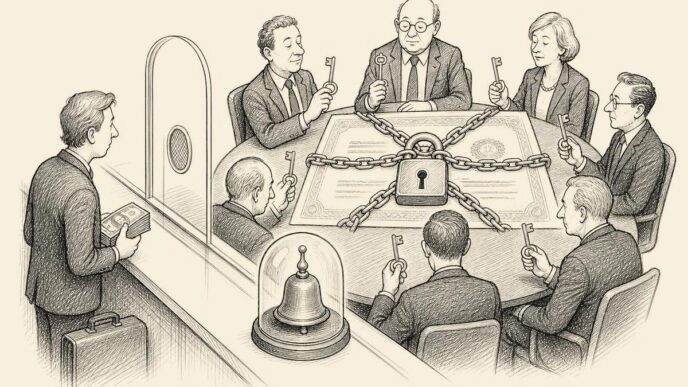
The taxpayer is the person or company that registers the vehicle with RDW. That sounds simple until an owner-managed business has several entities, an employee arranged the import, a dealer prepared the documents and an accountant expects to file. Only the taxpayer may file the BPM return, unless another party has valid authorisation. If another party files without that authorisation, Belastingdienst will not process the return.
That is not a technicality. It is a governance point in ordinary clothes. Small businesses often run on trust and short lines. Vehicle tax does not always follow those short lines. The legal person on the registration, the login used for the portal and the mandate held by the intermediary must match the transaction.
What the signal changes
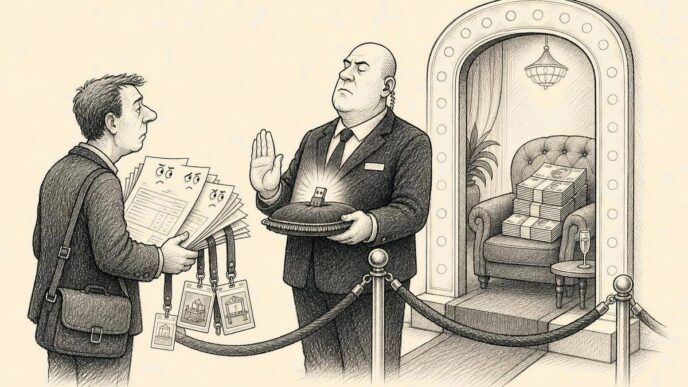
For Belastingdienst portals, businesses need eHerkenning at least at assurance level EH3. eHerkenning is personal, and it can include specific service authorisations for employees. A tax service provider can log in for a client only with client permission, arranged through ketenmachtiging. The words are awkward. The rule is not. They matter when a vehicle is waiting to be registered.
Where small firms feel the delay
Imagine a small building firm replacing an old diesel van. The owner has found a used van abroad, the RDW appointment is done, and the work schedule assumes the van will be available next week. Then the BPM route becomes less friendly. If the van uses the forfaitaire table, online filing may be available. If the case needs a koerslijst or a taxatierapport because value depends on condition, damage or a specific version, the paper route remains.
Even an eligible online filing has timing. If RDW inspection data have not yet reached Belastingdienst, the online return may show a VIN error. Belastingdienst guidance gives a possible wait of up to five working days for that data transfer. A complete and correct BPM return appears in the Belastingdienst system after four working days. Belastingdienst checks the return within seven working days. If BPM is due, a payment message follows. After payment is received, Belastingdienst informs RDW that the registration number can be issued, which takes about two to four working days.
For a large organisation, those days are planning friction. In a micro-business, they can mean using the vehicle, renting a substitute, postponing work or explaining a delay to a customer. The online route removes some handling friction, but it does not turn registration into an instant event.
The van question is wider than one form
Delivery vans deserve special attention. Since 1 January 2025, BPM for delivery vans is based on CO2 emissions rather than the net list price. A delivery van with CO2 emissions of 0 grams per kilometre has no BPM due. If CO2 emissions are unknown, Belastingdienst sets them at 330 grams per kilometre. For delivery vans with a first admission date of 1 January 2025 or later, the old entrepreneur scheme no longer applies. Transitional rules can matter for vans with a first admission date of 31 December 2024 or earlier.
This lands in a market where vans are still deeply tied to diesel. CBS reports that the Netherlands had just over 1 million registered delivery vans on 1 January 2026. Of those, 88.1 percent ran on diesel. Electric delivery vans, including hybrid, numbered 54.6 thousand, up 43 percent from the start of 2025. Construction is the largest branch for delivery vans, followed by trade.
That tells me something practical. The BPM portal is not arriving in a neutral environment. It arrives while many businesses are reconsidering fleet replacement, CO2 data, operating costs and resale expectations. Rijksoverheid says that from 2026 through 2028, BPM CO2 bracket limits are lowered, tax rates increase and the diesel surcharge for cars and plug-in hybrid electric cars increases. A van decision is now a tax decision, a cash-flow decision and an operational decision at the same time.
The evidence still has to survive
Online filing can make simple cases cleaner. It does not remove the evidential weight of BPM. Used vehicles are the clearest example. Depreciation can be calculated with a koerslijst, a taxatierapport or the forfaitaire table. The taxpayer may choose the most favourable method, and that choice is definitive.
What founders should check
A recent Hague Court of Appeal case on a BPM additional assessment shows the point without drama. The case concerned used-vehicle valuation. The taxpayer's valuation report could not be used, and claimed value reductions were not made plausible. One judgment does not settle every future dispute, but it reminds business owners that vehicle condition, comparability and version details need more than a feeling about market value.
There is also ledger memory. A Belastingdienst Kennisgroep position on export refunds for certain older pre-2025 delivery vans turns on a simple question: was BPM actually paid? If BPM was actually paid in the described situation, a refund of remaining BPM on export can exist. If no BPM was paid because of the old entrepreneur exemption, there is no BPM refund. Years later, the answer may sit in an old payment record.
That is why I would not treat the online BPM route as a small portal update. It is part of a longer administrative chain: RDW data, taxpayer identity, eHerkenning access, mandate, valuation method, payment, registration release and later defensibility.
A calmer way to handle the change
The useful habit is to bring the tax and access questions forward. Before the RDW appointment, someone in the business should know which person or legal entity will register the vehicle, who can log in for that taxpayer, whether an intermediary has valid authorisation and whether the valuation method fits the online route.
A trader needs stock speed and cash recovery. A contractor cares about capacity. A founder with one company vehicle is trying to avoid a quiet administrative stop at the worst moment. An adviser or import agent should treat the mandate as part of the transaction, not a courtesy document.
A faster portal is welcome. Dutch business life needs fewer avoidable paper steps. But the deeper lesson is sober: digital tax filing rewards businesses that have their identity, access, evidence and payment rhythm in order before the form opens.
The vehicle may be ready. The company has to be ready too.
Sources
- CBS labour market data
- Taxence
- Belastingdienst
- Belastingdienst
- Belastingdienst
- Belastingdienst
- Belastingdienst
- Belastingdienst
Referenced in the article
Column | Ledger & Tax
Dutch Tax Plan 2026 Turns Into a Ledger Test
Dutch Tax Plan 2026 now asks whether payroll, prices, leases and records can absorb the rules.
Column | Governance
Dutch Tax Refunds Put Identity, Evidence and Cash in One Chain
A refund is not only tax arithmetic when access, data, evidence and payment meet at the same.
Column | Ledger & Tax
The Dutch Innovation Box Rewards Profit After the Risk Is Taken
The regime is close to u20ac3 billion a year. Smaller innovators should read it as a question.
The Polder is written for readers who need the Dutch business environment translated into practical meaning. Corrections, source policy and editorial accountability are part of the publication record.