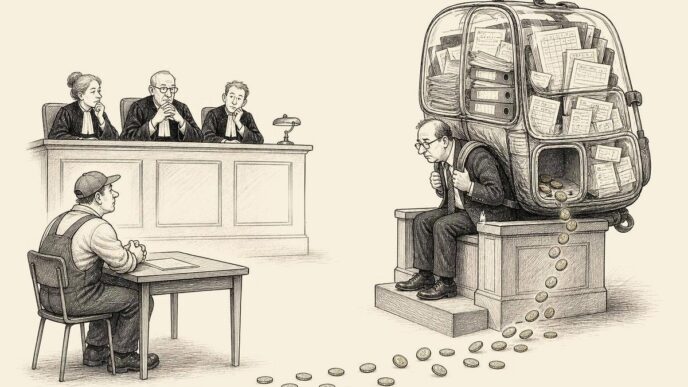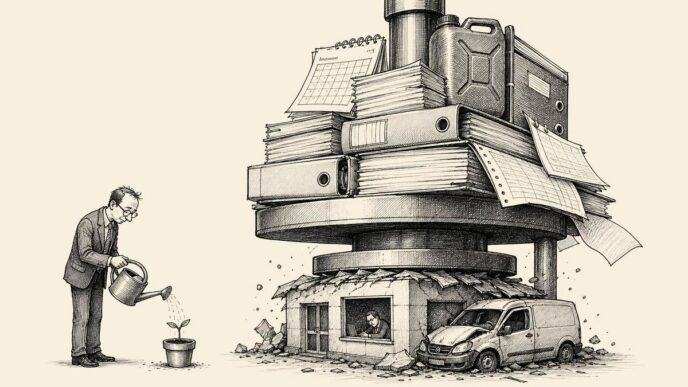




A lease, renovation or land purchase now needs earlier proof about soil, water and local rules.
A business site used to be judged first by rent, access, floor space and whether the neighbours were tolerable. Soil was usually the late question. It surfaced when a notary, bank, contractor, adviser or municipality suddenly wanted a report that had not been planned into the week.
That order is losing its comfort.
The signal has to become readable
EU soil policy has moved beyond proposal. Directive (EU) 2025/2360 on soil monitoring and soil resilience has been adopted and published. Dutch implementation is due in December 2028. The Netherlands still has room to fit the directive into its own system. The Dutch government also says the directive has no binding targets and no obligation to take measures. That matters. This is not a sudden rule that turns every Dutch business site into a problem tomorrow morning.
The sharper point is quieter. Soil is becoming more visible. Monitoring, target values and trigger values will make soil condition more visible. So will attention to lost soil services and a future register of potentially contaminated sites.
The ordinary site decision
Imagine a small food producer that has outgrown its rented unit. The owner finds a light industrial building with a loading bay, parking space and room for a cooling installation. The rent is manageable. The location works. The landlord is willing. The contractor says the renovation can be done in six weeks.
Then the real site starts speaking. Is the intended activity allowed under the municipal environmental plan? Does the new installation change the environmental position? Will extra paved space affect drainage? Is any soil movement involved? Does the parcel record show restrictions, utilities, leasehold rights, qualitative obligations or a contamination signal? Does the bank want more information because the property is part of the financing case?
None of those questions is exotic. They are ordinary business questions once the site is treated as more than a rectangle on a floor plan.
This is where compliance becomes practical. It is not only about obeying a rule after someone has found it. It is about keeping the sequence clean. Rent, purchase price, permit timing, contractor planning, finance and responsibility clauses still need to match the real condition of the location.
The Omgevingswet already changed the meeting point
The EU directive is not the only reason small businesses need to look earlier. The Dutch operating environment already changed through the Omgevingswet, which entered into force on 1 January 2024. Existing permits continue automatically if operations do not change. That is reassuring for many companies.
What the signal changes
But change is the important word. Renovation, expansion, a new activity or a different use of outdoor space can bring the company back to the Omgevingsloket and the local rules. The same is true for soil work or a building plan. KVK warned in May 2026 that permit requirements differ by municipality because each municipality has its own environmental plan. Late checking can mean delay, refusal or a fine.
For a micro business, delay is rarely an abstract inconvenience. It is idle rent, a contractor waiting, a missed season, a financing condition that expires, or a second move that should never have been needed. Soil and site information do not have to be dramatic to become expensive.
The direct business reading is simple. EU soil policy does not create a new universal checklist for every company tomorrow morning. Its meaning is that public information about soil, contamination, sealing and resilience will become more organised. Once information becomes more organised, municipalities, buyers, tenants, lenders, insurers and counterparties can ask sharper questions with less friction.
Records, not assumptions
Kadaster information can show more than a parcel number. Depending on the product and the parcel, it can include rights such as ownership, usufruct or leasehold. It can also include legal-status information such as utilities, qualitative obligations, soil contamination and certain public-law restrictions. That does not replace technical soil investigation. It does remind us that land has a history, and sometimes that history is already partly recorded.
The practical weakness in many small-company decisions is timing. The owner first negotiates the deal, then starts collecting the evidence. By then everyone is emotionally and financially committed. The rent-free period has started. The contractor is booked. The opening date has been promised to clients. A question that would have been manageable in week one becomes painful in week six.
A better rhythm is simple. Before a purchase, long lease, renovation or change of use, the business forms a short site record. It should cover the intended activity, permit position, local environmental plan check and known parcel information. It should also name available soil reports, drainage or sealing changes and the clauses that allocate responsibility. That record is not a guarantee. It is proof that the company has thought in the right order.
The cash effect is often hidden
Soil risk rarely arrives on the ledger under one neat heading. It appears as advisory costs, technical reports, design changes, permit preparation, legal review, mitigation, remediation, contractor delay, finance questions or a lower valuation. For leased premises, it can appear through responsibility for works, reinstatement duties or limits on adapting the site. For owned property, it can affect collateral quality and exit value.
This is why the accounting and tax side should not be treated as an afterthought. Environmental duties do not automatically decide fiscal or accounting treatment. Remediation costs, capital expenditure, impairments, provisions and subsidies each need their own assessment. The control point is documentation: what happened, why it was needed, which asset or obligation it related to, and how the decision was approved.
What founders should check
It may sound dry. In real business life it is the difference between a cost that can be explained and a cost that is merely regretted.
Water is entering the same conversation
Soil policy is also no longer only about contamination. Dutch planning sources increasingly connect soil with groundwater, subsidence, salinisation, water nuisance, fresh-water availability and climate adaptation. PBL has pointed to water nuisance, flood risk and subsidence as conditions that spatial planning should reflect more clearly. The draft Nota Ruimte looks towards 2050, with a view to 2100, and includes choices around land use, including agricultural land.
For farms and horticultural businesses, soil quality is production capacity. The National Programme Agricultural Soils aims for all agricultural soils in the Netherlands to be sustainably managed by 2030. The government links healthy soil to yields, water infiltration and retention, carbon storage, soil life and nutrient recycling. It also points to more drought in spring and summer, more wetness in winter and increasing salinisation due to sea level rise.
For business parks, the same logic appears differently. More paving, heat, drainage pressure, stormwater, energy infrastructure and limited space all meet in one location. DNB has also published work on nature physical risks, especially water-related risks, in financial risk models. That is not a binding rule for a small entrepreneur. It is a signal about the direction of finance. Physical site risk can become credit, insurance and valuation risk.
Construction pressure makes the issue less theoretical. CBS reported that permits were issued for 23.5 thousand new-build homes and 5.2 thousand new business buildings in the first quarter of 2026. Construction turnover was 5.1 percent higher than a year earlier. More building means more moments where soil, water, permits and local plans have to meet under time pressure.
The calm discipline
The conclusion is not that every business needs to become a soil specialist. It is that the owner should know when a specialist belongs in the room, and early enough for the answer to matter.
For the next site decision, the useful questions are modest. What is the intended use? What does the local environmental plan allow? What changes physically on the site? Is there known contamination or a recorded restriction? Does the project increase sealing or affect drainage? Who carries the cost if more investigation or remediation is needed? Will the lender, insurer, landlord, buyer or municipality ask for the same evidence later?
Those questions do not slow a good decision. They protect it.
The ground under a business has always carried memory: previous use, water, pipes, rights, restrictions, pollution, foundations, promises and mistakes. What is changing is the quality of the attention around that memory. Dutch soil monitoring, local environmental plans, parcel records and financial risk thinking are starting to pull in the same direction.
A small business does not need fear in front of that development. It needs a better sequence. Look at the site before the deadline becomes tight. Connect the physical condition with the contract, the permit, the budget and the ledger. Treat soil as part of the business decision, not as a specialist appendix after the deal is already alive.
Sources
- CBS source
- PBL
- PBL Netherlands Environmental Assessment Agency
- Overheid.nl Wetgevingskalender
- Rijksoverheid, Ministry of Infrastructure and Water Management
- Rijksoverheid
- KVK
- Rijksoverheid, Ministry of Infrastructure and Water Management
Referenced in the article
Column | Governance
Dutch Pay Transparency Makes Salary Memory a Governance Risk
Dutch pay transparency asks employers to explain pay before memory and negotiation become weak evidence.
Column | Real Estate
Dutch Housing Permits Rise While Small Firms Watch the Clock
A larger housing pipeline helps demand, while small firms live by starts, prices and payment.
Column | Governance
Dutch Tax Refunds Put Identity, Evidence and Cash in One Chain
A refund is not only tax arithmetic when access, data, evidence and payment meet at the same.
The Polder is written for readers who need the Dutch business environment translated into practical meaning. Corrections, source policy and editorial accountability are part of the publication record.