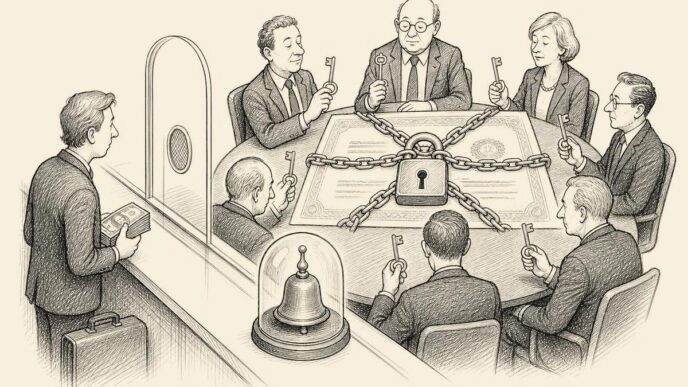
A Gelderland transport case shows why cash, creditor pressure and VAT evidence must stay in the same story.
VAT recovery often looks like normal cash planning. A supplier sends an invoice with VAT. The business uses the cost for taxable turnover. The VAT return deducts input VAT from the VAT due on sales. If the balance is favourable, the amount reduces what must be paid or creates a refund position.
The economic route comes first
That mechanism is ordinary, and for small companies it can matter. Belastingdienst guidance also explains why it matters for liquidity: supplier VAT can normally be deducted before the supplier has been paid, provided the legal conditions are met. That timing can keep a week alive.
A recent Rechtbank Gelderland judgment shows the other side of the same mechanism. In case ECLI:NL:RBGEL:2026:2049, a transport BV lost input VAT deduction on invoices from a related BV. The court did not treat the invoice as the end of the story. It looked at the route behind it.
The case concerned VAT for 2018 and 2019. The assessment was €40,272, with €2,716 tax interest. The disputed input VAT included €35,007 on invoices from a related BV. The court held that part of the deduction failed because the taxpayer had not made it plausible that it was the recipient of the services. For later invoices, the court found it implausible that the related BV had still performed transport services after personnel and fleet capacity had already moved.
That is the signal for founders. VAT recovery is not a loose cash claim. It is a claim about business reality.
The invoice opens the door, but it does not close the question
Article 15 of the Dutch VAT Act links deduction to VAT charged for goods or services supplied to the entrepreneur. Those goods or services must be used for taxable business activities. In plain language, the business needs more than a document with VAT on it. It needs a real supply or service, to the right recipient, for taxable activity, supported by an administration that can be checked.
An invoice naming the BV as recipient can create a presumption that the BV was indeed the recipient. That is useful for ordinary administration. Business cannot run if every invoice starts as suspect.
Legal form is not the whole story
Yet the presumption is not conclusive. In the Gelderland case, the inspector rebutted it through the surrounding facts. The file showed several pressure points: a third-party attachment, sudden invoice rerouting, related-party links, shared address facts, missing agreements and weak verifiable data. The problem was not the existence of creditor pressure alone. The problem was that the ledger changed faster than the documented business relationship.
I read this as a governance lesson more than a technical invoice lesson. A correct invoice is important, but it is not a witness. It cannot explain why the customer changed, who had the staff, who had the vehicles, or who carried the operational risk. It also cannot explain why the payment route made business sense at that date.
A small transport example makes the point clear
Imagine a small transport company that depends on one large route contract. A related entity used to invoice part of the work. Then a tax collector or another creditor attaches a receivable. Money can no longer move comfortably through the old route. Soon after, invoices start going through another BV in the family circle.
That may be legitimate if the underlying business has truly changed. Perhaps contracts were transferred, staff moved, vehicles were leased differently and the new entity became the real recipient or performer of the services. But then the administration must tell that story before anyone asks.
In transport, that story is concrete. It sits in route records, driver planning, vehicle use, lease contracts, subcontracting agreements, customer instructions, fuel records, payment flows and dated agreements. If the invoice says rides were performed, the business should be able to show who could actually perform them.
This is why the later invoices in the case were so vulnerable. Once personnel and fleet capacity had moved, the invoice story had to explain how the former supplier still performed the transport services. The court was not persuaded.
Creditor pressure changes the temperature of evidence
A third party attachment does not itself remove the right to deduct VAT. That point matters. The VAT rule remains the VAT rule.
Creditor pressure changes incentives, though. It can make an old payment route unattractive. It can make a related entity look like a convenient bridge. It can make expected VAT recovery feel like money already available for fuel, wages, finance costs or tax arrears.
That is exactly when the administration needs to slow the owner down. Not because every restructuring step is wrong. Not because related party invoices are forbidden. They are not. The issue is whether the legal relationship, operational capacity and invoice route still fit together.
Follow one revenue stream
Dutch VAT law and guidance do not ask for drama. They ask for a reliable trail. Article 35a of the VAT Act deals with invoice details, including supplier and recipient data, the nature and scope of the service, dates, amounts and VAT. Article 35b goes deeper: authenticity of origin, integrity of content, readability and business controls that create a reliable audit trail between invoice and transaction.
That phrase, reliable audit trail, is not abstract. For a small company, it means the story can be followed from invoice to contract and from contract to work. Then it must connect the work to people, assets and taxable turnover.
The 2026 pressure setting makes this practical
The court case arose from earlier years, but the lesson is current. CBS reported that transportation and storage had the highest bankruptcy rate in April 2026, without adjustment for court session days, at 28.6 bankruptcies per 100,000 businesses. CBS also reported business confidence in transportation and storage at -13.5 in April 2026, down from -4.7 in January.
Those figures place the case in a pressured sector. In that setting, weak receivables, tax debt, vehicle leases, subcontracting and VAT recovery can meet in the same week.
DNB adds another layer. In March 2026, SMEs paid about 3.6 percent on outstanding bank credit, compared with about 3.1 percent for non SME businesses. DNB also points to information gaps that can make SME risk assessment harder for banks. A VAT dispute with weak evidence does not help that picture. It turns a tax correction into a trust problem.
The practical discipline is not complicated, but it must happen early. Large VAT claims deserve to be matched with the documents and operational records that make them credible. Related party invoices deserve dated agreements that describe what was actually done. Invoice route changes after attachment, tax debt pressure or restructuring deserve a written business explanation that fits the facts.
The calm conclusion is simple: VAT recovery is still a normal right when the conditions are met. It can support cash flow, and many small firms rely on that timing honestly. Under creditor pressure, the right becomes fragile if the records cannot explain the transaction.
A clean invoice may start the VAT story. The ledger, contracts, people, assets and dates have to finish it.
Sources
Referenced in the article
Column | Compliance
Customs Representation Ties Dutch Import Authority to Cash and Recovery
The name on the declaration can decide who faces duty, VAT pressure and recourse when an import.
Column | Governance
Dutch Tax Refunds Put Identity, Evidence and Cash in One Chain
A refund is not only tax arithmetic when access, data, evidence and payment meet at the same.
Column | Ledger & Tax
Box 3 Refund Hopes Need Dates Before Optimism
The latest court signal turns a familiar tax grievance into private liquidity.
The Polder is written for readers who need the Dutch business environment translated into practical meaning. Corrections, source policy and editorial accountability are part of the publication record.