The March submission is a negotiating note, not a new Dutch tax bill. It shows how cross-border business now sits inside treaty layers, EU data exchange and payment-time evidence. Dutch cross-border tax records now decide whether treaty positions, platform income, foreign accounts and group notes can be read as one proof trail.
A small Dutch company can feel local and still leave an international tax trail. A consultant invoices a client abroad. A webshop sells through a platform. A founder keeps a foreign bank account after moving to the Netherlands. A small company owns a foreign subsidiary, rents out property, or receives a payment that triggers withholding questions. That makes Dutch global minimum tax a ledger-discipline question, not only a large-group policy.
A group rule with local consequences
To the entrepreneur, these are ordinary business facts. To tax administrations, they are data points. They point to residence, income type, treaty treatment, platform reporting, bank information and the route a dispute may follow if two countries tax the same money.
That is why the Dutch position on the draft UN Framework Convention on International Tax Cooperation deserves more attention than most small businesses will give it. On 11 March 2026, State Secretary Eelco Eerenberg sent the Tweede Kamer the Kingdom of the Netherlands' written contribution on the UN draft. The Netherlands supports stronger, inclusive and sustainable international tax cooperation. It also wants a high-level framework, separate protocols that states can choose to join, respect for existing tax treaties unless states agree otherwise, and room for EU law.
I read this as a Dutch control instinct. Not control in the sense of a new tax form tomorrow morning, but control over layers. Which instrument has priority? Which route applies? Which data travels where? Which explanation is expected when the administration asks a question?
No new tax bill, but not a distant debate
The March submission itself does not change Dutch tax rates, returns or filing deadlines. It is a negotiating contribution on draft international text. The European Commission has described the UN process as running from 2025 until the end of 2027, with possible signature and conclusion only after the legal texts are finalised.
That timing matters. A founder does not need to restructure a company because a draft UN text exists. But it would also be too easy to dismiss the issue as diplomatic theatre. The practical environment around the draft is already active.
The Dutch treaty overview was updated again on 1 April 2026. On 23 April 2026, the State Secretary informed parliament about planned and ongoing tax treaty negotiations. The bilateral treaty network is not disappearing while the UN process continues. It is being maintained beside it.
Inside the EU, the Directive on Administrative Cooperation already gives tax authorities a legal framework for exchanging information. It covers natural persons and legal entities. It also includes employment income, pensions, financial accounts, tax rulings, country-by-country reports, cross-border arrangements, platform sellers, crypto-assets and multinational Pillar 2 reporting. The EU dispute resolution mechanism has applied since 1 July 2019 for certain disputes about treaty interpretation and double taxation.
The ledger has to explain the rate
So the real story is not one new convention replacing the old world. The real story is layering. For small businesses, layering is where compliance cost often hides.
When the records tell different stories
Imagine a designer in Utrecht. She sells some work through an international platform and invoices an Italian client directly. The platform sends an annual DAC7 overview. Her bank still holds an old fiscal residence record from before she moved. The Italian contract uses the word licence, while her invoices describe design services. Her bookkeeping records the receipts correctly in total, but not with the same labels and dates used by the platform overview.
None of that automatically means tax avoidance. It does mean that different records may tell different versions of the same commercial activity.
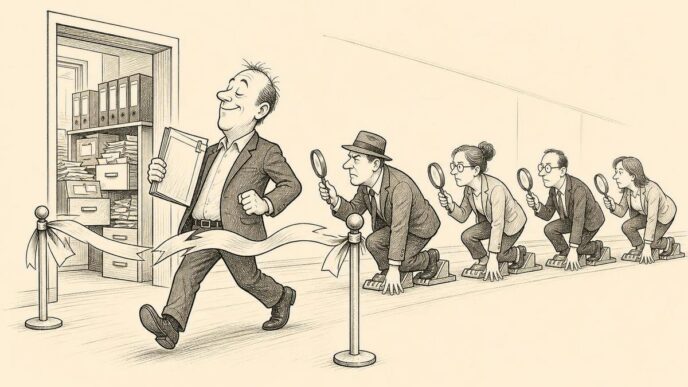
That is the point small companies often underestimate. International tax cooperation does not only chase complex structures. It also creates comparison points. The tax return, bookkeeping, platform overview, bank residence record, contract, invoice and payment trail may meet in one administrative picture. If they do not match, time moves from selling and delivery into reconstruction.
The Belastingdienst guidance on DAC7 says platform operators may have to report seller data from 1 January 2024. Relevant activities include rental of immovable property, personal services, sale of goods and rental of means of transport. Sellers may receive an annual overview and are expected to check whether the data is correct and complete. Platform reporting does not automatically make someone an entrepreneur for income tax or VAT, but the data enters the assessment environment.
CRS, the Common Reporting Standard, has operated in the Netherlands since 1 January 2016. More than 100 countries participate in automatic exchange of financial account information. Financial institutions register fiscal residence. The Belastingdienst receives foreign account information about persons and organisations fiscally resident or established in the Netherlands, and checks that data before drawing conclusions.
Those details sound technical. In a small company, they are practical. Old addresses, platform names, mixed private and business receipts, unclear contract wording and incomplete payment explanations can all create work at exactly the wrong moment.
Compliance is timing, not only correctness
Many founders still treat tax evidence as a year-end exercise. That habit is becoming expensive. Data can move before the business has written its explanation. A platform can report. A bank can record residence. An intermediary can assess a cross-border arrangement under DAC6. A foreign counterparty can ask for treaty paperwork before paying an invoice.
DAC6 is especially relevant for businesses that used advisers, intermediaries or structured cross-border arrangements. In the Netherlands, it is implemented through the Wet op de internationale bijstandsverlening bij de heffing van belastingen. It concerns reportable cross-border arrangements that meet hallmarks and, where relevant, the main benefit test. From 1 January 2026, extra information must be included in the summary of a DAC6 report, including information relevant to assessing possible tax risk.
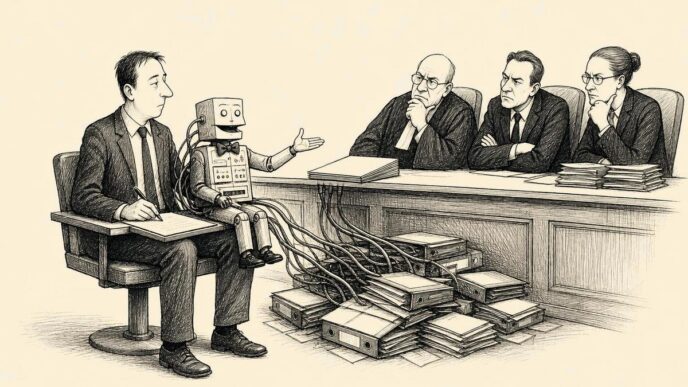
This does not mean every international invoice is a DAC6 case. It means the official tax environment increasingly asks for a narrative, not just numbers. Who was involved? What happened? Which years? Which country? Which purpose? Which tax risk? A small company with a simple answer is in a better position than a company with a clever structure and poor memory.
Why smaller structures should still care
The same direction is visible at the large-company end. Country-by-country reporting applies to multinational groups with consolidated group revenue of at least 750 million euros. The Belastingdienst receives more than 3,000 country reports each year and uses published signal rules to support human risk assessment. Most small businesses are far outside that threshold, but the lesson still matters: international tax data is not passive storage. It is read for patterns.
The founder's version of the same discipline is more modest. It is knowing which foreign clients exist, which platforms report, which bank accounts carry which residence data, which contracts may trigger withholding questions, and where private founder assets touch company administration.
The Dutch message is compatibility
The Netherlands is not rejecting international tax cooperation. It is asking that the UN framework fit beside existing treaties, EU obligations and regional legal systems. The European Commission has also identified possible overlap between UN dispute work and EU law, especially the EU dispute resolution mechanism and the Directive on Administrative Cooperation.
For a founder, this is a useful mirror. A company also needs compatibility between its own layers. The commercial story, contracts, invoices, platform reports, bank data, tax returns and internal bookkeeping should not contradict each other without explanation.
This is not about creating paperwork for its own sake. It is about protecting cash and attention. A foreign client may delay payment while checking withholding tax. A platform mismatch may require correction before the annual tax return is reliable. A bank residence error can create avoidable questions. A double taxation issue can keep money tied up while the right route is identified.
The cleanest response is not fear. It is a better memory of the business.
Cross-border work needs its real price
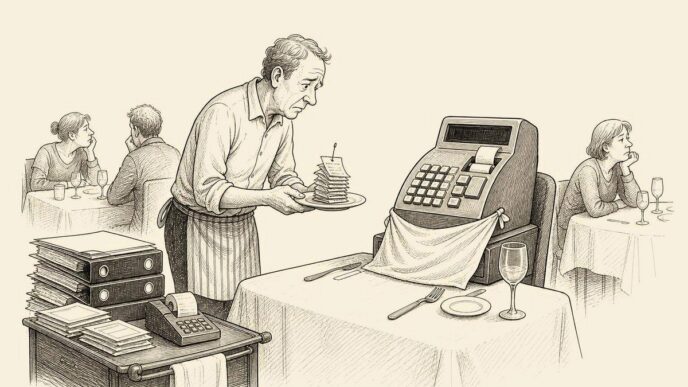
There is also a pricing lesson here. Small firms often price international work as if it were domestic work with a different address. That can be too optimistic. Cross-border work may need residence certificates, treaty checks, platform reconciliation, VAT classification, contract review, withholding explanations or extra correspondence with an adviser.
Those hours are not failure. They are part of the cost of selling across borders. If they are ignored, they show up later as margin loss, payment delay or founder fatigue.
The draft UN framework is still unfinished. The Dutch submission is only one formal contribution to the negotiation. But the direction around it is clear enough for daily business life. Tax cooperation is moving through treaties, EU routes, automatic data exchange, platform reports, bank residence records and cross-border arrangement reporting.
A small business does not need to become a tax department. It does need to know what its international footprint says.
The calm adjustment is simple: keep the cross-border story visible before someone else assembles it from scattered data. Not because the UN draft creates a new Dutch duty today, but because the tax environment already rewards coherence. In that world, messy records do not only look untidy. They cost time, cash and trust when the business can least spare them.
Referenced in the article
Column | Ledger & Tax
The Global Minimum Tax Is Becoming a Dutch Ledger Test
Pillar 2 will rarely touch ordinary small firms.
Column | Human Resources
The First Contract Can Break the Dutch Expat Payroll Promise
A zero-hour start may be lawful, but it can still fail the 30% facility before the specialist.
Column | Human Resources
When Sickness Files Become the Gatekeeper for Dutch Employers
A sickness file now shapes payment timing, privacy and reintegration for own-risk.
The Polder is written for readers who need the Dutch business environment translated into practical meaning. Corrections, source policy and editorial accountability are part of the publication record.