For small employers, foreign recruitment starts with capacity, payroll discipline, and honest onboarding.
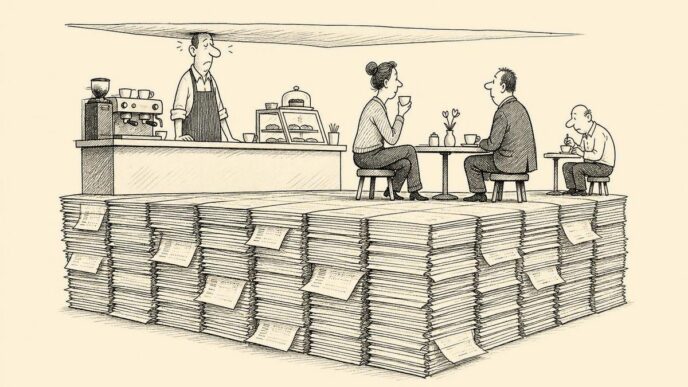
UWV has put a useful sentence into the Dutch labour-market debate: for 184 of 193 Dutch shortage occupations, at least one European country reports surplus labour. That is a serious signal. It means the shortage is not always absolute. Sometimes the worker exists. The Dutch employer has not yet built a route to reach, assess, employ, and keep that worker.
The economic route comes first
I read this less as a recruitment promise than as a management test. The Netherlands still has pressure in the labour market. CBS reported 378 thousand open vacancies at the end of Q1 2026, with 91 vacancies per 100 unemployed people. Eurostat placed the Netherlands at a 3.9 percent job vacancy rate in Q4 2025, the highest among Member States with comparable data. The fever of 2022 has cooled, but the patient is not walking freely.
For a small employer, the message is not that Europe will solve the roster. The message is that the vacancy conversation has become more precise. If the worker may be available elsewhere, the question moves from can nobody do this work to can we make this hire work inside our company.
The pool is not the bridge
UWV names care and welfare, ICT, and technical occupations as the areas where Dutch shortages are most common. It gives concrete examples: welders and cutters in Finland, building electricians in Finland and Greece, system administrators in Czechia and Latvia, electronics and hardware engineers in Greece and Finland. A later UWV update still sees reported European surpluses for many Dutch shortage occupations. It also shows that some bottlenecks are European, not local. Electricity grid mechanic is one such exception in that update.
That distinction matters. Occupation matters more than country. A lower vacancy rate abroad does not mean a Dutch company can simply open a tap. A welder, a nurse, a system administrator, and a carpenter each bring a different route, different proof, different language pressure, and a different first month on the job.
Imagine a small installation company near Eindhoven. It has too much work and not enough electricians. A candidate from Greece may have the hands and discipline the company needs. Still, the first Monday is not just about handing over tools. The employer has to know whether the person understands safety instructions, site communication, client contact, drawings, reporting routines, and Dutch working-time expectations. Someone has to translate the unofficial knowledge that never appears in the vacancy text.
That is where foreign recruitment often succeeds or fails. Not in the advertisement, but in the bridge.
Right to work is not the whole job
The legal starting point is favourable for European recruitment. Rijksoverheid states that people with the nationality of an EEA country or Switzerland may live and work in the Netherlands without a visa, residence permit, or work permit, provided they have a valid passport or identity card. This lowers immigration friction.
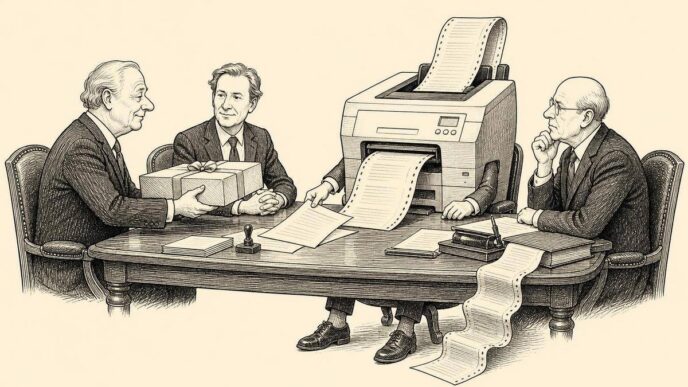
It does not remove employer discipline. Dutch employers still have to check identity before work starts, check the original identity document for authenticity and validity, and keep the required copy in the administration. Payroll then turns the hire into a tax and wage record: identity establishment, burgerservicenummer handling, wage records, payroll-tax returns, payslips, and annual statements belong to the same reality as the job interview.
Legal form is not the whole story
This is why I do not like the phrase easy foreign hiring. Easier than some third-country routes, yes. Easy, no. A European hire is still a Dutch employment relationship. It has a wage floor, a roster, a contract, a payslip, supervision, working conditions, and a place in the employer's records.
The statutory gross minimum hourly wage for employees aged 21 and older is €14.71 from 1 January 2026 and €14.99 from 1 July 2026. That is only the floor. Sector practice, allowances, premiums, holiday pay, tools, travel, training, and slower early productivity can change the cost of the hire. EU recruitment is not a low-wage strategy if it is done seriously. It is a capacity strategy.
Care shows the hardest version
Care is where the promise and the constraint meet most sharply. UWV identifies care and welfare as one of the main shortage areas. CBS also shows that care, together with trade and business services, accounted for more than half of all open vacancies in Q1 2026.
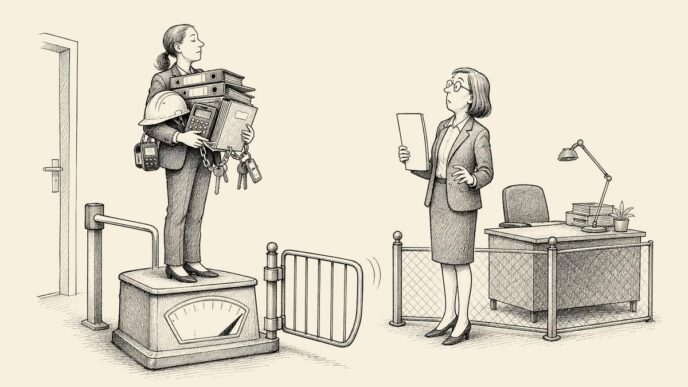
But a nurse, dentist, teacher, security officer, lawyer, or architect may fall under protected or regulated-profession rules. Rijksoverheid is clear that statutory professional qualifications can apply, and that recognition may require diplomas, certificates, experience evidence, and sufficient Dutch language proficiency.
Here the right to work is not the same as the right to practise. For a small care provider, it can decide whether a recruit can take full responsibility in weeks, months, or not at all. The vacancy may be urgent, but the recognition path has its own clock.
This is also where internal capacity becomes visible. UWV reported in February 2026 that 45 percent of vacancies were difficult to fill according to employers, down from 53 percent in 2023 and 2024. It also reported that 52 percent of employers with recent vacancies more often hire people who still need training because of tightness. The lesson is broader than foreign recruitment. Dutch employers are already moving from perfect fit to trainable fit.
That is sensible, but only if someone has time to train.
The second shortage is onboarding
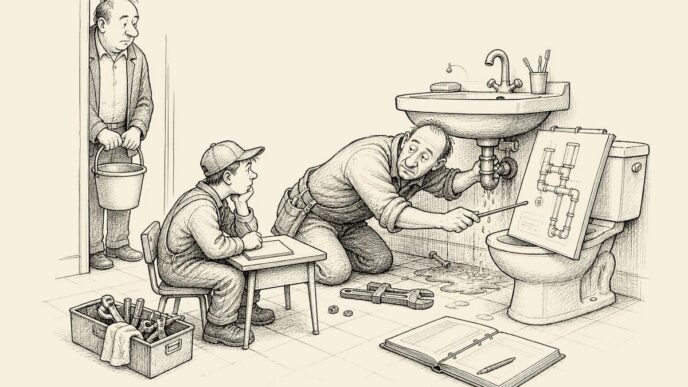
Small companies often speak about staff shortage as if the missing person is the only missing resource. I see another shortage just as often: the shortage of experienced people who can absorb newcomers without breaking their own work.
A European hire may need help with language, tools, safety routines, software, customer etiquette, sector habits, Dutch payslips, registration questions, and ordinary settlement stress. None of this is dramatic. It is ordinary human onboarding. But in a micro business, ordinary onboarding can sit on the shoulders of one owner, one planner, or one senior technician.
If that person is already carrying customer deadlines, quotes, complaints, purchasing, and cash collection, the foreign recruitment route can create extra pressure before it creates relief. The candidate was found, but the company did not reserve the human bridge.
Follow one revenue stream
This is why the nearby labour reserve should not be skipped. CBS reported 559 thousand underutilised part-time workers in Q1 2026, the highest number in more than four years. For some employers, extra hours for people already on the roster, better scheduling, training a known employee, or redesigning a role may be faster than recruiting across borders. For others, especially in technical, care, and ICT shortages, European recruitment may be necessary. The sequence should be chosen with a cool head.
When an agency feels easy
Many small employers will not start with a direct EURES search. They will call an agency. That is understandable. CBS reported that in 2024 the Netherlands had more than 2.3 thousand temporary employment agencies with 407 thousand temporary-agency jobs. Workers born abroad who had lived in the Netherlands for less than eight years filled 52.4 percent of temporary-agency jobs.
The agency route can bring speed. It can also hide responsibilities in the wrong place. For agency workers, the hirer must still check the original identity document before work starts. Supplier choice then becomes part of HR risk: wage evidence, working-time discipline, contact language, incident handling, housing-related questions, and registration awareness all matter.
The government's May 2026 consultation on a duty of care for lenders around labour-migrant registration is still only a consultation. Even so, the direction is visible. Labour migration is no longer treated as a quiet back door of the labour market. It is measured, discussed, and increasingly connected to registration, information duties, and worker protection.
A small employer that uses an agency should not treat the supplier as a curtain. It is more realistic to treat the agency as part of the employer's governance chain. That does not mean suspicion. It means control worthy of the risk.
What changes tomorrow morning
The practical change is modest and serious. A Dutch employer with shortage roles can look at Europe without fantasy. A careful first step is to rewrite the vacancy in real work language: tasks, tools, certificates, customer contact, safety exposure, software, physical demands, working hours, and the language actually needed on the floor.
Then comes the price of conversion. How many weeks before the person produces useful capacity? Who trains them? Which work will the trainer stop doing? Does the contract meet Dutch wage and payroll reality? Is the profession regulated? Is the first payslip ready before the first shift? If an agency is involved, is the supplier route visible enough?
UWV's signal is valuable because it breaks a lazy conclusion. It is not always true that there are no people. Sometimes there are people, but they are on the other side of language, recognition, payroll, housing, registration, supervision, and trust.
For small employers, that should be encouraging rather than discouraging. A bridge can be built. It just has to be built before the person stands at the door.
The Netherlands does not only need more recruitment. It needs better conversion of labour into stable work. European workers can help ease Dutch shortages where the occupation match is real. But the employer who benefits will not be the one who simply searches farther away. It will be the one who makes the journey into the company clear, lawful, paid correctly, supervised well, and human enough to last.
Sources
Referenced in the article
Column | Ledger & Tax
Dutch Tax Plan 2026 Turns Into a Ledger Test
Dutch Tax Plan 2026 now asks whether payroll, prices, leases and records can absorb the rules.
Column | Human Resources
The Labour Reserve Already Has a Badge
Many Dutch part-time workers want more hours. For small employers, the real question is whether.
Column | Governance
Dutch Pay Transparency Makes Salary Memory a Governance Risk
Dutch pay transparency asks employers to explain pay before memory and negotiation become weak evidence.
The Polder is written for readers who need the Dutch business environment translated into practical meaning. Corrections, source policy and editorial accountability are part of the publication record.