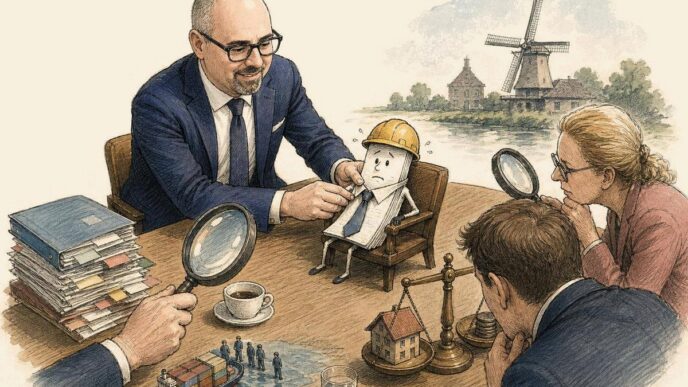
A careful transition is only responsible if we also name who carries the cost before the system is ready.
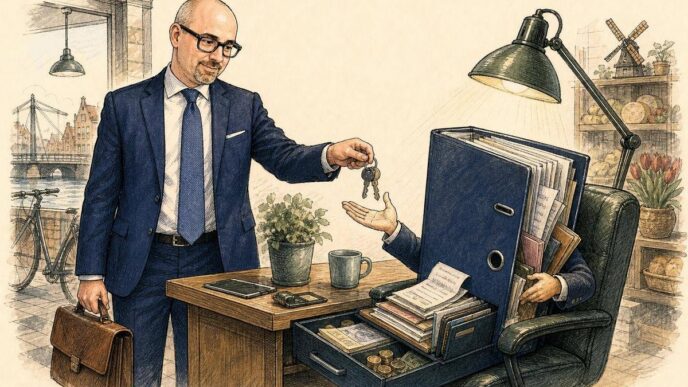
On Friday afternoon in a small Dutch office, waiting does not look like national character. It looks like a founder looking at three unfinished decisions before closing the laptop. The tax correction may come, but not yet. The self-employed specialist may work Monday, but only if the relationship is safe. The foreign VAT route may become simpler, but the invoices still need proof. No one is dramatic about it. The calendar is full, the coffee is cold, and the question is quiet: who is paying for the calm?
The signal has to become readable
I recognise that calm. It is part of how the Netherlands keeps difficult matters from breaking too quickly. We prefer transition periods, consultation, repair routes and careful wording. I do not dismiss that instinct. It has saved this country from many hard edges that faster cultures sometimes accept as the price of action. Yet the week left me with a sharper question. When does careful delay stop protecting people and start moving the bill to the company floor?
That question matters because small companies do not live at the pace of policy. Wages are due on fixed dates. Customers expect delivery. A sick employee needs a plan. A roster needs a name, not a future settlement. Dutch patience can be a public virtue, but in a business it becomes cash, proof, hours and risk.
A future correction is not today’s cash
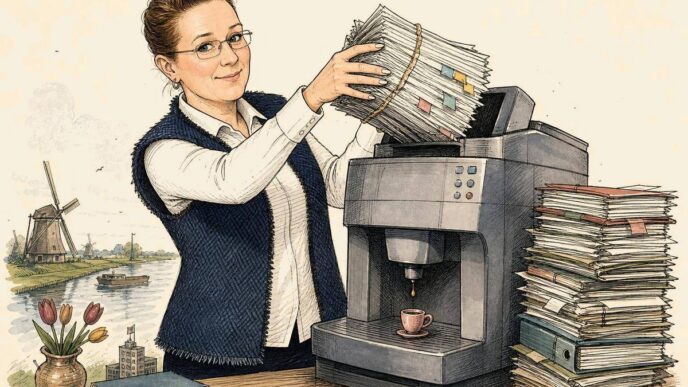
Box 3 is the clearest example. The repair of the Dutch wealth-tax file and the work toward a new system in 2028 may be necessary steps. Court correction, legislation and tax execution all need time. Still, a founder who expects relief cannot spend a future correction with confidence today. Until the dates, proof, bank data and assessment work line up, the expected amount remains a file, not money.
That is not only a private tax story. Many Dutch owner-managers carry private assets close to the business table: savings after a sale, a securities account, a rental property, a loan to or from the company, or money kept for a house purchase. The tax system may classify the wealth as private. The company often feels the consequence when the founder has less room to support working capital or absorb a difficult month.
What the signal changes
So the Dutch question is not whether repair is justified. It is. The harder question is whether we are honest about the waiting period. If the state needs time to correct an old system and build a new one, who carries the uncertainty in the meantime? Too often the answer is the person with the adviser bill, the incomplete proof and the bank balance that cannot yet be treated as certain.
A clean labour market still needs people
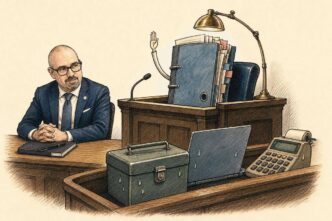
The zzp debate shows the same habit in human form. The question is no longer only who sends an invoice. The real issue is how the work is done: authority, embedding in the organisation, freedom to replace, hours, rates and daily control. That matters. False self-employment can harm workers, distort competition and let some companies buy flexibility without carrying normal employer duties.
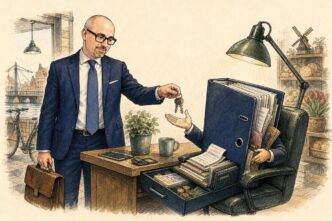
But a careful legal distinction does not fill Monday’s roster. In care and in other sectors, organisations that reduce dependence on self-employed workers may not automatically gain employees in their place. Some people wait. Some leave. Some choose work with less friction. The Dutch system can be right to ask whether the relationship is truly independent, while the employer is still left with a simple operational question: who is doing the shift?
This is where our culture prefers classification to confrontation. We want to clean the labour market, but we are less direct about the capacity we may lose while cleaning it. A company cannot schedule a principle. It schedules a person. If that person disappears before the new model works, the result deserves attention, not only the intention.
The easier door still asks for proof
VAT gives the same pattern in a less emotional language. The European move toward a single VAT registration route under VAT in the Digital Age sounds like the simplification businesses have long wanted. For Dutch sellers with cross-border sales, fewer foreign registrations and a more central route can reduce visible friction. That part is real.
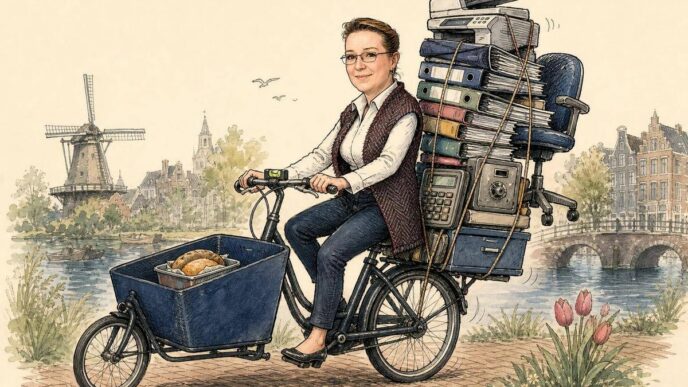
Yet the work does not vanish. A company using OSS, selling through platforms, moving stock or serving private customers in several EU countries still needs to prove why each transaction followed the chosen VAT route. The pressure moves into invoice data, VAT rates by country, customer evidence, ICP matching, software settings and stock records. The door may become easier, but the floor behind it must be cleaner.
This is a very Dutch trade-off. We reduce one burden and increase the need for orderly proof somewhere else. That can be a sensible exchange, but it should be named clearly. Otherwise the founder hears less administration and later discovers a stricter ledger.
Goodwill also needs a working route
The work pilots around residents of asylum centres add a more human version of the same question. UWV described pilots by COA, VNG and UWV on 23 June 2026 that helped residents move toward paid work through matching, information and employer support. For employers with open vacancies, that can be meaningful. For residents, work can restore rhythm, dignity and contact with ordinary Dutch life.
What founders should check
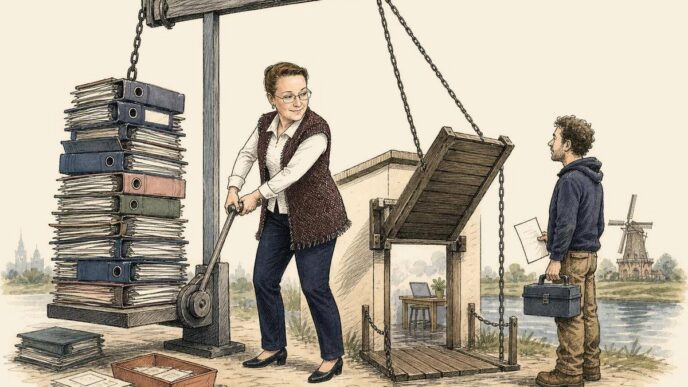
Still, a vacancy becomes real capacity only when permission, pay, payroll, guidance, language, transport, working hours and records are settled before the first shift. Goodwill is not a payroll system. Social value does not remove the employer’s duty to organise work properly. The person who wants to work and the founder who needs staff can both be stopped by a route that is too slow for the workplace.
Here the Dutch compromise has a better face, because it tries to connect rules with dignity. But even a better compromise must be judged by result. If work is part of integration and labour supply, the process has to move at the tempo of actual employers, not only at the tempo of public coordination.
The question under the Dutch rhythm
What do these files have in common? Not the subject. Tax repair, labour status, VAT and asylum-centre work belong to different desks. The shared pattern is timing. The Netherlands often promises a cleaner outcome later and asks small businesses to carry sharper proof, stricter caution or staffing uncertainty now.
I do not want a country of sudden rules and theatrical decisions. Having worked with other systems, I know that speed can also be careless. Dutch patience has value when it prevents avoidable damage. But patience becomes too easy when the public side enjoys the appearance of calm while the private side absorbs the cost in cash, hours and records.
The practical measure is not whether a transition looks reasonable in a policy note. It is what happens at 8.30 on Monday morning. Can the founder count the money? Can the employer safely place the worker? Can the seller prove the VAT route? Can the motivated candidate start without turning goodwill into risk?
That is the question I would put on the table this weekend. Not whether Dutch compromise is good or bad. It is both, depending on where the cost lands. If our patience is becoming an operating cost for small companies, we should say so plainly. Only then can we decide which uncertainty we are choosing to leave on the company floor.
Referenced in the article
Column | Human Resources
Dutch Zzp Caution Can Leave the Monday Roster Empty
The DBA question is no longer only who sends the invoice, but who can safely do the work.
Column | Human Resources
Asylum-Centre Work Can Help Rosters, If Employers Slow Down First
UWV pilots show real hiring movement, but permission, pay and guidance decide the gain.
The Polder is written for readers who need the Dutch business environment translated into practical meaning. Corrections, source policy and editorial accountability are part of the publication record.