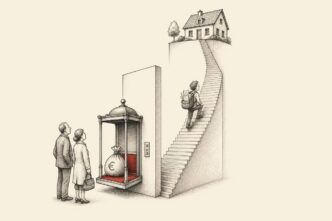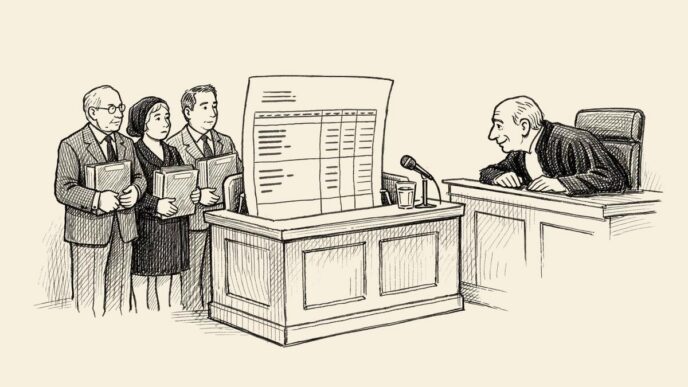




The Dutch question now is whether balance still works when small firms must carry the proof, cash and access behind it.
On a Friday afternoon, a small employer in the Netherlands can know quite a lot and still not know what to do first. The vacancy market is cooling. Wages are still higher. A future dismissal cost may sit more firmly with the employer. A VAT refund may depend on access before entitlement. A private tax claim may depend less on fairness than on a date in the file.
The signal has to become readable
That is not a weekly summary. It is one Dutch question in several forms: how much of our reasonableness now depends on the administrative strength of the person who has to carry it?
I ask that from inside the culture. The Netherlands is good at avoiding hard collisions. We prefer routes, conditions, exceptions, dates, portals and proofs. Often that is a strength. It keeps politics from becoming theatre and gives business life a chance to work with the rule after the headline has gone.
But there is a point where a balanced rule becomes a heavy desk. The issue is not whether the Dutch system has become unfair. The sharper question is whether it has become too comfortable with moving the last part of the work to the smallest operator.
The question behind the neat answer
Dutch compromise usually sounds calm. It rarely says: you are on your own. It says: there is a route. There is a form. There is a condition. There is a deadline. There is a scheme, or there used to be one.
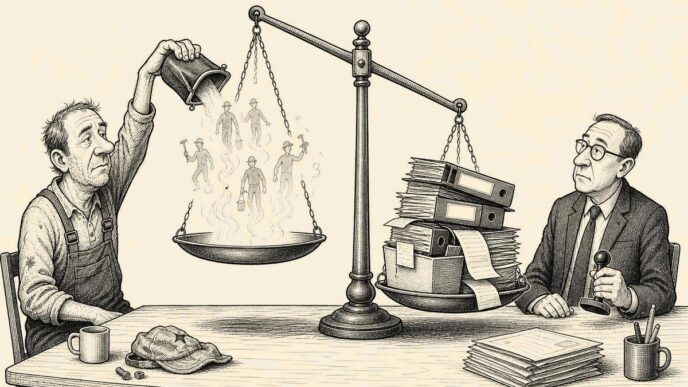
For a large organisation, that language becomes process. For a small firm, it becomes time, cash, attention and risk. Someone has to know the rule, find the login, read the letter, check the payroll file, adjust the price list and keep the proof. That someone is often also selling, hiring, ordering, repairing, answering customers and worrying about the bank balance.
This is the Dutch blind spot. We discuss whether a measure is balanced between interests. We ask less often whether a serious small business can run the measure without becoming a small public administration beside its normal work.
Cooling does not staff the roster
Take labour. CBS counted 378,000 open vacancies at the end of the first quarter of 2026. Labour-market tension fell to 91 vacancies per 100 unemployed people. Those figures matter. They show that the market is no longer at the same heat as before.
Yet UWV still describes the labour market as tight. A lower number of vacancies does not automatically give a baker a second pair of hands, a care provider a stable roster, or a transport firm a driver who fits the planning, the language at work and the payroll rules.
What the signal changes
At the same time, wages have not returned to an old baseline. CBS reported that collectively negotiated hourly wages, including special remuneration, were 4.5 percent higher in the first quarter of 2026 than a year earlier. That is below the 2024 peak, but still above April 2026 consumer inflation of 2.8 percent.
So the employer does not face one clean question. It is not simply: can I hire? It is: can I redesign the work, pay correctly, keep people, lift prices, protect margin and still remain a decent employer? A cooler labour market may reduce the drama. It does not remove the work.
This is where Dutch policy language can become too tidy. A shortage eases in the data, but the roster remains stubborn. Wage growth slows, but the bill stays high. The compromise may be statistically true and practically incomplete at the same time.
The refund exists only if the door opens
Tax shows the same pattern in a quieter way. For non-EU entrepreneurs seeking Dutch VAT refunds, the route is moving further into digital access and portal discipline. The practical question is no longer only whether Dutch VAT can be recovered. It is whether the company has the right registration, login, mandate and invoice evidence before the refund route can work.
That distinction matters. A right can exist and still wait behind a door. The invoice may be real. The business use may be real. The cash may still sit outside reach because the access file is not ready or the right person cannot act.
This is not an argument against digital filing. The Netherlands cannot run a modern tax system through loose paper and hope. But we should name the cultural move clearly. Access has become part of entitlement. Proof has moved earlier. The business must be ready before the state can be useful.
For experienced advisers, that is normal. For a foreign entrepreneur dealing with Dutch VAT for the first time, it is not normal at all. The Dutch system may think it has offered a route. The business may experience a locked room with instructions in front of it.
Protection without reimbursement is still a cost
The same question appears in transition payments. From 1 January 2027, the cabinet intends to abolish compensation schemes that currently allow employers to reclaim transition payments in two situations: dismissal after long-term incapacity for work, and business closure because the employer retires or dies. The transition payment itself remains.
There may be a public-finance argument for that. A state cannot reimburse every employer cost forever. Workers should also not lose protection because a company is small.
Still, the practical sentence is clear: the payment stays, the refund route may disappear, and the cash risk moves closer to the employer.
What founders should check
For a large organisation, that becomes a provision. For a small employer, it can become the difference between hiring and waiting, between succession and closure, between carrying one more employee or deciding that growth is too risky. The rule protects one side and charges another. That may be defensible. It should not be disguised as a minor administrative change.
Dates are also a culture
Box 3 brings a colder lesson. Advocate General Pauwels advised the Hoge Raad on 8 May 2026 that taxpayers who did not object in time to income-tax assessments for 2017 to 2020 should not receive recovery through ambtshalve vermindering by relying on the Christmas judgment route. This is not yet a final Hoge Raad judgment, but it is a strong procedural signal.
Here the Dutch system asks a hard question of itself. When fairness and finality collide, which one leads? The legal answer may need dates. Without dates, tax cannot close and public administration becomes unstable.
But the business lesson is also clear. People learn that a possible right is not enough. The file must be alive. The assessment must be watched. The objection must be timely. Trust becomes calendar work.
What are we accepting?
The Netherlands will not stop being a country of rules, and it should not. Good rules protect workers, taxpayers, customers and honest businesses. The question is not whether proof, deadlines and employer duties are necessary.
The question is what we are accepting when every balanced solution requires a stronger back office.
We are accepting that small firms become the last-mile administrators of public choices. We are accepting that a right without access is weaker than it looks. We are accepting that lower pressure in the data may still leave high pressure at the desk. We are accepting that cash risk can move quietly while the language stays polite.
Maybe that is the price of a careful country. Maybe the alternative would be rougher, less fair and less Dutch. But then we should say so honestly.
Because tomorrow morning, the employer at the Friday desk will not be thinking about compromise as a national virtue. She will be checking a login, a wage bill, a dismissal reserve, a vacancy and a tax date. If Dutch reasonableness depends on her file being perfect, then the file is no longer a detail. It is where the policy actually lives.
Sources
- VAT Recovery Under Pressure Needs More Than a Clean Invoice
- Box 3 Refund Hopes Need Dates Before Optimism
- European Workers Can Ease Dutch Shortages Only With a Real Bridge
- Dutch Transition Payment Refunds May Disappear, but Employer Costs Remain
- A Faster BPM Portal Still Needs the Right Hands on It
- When a Senior Employee Raises the BV Owner’s Salary Question
- After a Bad Exit, Payroll Still Needs a Clean Border
- When the Company Pays for the Match, Payroll May Enter the Room
Referenced in the article
Column | Ledger & Tax
VAT Recovery Under Pressure Needs More Than a Clean Invoice
A Gelderland transport case shows why cash, creditor pressure and VAT evidence must stay in the same.
Column | Real Estate
Before Fighting the WOZ Value, Ask What Was Valued
A garage or workshop can change the tax story before the euro amount is even.
Column | Ledger & Tax
Box 3 Refund Hopes Need Dates Before Optimism
The latest court signal turns a familiar tax grievance into private liquidity.
The Polder is written for readers who need the Dutch business environment translated into practical meaning. Corrections, source policy and editorial accountability are part of the publication record.