The useful signal from the week is that the Netherlands is opening small lanes, but only for businesses ready to carry the consequence.
A founder does not feel relief as a press release. He feels it when the notary stops asking, the bank releases the payment, the supplier accepts the date, the worker can find a room, and the month closes with enough cash to breathe. Until then, relief is only a nicer word in someone else’s document.
The signal has to become readable
That is the thought I carried at the end of the week. The Netherlands is not turning soft on business. It is not suddenly removing the weight from small companies. It is trying something more Dutch and more difficult: less blockage, but not less responsibility. The country is opening narrow lanes, then asking whether the people who want to use them can carry the decision without making the next person pay for weak work.
I am not Dutch, and that still matters in how I read this place. I did not inherit the instinct that a clean shared rule is better than a private shortcut. I learned it by watching how Dutch systems behave when money, land, tax, labour and public trust meet each other. The logic can be slow. It can be irritating. It can be unforgiving to a small firm with no spare afternoon. But its best version is serious: put the reason on the table, let another person inspect it, and do not confuse friendliness with trust.
The door is open, but not empty
The hard thesis is this: Dutch business relief now comes as a responsibility test. The easier reading is that some pressure is easing. The better reading is that the Netherlands wants movement again, but only movement that can survive contact with evidence, price, delivery and accountability.
This is not a compliance slogan. It is market reality. A country that has lived through housing scarcity, nitrogen limits, energy shock, labour pressure, fraud concerns and expensive money does not simply reopen by saying yes more often. It reopens by asking better questions earlier. That is where the discomfort starts for founders, advisers, buyers and lenders. The yes is still possible, but the lazy yes is becoming harder to defend.
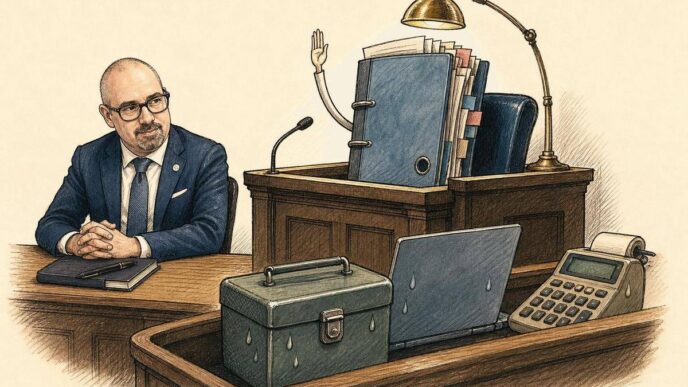
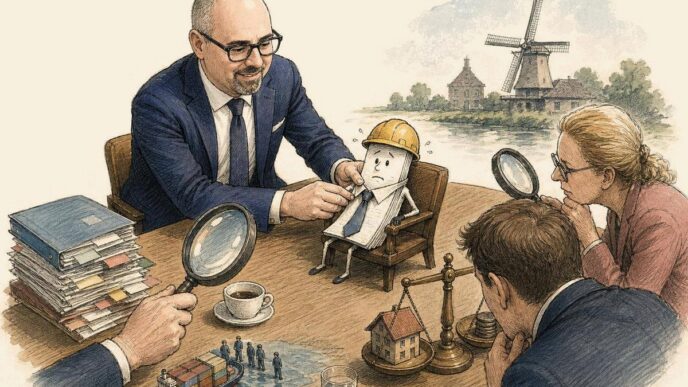
The notarial signal shows it clearly. BFT’s renewed protocol turns notarial trust into something that arrives earlier in the transaction. A founder may meet it as extra questions before a BV incorporation, share transfer, property completion or refinancing. The first reaction is often practical annoyance. Why now? Why this document? Why does the notary need to know this before the deal is ready?
The answer is that Dutch trust is moving before the signature. A signature used to feel like the formal moment. Now the more important moment may be the conversation before it, when the names, authority, money and purpose are tested. That is not suspicion for its own sake. It is the market protecting the closing table from becoming a theatre scene where everyone smiles and the risk is left for later.
What the signal changes
I have won work because the boring part was ready. I have also watched good commercial energy die because the story was stronger than the documents behind it. That is a useful humiliation for any entrepreneur. A company is not only what the founder believes. It is what a buyer, bank, tax officer, notary, supplier or court can understand without needing the founder’s charm in the room.
A lighter rulebook must reach the morning
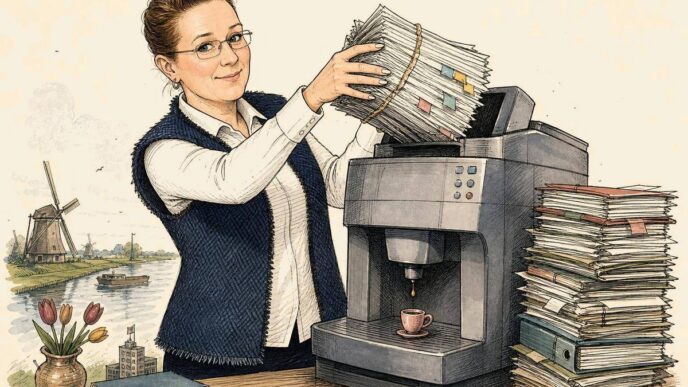
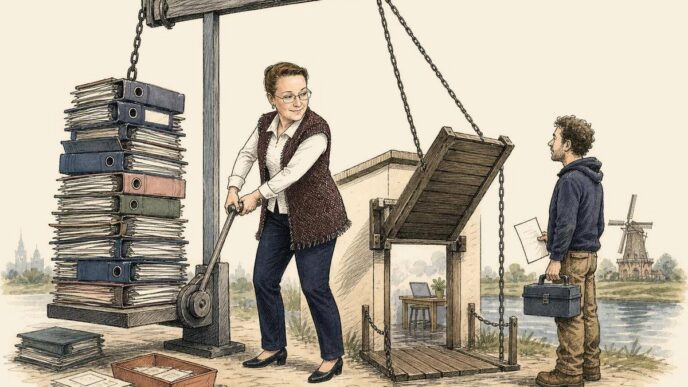
The same test sits behind the cabinet’s regulatory burden work. Rijksoverheid reported that 403 rules for entrepreneurs had been scrapped or simplified under the 500-rule approach. The missed target is the easy headline. It is also the least interesting part of the story.
For a small firm, the rule count matters only if the morning changes. One less repeated data request. One shorter wait. One clearer form. One obligation that no longer steals the hour that should have gone to a customer, a worker or an unpaid invoice. If the count falls but the inbox still grows, the founder is not wrong to remain unimpressed.
Still, I would not dismiss the signal. The Dutch state is at least admitting that rule pressure is not a complaint from people who dislike discipline. It is a cost that lands in real hours. A large organisation can bury that cost in a department. A small firm pays with the owner’s evening, the bookkeeper’s patience and the delay before a decision becomes action.
Here the Dutch argument becomes uncomfortable in a useful way. Fewer rules do not automatically mean weaker responsibility. In fact, the opposite may be the smarter bargain. Remove the repetition, remove the unclear steps, remove the waiting that adds no value. Then expect the company to know what it is doing when the real question arrives. That is a better country than one that confuses thickness of paperwork with seriousness.
Markets do not pay for comfort
The economic mood also carried this lesson. CBS estimated June inflation at 2.9 percent, down from 3.5 percent in May. That is better news. It gives households, firms and policymakers a little more air. But a lower national inflation figure does not pay the July payroll, renegotiate the energy contract or make a cautious customer suddenly generous.
This is where founders need a colder ear than the public conversation usually gives them. A macro number is not a till receipt. It is not rent. It is not the wage hour on Saturday. It is not the supplier who moved the price three months ago and has no intention of moving it back. Lower inflation can help the climate, but margin lives in details.
Dutch market behaviour now looks selective rather than carefree. Customers may buy, but they still compare. Firms may raise prices, but they risk resistance. Workers need wages that match the cost of living, while employers need hours that produce enough value to carry those wages. A softer number reduces heat. It does not remove the discipline.
What founders should check
This is the point where I distrust both pessimism and celebration. Pessimism misses the movement. Celebration misses the invoice. The Netherlands is not frozen. It is also not cheap again. The mature reading is that the country is entering a phase where better signals must still be converted line by line into cash, capacity and delivery.
Housing is the proof of delivery
Housing is the most human test because it refuses to stay in one policy box. Rijksoverheid reported that ABF Research expects 99,700 homes to be realised in 2027. If delivered, that would put the national 100,000-home target within reach for the first time since the early 1990s.
That is a serious forecast. It matters to developers, contractors, municipalities and lenders. It also matters to the restaurant owner who cannot staff the evening shift, the care provider that loses people to commuting pressure, the shop that needs younger workers, and the small manufacturer trying to hire someone who does not already live nearby. Housing is not a social side issue for business. It is wage pressure, staff turnover, local demand and the daily cost of keeping people close to work.
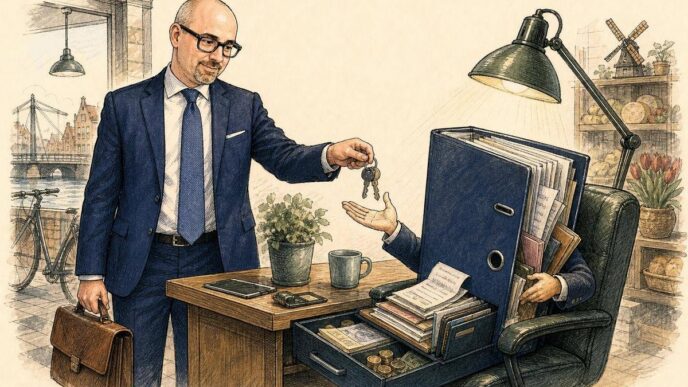
But no one lives in a forecast. Relief needs keys, streets, permits, builders, grid capacity, finance and local acceptance. A target becomes real only when a person can sign a lease or buy a home and still afford the rest of life. Until then, the business effect remains partial. Employers still carry the hidden cost of scarcity in recruitment, absence, pay demands and lost flexibility.
That is why housing is the cleanest test of Dutch execution. The country can design a careful logic around scarcity. It can define targets, coordinate levels of government and explain the need with precision. The harder question is whether the system can deliver fast enough for ordinary companies and workers to feel the difference before another year is lost.
The Dutch bargain is getting sharper
Put these signals together and the week says something stronger than the separate facts. Notaries are asking earlier. The state is trimming rules, but the useful test is whether work disappears from the morning. Inflation is softer, but margin still has to be earned. Housing forecasts improve, but business will believe them when people can move.
This is not a weekly mood. It is a direction. The Netherlands is trying to trade paralysis for governed movement. That is a hard bargain for small firms because they feel every condition directly. There is no legal department in the back room, no policy team to translate the rule, no treasury unit to smooth the month. There is the owner, the adviser, the bookkeeper, the bank login and the decision that cannot wait forever.
Yet this bargain also rewards the kind of company that deserves more room. The firm that knows its prices, keeps promises it can explain, treats signatures seriously, watches cash before pride, and understands that delivery is the only proof customers really respect will not merely survive Dutch friction. It will use that friction as a filter.
That is the outsider’s respect I have for Dutch logic. At its best, it does not ask business to be theatrical. It asks business to be answerable. The week’s message is not that the Netherlands is becoming easy. It is that the country may be becoming movable again, but only for those willing to carry the weight of their own yes.
Referenced in the article
Column | Compliance
Dutch Red Tape Falls Short Where Small Firms Feel It Most
The cabinet counted 403 handled rules, but relief starts only when tomorrow's work.
Column | Governance
Cybersecurity Reaches the Board When Cash and Trust Are Exposed
The real question is not who carries the CISO title, but who owns digital risk before pressure arrives.
Column | Market Pulse
A Softer Inflation Number Does Not Pay the July Payroll
CBS puts June inflation at 2.9 percent, but wages, energy and services still decide the small firm’s margin.
The Polder is written for readers who need the Dutch business environment translated into practical meaning. Corrections, source policy and editorial accountability are part of the publication record.